What May You Pick in the Mountains? Berries, Herbs and the Boundaries of Responsible Observation in the Jizera Mountains and the Giant Mountains
Two neighbouring national parks share the Giant Mountains, but their rules on gathering are not identical. This practical guide explains where legal picking ends, how to recognise bilberries, raspberries and cranberries, and why peat bogs are best viewed from a designated trail.
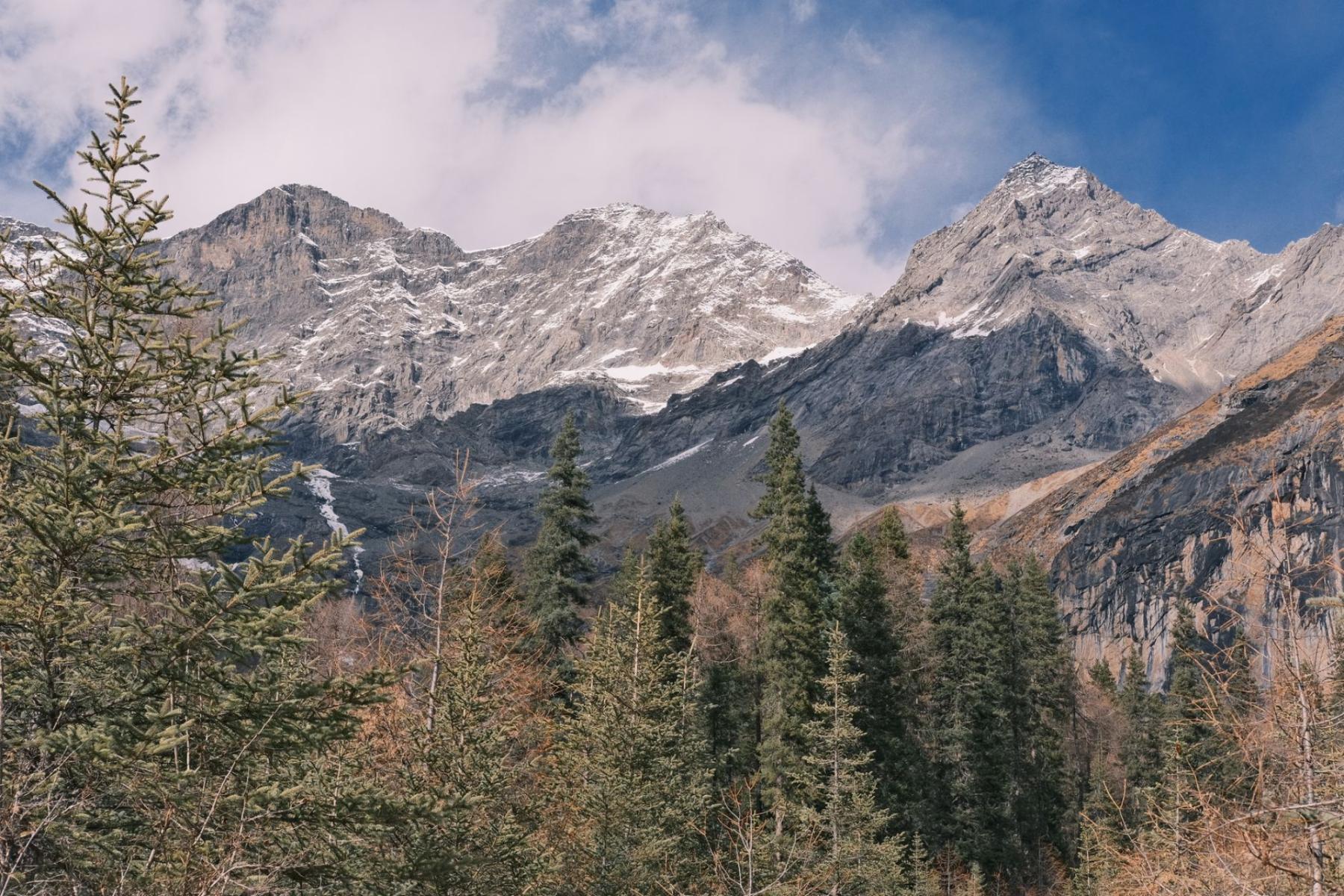
Two neighbouring national parks share the Giant Mountains, but their rules on gathering are not identical: on the Polish side, picking wild fruit, plants or mushrooms is prohibited, while on the Czech side gathering for personal use may be permitted outside designated quiet zones and provided it does not damage the ground vegetation.[1] It is a difference that changes the plan for a walk more than the border itself does on the map.
In the Jizera Mountains, too, the situation cannot be reduced to a simple “allowed” or “not allowed”. A managed forest is treated differently from a nature reserve, national park, Natura 2000 site or peat bog. That is why a berry basket should not be the first item in your equipment. First, you need to know where you are.
Two parks, two legal frameworks
In the Karkonosze National Park, adopt a rule without practical exceptions: pick and gather nothing. General regulations governing national parks prohibit picking and damaging plants and forest undergrowth, as well as gathering fruit and mushrooms; any exceptions may apply only to places designated by the park director.[1] An ordinary trail, the side of a path or a bush growing right beside a bench does not therefore become a place where gathering is permitted.
This is especially important during bilberry season. In the Polish KPN, you can photograph a bilberry patch, talk about its inhabitants and show children the difference between bilberry and lingonberry. You may not, however, fill a cup with fruit or dig up a plant for the garden.
On the Czech side, in Krkonošský národní park, the regulations are more nuanced. Gathering wild fruit for personal use may be permitted, but not in klidová území, or quiet zones, where movement is allowed only along marked trails. In practice, this means that even where gathering is legally permitted, you may not leave the trail simply to reach a larger patch of berries. Nor may you break branches, damage low-growing plants or gather on a commercial scale. The arrangement of zones and movement restrictions on the Czech side differs from that on the Polish side, so before crossing the border you should check the current signs and markings.[2]
Outside national parks, Polish State Forests are open for gathering forest-floor produce for personal use, subject to entry bans and local restrictions. The law prohibits, among other things, gathering in marked prohibited areas and damaging plants. Gathering must be done by hand; tools, combs and “mechanical pickers” that damage bilberry shrubs are not permitted.[3]
The Jizera Mountains Landscape Park is not automatically synonymous with a total ban on gathering, but its name does not give visitors unconditional permission either. The exact location matters: a nature reserve, forest, peat bog, area with an entry ban, protected habitat or site covered by a temporary restriction. If you cannot identify on a map what protection regime applies in a given place, the safest decision is to observe without gathering.
An edible berry is not always a berry for the basket
The fruiting plants of the Jizera Mountains and the Giant Mountains are excellent material for learning identification, but a poor excuse for testing your memory. Fruit colour is not enough. What matters are the leaves, the plant’s form, its habitat, the time of year and the characteristics of the plant as a whole.
Bilberry
Bilberry forms extensive patches in coniferous forests, in areas where the canopy has opened up and in some peatland habitats. It has small deciduous leaves, green shoots and dark blue or blue-black fruit with purple flesh. In the Giant Mountains, it is one of the characteristic components of bilberry heath, alongside lingonberry and bog bilberry.[4]
This is the plant most likely to inspire the thought, “Let’s pick some for pancakes.” If you are in a managed forest outside an area with an entry ban, gathering for personal use may be permitted. Pick only by hand, without pulling up shoots or disturbing the leaf litter. In KPN, do not gather at all.
Lingonberry, cranberry and bog bilberry
Lingonberry has red fruit and leathery, evergreen leaves. It grows on acidic soils in coniferous forests, heathlands and some peatlands. Cranberry is associated primarily with wetlands; its shoots creep low across the ground, and its red fruit appears in an environment that should not be entered without a designated boardwalk or trail.
Bog bilberry can resemble bilberry, especially to someone looking only at the fruit. It is a good example of a plant to which you should not apply the “I’ll taste it and see” method. If you cannot identify the entire shrub, leave the berry where it is. In wet terrain, the problem is not only identification but also the risk of damaging the delicate ground.
Raspberry and blackberry
Raspberries appear primarily in clearings, at forest edges and in places where the tree cover has been thinned. Their fruit is made up of small drupelets, and a ripe raspberry usually separates easily from the receptacle. Blackberries have a similar fruit structure, but their shoots are generally more spreading and thorny. In both cases, moderation is important: do not break shoots, force your way through dense scrub or leave permitted terrain.
Cloudberry — observe, don’t take home
In high, wet locations, you may encounter plants whose significance is far greater than their culinary appeal. Cloudberry is a glacial relict associated with the wetlands of the Giant Mountains. It is not a “rare raspberry to find”, but an element of an exceptional habitat. If you spot one, the best course of action is to take a photograph, make a note and leave by the same route.
A rule for families: a child can point out three characteristics of a plant, draw a leaf or photograph the fruit. They should not check whether it is “definitely edible” by putting it in their mouth.
Traditional herbs: identification is not permission
The mountain herbal tradition is part of the history of the Giant Mountains and the Jizera Mountains. Arnica, gentians, yarrows, wild thymes, nettles and other plants have long featured in stories about homemade infusions, ointments and pharmacy. Today, this tradition should lead above all to education, not to independently harvesting plants from wild habitats.
Polish regulations distinguish between species under strict protection, partial protection and those whose harvesting may be permitted under specific rules and with a permit. For protected plants, prohibitions include deliberate destruction, picking, damaging, taking and gathering.[5] The fact that a plant has a traditional or medicinal use does not in itself change its legal status.
Among the plants growing in the higher parts of the Giant Mountains are monkshood, white hellebore, foxglove and others that should not be treated as ingredients for homemade tea. Foxglove is highly toxic, and its pharmaceutical use does not mean that it is suitable for preparing remedies yourself. The same applies to plants whose leaves resemble those of safe meadow species or culinary herbs.
The safest herbarium is created without picking. Note the common name, if you know it, the habitat, flower colour, leaf shape and the plant’s height. Take a photograph of the whole specimen as well as a close-up of a leaf. If identification is important, check it later in a botanical guide or ask an educator. If the plant is unfamiliar, do not touch it unnecessarily, and wash your hands before eating your own snack.
A plant garden or education centre is a good place to learn, allowing species to be viewed in controlled conditions. In the Świeradów-Zdrój area, this role is fulfilled, among other places, by Izerska Łąka — Environmental Education Centre. It is a more sensible way to learn about herbs than creating a collection from a peat bog.
A peat bog is not a meadow to walk across
Hala Izerska and the other wetlands of the Jizera Mountains attract visitors precisely because they differ from ordinary forest. They are not open spaces where you can walk between clumps of plants. A peat bog forms in conditions of high water levels and an acidic, nutrient-poor environment, where dead matter decomposes very slowly and accumulates as peat.[6]
This means that a single footprint is not harmless. A compressed clump of sphagnum may dry out, a trampled depression may alter the flow of water, and a few people leaving the trail can quickly create a side path. These habitats support wetland species including cranberry, bog bilberry, bog rosemary, crowberry and various sedges. In the Giant Mountains, peat bogs are also home to glacial relicts.[4]
So do not enter a peat bog for the sake of a berry, kneel among the plants for a photograph or move clumps aside to reveal fruit. If the path leads onto a boardwalk, the boardwalk is part of the habitat’s protection, not an obstacle to reaching a “better” spot.
The same principle applies to alpine grasslands and tall-herb communities. A short growing season, strong winds, frost and poor soil mean that plants grow more slowly there and have fewer opportunities to recover after damage. In Karkonosze National Park, some grasslands are being degraded by trampling.[4] Even if an individual specimen looks common, it is not worth testing how many such plants can “disappear without harm”.
An observer’s checklist: a photograph instead of a specimen
Before setting out
- Check whether the route passes through a national park, nature reserve, Natura 2000 site, managed forest or an area with a temporary entry ban.
- On the Czech side, pay attention to signs marking klidová území and do not assume that the rules from the Polish side apply there in exactly the same form.
- Take a phone with a camera, a small notebook and a pencil. Leave the basket for later — unless you know exactly that you are in a place where gathering is permitted.
In the field
- Take photographs from the trail. Instead of approaching the plant, use the zoom or frame the entire section of habitat.
- Take three photographs: of the whole plant, the leaf or stem, and the flower or fruit. A photograph of the berry alone is often not enough for identification.
- Record the date, approximate elevation, habitat type and whether the plant was growing in a forest, clearing, beside a stream or on a peat bog.
- Do not pick flowers for a bouquet, take seeds, dig up seedlings or create private herbaria from protected or uncertainly identified plants.
- If you see a rare plant, do not publish its exact location in a way that could bring more people there intending to gather it.
After the walk
Compare your photographs with a field guide, the park’s website or the educational centre’s materials. If the specimen remains uncertain, do not use it for culinary or medicinal purposes. In botany, “I don’t know” is a correct answer; in the kitchen, it can be dangerous.
The two parks on either side of the Giant Mountains really do apply different rules on gathering. But they should share a simpler principle: you can get to know a plant without owning it. In the Jizera Mountains and at Hala Izerska, the best souvenir remains a well-taken photograph, a careful note and the certainty that the habitat looks the same after our visit as it did before.