Sudeten Mountain Huts Without Barriers or Illusions: How to Truly Assess Access, Accommodation and Food
“Easy access” does not tell someone moving more slowly, using an all-terrain wheelchair, recovering from an injury or carrying a heavy pack nearly enough. This guide separates transport, surfaces, gradients, gondola travel, building access, rooms, toilets and dining — individually for Stóg Izerski, Wysoki Kamień, Hala Szrenicka, Szrenica and Jizerka.
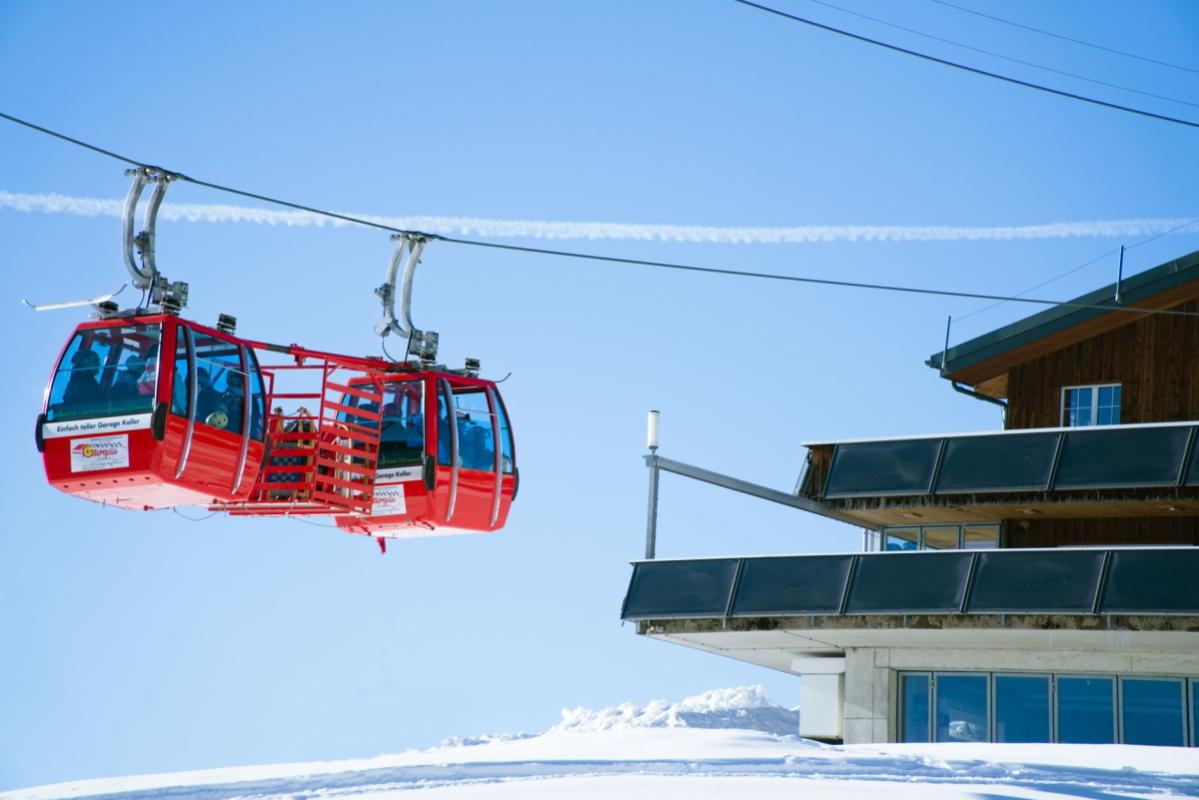
If you are planning a trip in September or October 2026, the Ski&Sun gondola to Stóg Izerski operates until 4:00 p.m. Monday to Friday and until 5:00 p.m. at weekends — this timetable may constrain your plans more than the length of the approach.[1] Operating hours are seasonal, so you need to check the current timetable before every trip, then allow extra time for the walk, rest stops and the return to the upper station.
This is how access to a mountain hut should be approached. Not as a single label: “easy”, “difficult”, “barrier-free”. Accessibility is a chain made up of several sections, and the whole thing works only if it does not break down in the final hundred metres.
For one person, the most important factor will be being able to enter without steep stairs. For another, it will be an even surface, somewhere to rest, a toilet without having to negotiate an additional level, or the certainty that lunch can be ordered without booking a bed for the night. A family with a child in an all-terrain wheelchair assesses a route differently from a hiker recovering from knee surgery. Someone carrying a heavier pack needs different information from someone planning only tea and an hour in a mountain dining room.
Check the clock first, then the route
A gondola can shorten part of the approach, but it does not remove every limitation. The operator, Ski&Sun, describes the lift as operating year-round and being accessible to people with disabilities; the official transport regulations also provide for the carriage of wheelchairs and pushchairs.[2][3] This is important information about the journey itself. It is not yet a certificate of accessibility for the mountain hut above.
Before setting out, separate four questions:
- is it possible to reach the lower station comfortably and park;
- can a person using a particular type of wheelchair or with a particular mobility limitation get into and out of the gondola;
- what kind of surface awaits at the upper station;
- can the entrance to the hut, the toilet and a place at the table be reached without unexpected stairs?
Then there is the season. Mud, ice, wet leaves and compacted snow change the assessment of the same road. A section that can be managed on wide wheels in summer may require assistance — or abandonment — in winter. The person running the hut should be asked not whether the property is “adapted”, but about a specific scenario: “Can a person in an all-terrain wheelchair, with the help of one other person, travel from the upper station to the entrance over the current surface?”.
Language that replaces “easy” and “difficult”
The most honest description of an approach should consist of several separate pieces of information. Distance is only one of them — and often the least useful.
1. Starting point
State where the outing really begins: at the car park, the bus stop, the lower lift station or the end of the road open to guests. For someone with limited mobility, the difference between being dropped off at the entrance and walking several hundred metres from the car park can be decisive. It is also worth checking whether the road to the starting point is legally accessible by car, or merely looks driveable on a map.
2. Surface and gradient
“A wide road” is not enough of a description. You need to know whether it means asphalt, concrete, compacted gravel, loose stones, roots, wooden walkways or a stone trail. It is also useful to identify the worst section: a short but steep incline can be more difficult than a longer stretch with a constant gradient.
3. The final metres
At mountain huts, this is often the most important section, and at the same time the one described least accurately. Ask about the threshold, stairs, door width, handrail, type of surface in front of the entrance and the possibility of approaching with luggage. “Close to the upper station” does not automatically mean “stair-free”.
4. The interior
For an overnight stay, it is not only the rooms that matter, but also where they are located. Establish whether the room is on the ground floor or a low level, whether the bathroom is private, whether the toilet is in the corridor and whether there is enough space between the bed, the door and the bathroom. At a mountain hut, you should not assume there is a lift, handrails or a level-access shower unless the person running the hut confirms this explicitly.
5. A visit without an overnight stay
For many people, the most realistic goal is not a night at altitude, but a meal and a rest. In that case, ask whether the property accepts day visitors, what hours the kitchen operates, whether orders are placed at the counter, whether it is possible to sit down without going up another level, and whether queues form during the season. This is a separate service, not a shortened version of an overnight stay.
Five places, five different problems
Stóg Izerski: the easiest transport does not mean full accessibility
Stóg Izerski is the most obvious starting point for people who want to shorten the approach. The gondola is 2,172 m long, covers the difference in elevation between the lower and upper stations in around eight minutes, and the upper station is located in the vicinity of a high mountain ridge.[2] In terms of fitness, this is a huge difference compared with walking up from the direction of Świeradów-Zdrój.
The PTTK mountain hut on Stóg Izerski is open year-round. The official description lists around 50 beds, rooms for between two and nine people, washbasins in the sleeping rooms and bathrooms available in some of the rooms; there is also a buffet for visitors stopping only for a meal.[4] This is useful information, but it still does not answer questions about wheelchairs, walking frames or anyone needing a toilet without stairs.
Before booking, confirm four things: the type of approach from the upper station, the number of steps at the entrance, the location of the accessible room and the route to the toilet. It is also worth asking whether, in wet weather, the person running the hut recommends a particular way of getting there. A short section may matter more than the number of metres if it runs over uneven ground.
Stóg is therefore a good choice for people who need to shorten the approach, but it should not be advertised as an automatically barrier-free mountain stay.
Wysoki Kamień: a short destination is not a destination without effort
Wysoki Kamień lies at an elevation of 1,058 m above sea level and is one of the best-known points in the Izera Mountains. The new building at the summit was created as part of the revival of the tradition of the former mountain hut, and marked routes lead there from the direction of Szklarska Poręba and other points along the High Ridge.[5]
Here there is no gondola to remove the main part of the approach from the plan. Accessibility therefore depends on the starting point, the length of the approach, the gradient and the condition of the surface. It is not enough to know that the access road has been improved. You need to distinguish between a service road and a route that guests can actually use, and establish whether it is legally possible to drive up to the building with someone who requires transport.
Before setting out, it is worth asking the person running the hut above all about the current accommodation offer, the possibility of entering on the ground floor, the stairs at the entrance and arrangements for visitors coming only for a meal. Wysoki Kamień may be an excellent destination for a short outing for someone who walks independently, but the same route may not suit someone with limited stability.
Hala Szrenicka: a property beside a trail, not a city pavement
The PTTK mountain hut at Hala Szrenicka stands at an elevation of around 1,200 m above sea level, within Karkonosze National Park.[6] Its location itself suggests the right way to plan: access must be assessed as an approach along a mountain trail, not as the final stretch of a paved urban street.
The surface will be the key factor here, not the name of the route or the number of kilometres. Someone recovering from an injury should know whether the chosen option includes stones, mud, loose sections, gradients and places where stopping is difficult. A family with an all-terrain wheelchair should ask for a description of the most difficult section and a current photograph of the entrance, rather than relying on the general assessment that “you can get there”.
Questions for the person running the hut should cover a room on a lower floor, the bathroom, stairs at the entrance, the possibility of having lunch without staying overnight and somewhere to rest in peace. Altitude and exposure increase the importance of the weather: in snow or icy conditions, an earlier summer assessment of the route may be useless.
Szrenica: the lift solves only part of the problem
The Szrenica area attracts people who want to get high without an hours-long approach. That is no reason, however, to transfer assumptions from lowland attractions to this property. A lift ride, a short distance from the station and the possibility of entering the building are three different pieces of information.
For an overnight stay, establish exactly where the transport ends, what surface continues from there and whether there are stairs between the drop-off point and reception. For a day visit, confirm meal-serving hours, how orders are placed and whether it is possible to find a seat without passing through a crowded part of the building. Someone with sensory hypersensitivity should ask about the quietest time, how busy the property is and whether it is possible to rest away from the main dining room.
Jizerka: do not look for a single “hut accessibility” rating
Czech Jizerka needs to be planned differently from a single property on a summit. It is a group of buildings and accommodation venues with different standards, entrances and service arrangements. In practice, you do not book “accessible Jizerka”; you book a specific room in a specific property.
Before arriving, ask for photographs of the entrance, bathroom and route from the drop-off point. Establish whether a car can get sufficiently close, whether the final section runs over cobbles or gravel, and whether the restaurant serves people who are not staying there. For people with limited mobility, the difference between a guesthouse beside the road and a property several hundred metres away may be greater than the difference between the rooms themselves.
Pre-booking checklist
The best approach is to send the person running the property a short, specific message. The following set of questions can be copied and supplemented with your own needs:
- Where is the nearest place to the property where it is legal to get out of a car or other transport?
- What is the final 100–200 metres like: asphalt, gravel, stones, stairs, roots, mud?
- Can you describe the steepest section and say whether it is possible to stop there?
- Can someone using a wheelchair, walking frame or crutches travel from the drop-off point to the entrance?
- How many steps lead to the door? Is there a threshold, a handrail or an alternative entrance?
- On which floor is the most accessible room located?
- Does the room have a private bathroom? Does the shower have a threshold, and is there enough space by the toilet for a safe transfer?
- Is it possible to come only for a meal? What hours does the kitchen operate, and do you need to call ahead?
- Is there somewhere to sit without booking accommodation and without negotiating stairs?
- Is there mobile-phone reception at the property, and if the weather deteriorates, is it possible to reschedule the booking?
It is worth describing your own needs without abbreviations: “I walk with a stick but cannot manage stairs”, “the wheelchair is 68 cm wide”, “I need a bathroom on the same level” or “the child can travel over compacted gravel but not loose stones”. Such sentences are more useful to the person running the property than a general question about accessibility.
The best mountain plan does not begin with choosing a hut, but with identifying the limitation that must not be overlooked: the time of the last descent, the surface, the stairs or the toilet. Once these conditions are known, Stóg Izerski can become a brief encounter with a high ridge, Hala Szrenicka a realistic destination once the approach has been checked, and Jizerka a comfortable stay in a specific, well-described property. Without illusions, but without unnecessary surrender either.