Natural Enduro in Świeradów-Zdrój: How to Read Sępia Góra Beyond the Bike Park
Sępia Góra or Bike Park Świeradów? The choice is not between an easier and a harder descent, but between two different ways of riding. Natural enduro demands that you read the terrain, choose your own line and check whether a particular section is currently marked and accessible.
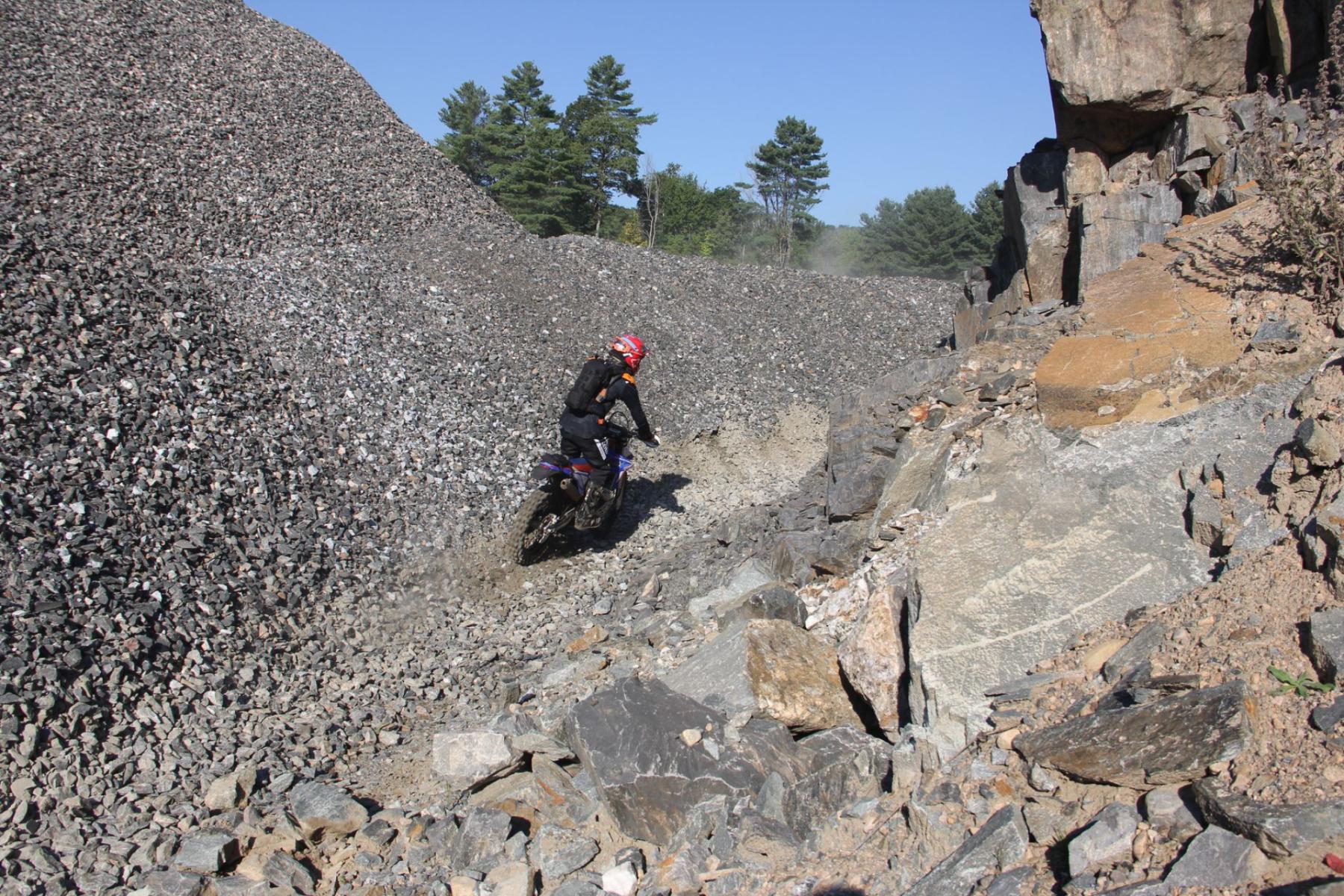
Sępia Góra or Bike Park Świeradów? The choice depends on whether you want to repeat a prepared line or read the terrain metre by metre. Natural enduro is not simply a more “hardcore” version of singletrack. It means riding a section where roots, rocks, ruts, changing trail width and gradient force you to make your own decisions—often without a single obvious line through.
That is precisely why Sępia Góra should not be treated as a local adrenaline ranking. The key question is not “where is it hardest?” but “can I read the terrain before I enter its most difficult section?” If the answer is “not yet”, a prepared singletrack, a technical skills section or a trail accompanied by an instructor will be a better place to learn.
Natural trail, enduro, singletrack and bike park—four different riding languages
In conversations about mountain biking, these terms are often used interchangeably. In practice, they describe different levels of terrain preparation, logistics and responsibility.
- Natural trail follows the existing contours of the land. It may be cleared and marked in places, but it does not necessarily have a consistent width, even surface or repeatable corner geometry. Its character changes after rain, forestry work and the winter season.
- Enduro trail is usually a downhill section whose difficulty results from a combination of gradient, obstacles and the need to choose a line. It may run through natural forest, along a prepared trail or within a complex with its own signage. The word “enduro” alone, however, does not guarantee a particular level of difficulty.
- Singletrack is a narrow, prepared trail, usually with a predictable course and a clearly indicated direction of travel. In the Single Track Świeradów-Zdrój system, the trails are presented as one-way, and the operator states that the entire complex on the Polish and Czech sides extends for more than 80 km. Most of the trails are around a metre wide and have a hardened surface[4].
- Bike-park line is part of managed infrastructure. It has a designated start and finish, signage, rules of use and—depending on the facility—access to a lift or gondola. Bermed corners, rollers, tabletops and jump sections allow riders to repeat specific features and practise them in more predictable conditions.
This distinction has practical significance. A trail colour used for a singletrack does not automatically translate to a natural descent. Likewise, a bike that performs brilliantly on a flowing loop may require a different setup and greater caution on a rocky, wet section of Sępia Góra.
Sępia Góra: natural terrain instead of a ready-made product
Sępia Góra rises directly above Świeradów-Zdrój and is a popular destination for walks and local mountain biking[6]. For enduro riders, however, the most important point is that it is home to a complex of natural trails developed and marked by the local community. The current map prepared by the Naturals hosts shows the main downhill lines and the access route, while its description clearly highlights roots, rocks, rock gardens and the natural character of the area.
This is not terrain smoothed out for a single speed. On one descent, you may find a section that lets you build speed smoothly, followed a few metres later by a rocky step, a track carved up by water or a corner where the width of the line narrows from two metres to one. The rider is not given a ready-made answer here. They have to find it for themselves.
Świeradów also has genuine enduro infrastructure, rather than just a marketing label. The town has published information about Enduro MTB Series competitions, guided rides and training sessions prepared in cooperation with the IzerRiders team[1]. This is important context: legal natural trails are not created simply by uploading a track to an app. They require agreements, signage, a host and users who respect the established rules.
Legality begins with a specific section
The most common mistake is to equate a visible path with a route that cyclists are allowed to use. In a forest, it may be an old footpath, a service road, a trail created by erosion or a line worn in by riders. None of these facts in itself means that cycling is permitted.
At Sępia Góra, your points of reference should be the current map prepared by the Naturals hosts, the signage on the ground and the latest statement on conditions. If an app shows a track that is not on the information board or leads through a closed section, follow the signage and the manager’s notice—not a GPS recording from the previous season.
You also need to distinguish the status of the trail from the status of the forest through which it runs. The Świeradów Forest District advises avoiding areas where forestry work or hunting is taking place, as well as sections marked with restrictions or a prohibition on entry[2]. Closures may be imposed for safety reasons, rather than because of the cycling trail itself. After strong winds, during felling operations or while a road is being repaired, even a familiar route may temporarily become inaccessible.
A good example of how variable such conditions can be is the Forest District’s notice of 3 September 2026: part of the green trail in the Lasek forest range was temporarily closed because of repairs to a fire road, with a diversion designated until 30 November 2026[3]. This notice does not mean that Sępia Góra is closed. It does, however, show why you need to check current updates, boards and signs before riding, rather than assuming that the situation from your previous visit still applies.
Do not shorten the line. Do not build your own variant across the forest floor. Do not enter a section marked as closed simply because the descent looks appealing. Responsibility for natural enduro also includes what you choose not to do.
How to read the terrain before a descent
A natural descent should be assessed before you set off. It is worth stopping at the start of a more difficult section and identifying not just the obstacle, but the entire sequence: the braking point, the point where you enter the corner and the direction of the exit.
Roots
A root is not difficult merely because it protrudes from the ground. The problem may be its angle relative to your direction of travel, its wet surface or its position immediately before a corner. On wet ground, heavy braking on roots can instantly rob you of traction. It is better to reduce your speed beforehand, then ride over the obstacle itself with relaxed arms and a stable position.
Rocks and rock gardens
A rocky section does not always require the fastest line. Sometimes it is better to choose a slower but smoother track than to attempt to ride straight through the largest rocks. Look at the exit from the section, not only at the stone directly in front of your front wheel. If you cannot predict where the rear wheel will land, getting off the bike is a sensible technical decision, not a failure.
Ruts
A rut can guide a bike like a rail, but it can just as easily catch a pedal or push the front wheel sideways. First assess whether you can get out of it before the corner. If not, maintain a calm position and avoid any sudden turn of the handlebars. In a deep, wet rut, getting through may require more strength than the gradient alone would suggest.
Trail width
A narrow section changes the rules of movement. There is no room for safe overtaking, and stopping in the middle of the trail can create a hazard for anyone riding behind you. If you have to stop, look for a wider spot and make sure you are visible. Before a blind corner, assume that a pedestrian, another cyclist or a forestry worker may appear from the opposite direction.
Steepness
The most deceptive sections are those that look short and easy. A short, steep drop ending in a tight corner requires preparation before you enter it: the right body position, the correct focus for your gaze and control of your speed. If you only start braking halfway down the slope, the decision was probably made too late.
Who is Sępia Góra for?
Your level is best judged not by the name of your bike, but by your skills and your margin of control. “I have an enduro bike” does not mean that I am ready for every natural descent. Similarly, a trail bike may be enough for many sections if its rider can choose an appropriate line and speed.
Beginners
If you are only just learning to ride beyond an even trail, Sępia Góra should not be your first technical descent. Start with a prepared singletrack or a skills section. Practise braking with one and both brakes, riding in a standing position, looking ahead of the front wheel and turning around safely on a slope. On natural terrain, you must be able to stop without panicking.
Intermediate riders
This is the group for whom Sępia Góra can be a valuable test—provided they ride with a margin for error. You should be able to recognise when to back off, walk a section and remount in a safe place. Do not assume that every line visible in the forest will have the same level of difficulty. The Naturals hosts describe the main descents as requiring at least intermediate technical skills.
Advanced riders
An experienced rider does not have to ride fast. Their advantage lies in reading the terrain early, changing lines smoothly and knowing when to abandon a move that does not provide enough control. Sępia Góra rewards not bravado but precision: choosing a line that allows you to keep your speed under control even when the surface changes halfway down the descent.
Sępia Góra versus Singletrack Świeradów and the bike park
Singletrack is the best place to build flow. One-way traffic, a defined width and a prepared surface allow you to focus on body position, corners and brake control. The operator of Single Track Świeradów-Zdrój also stresses that the difficulty can be adjusted through riding speed[4]. This does not mean that singletrack is without challenges. It simply means that the terrain usually provides more information and fewer unpredictable changes.
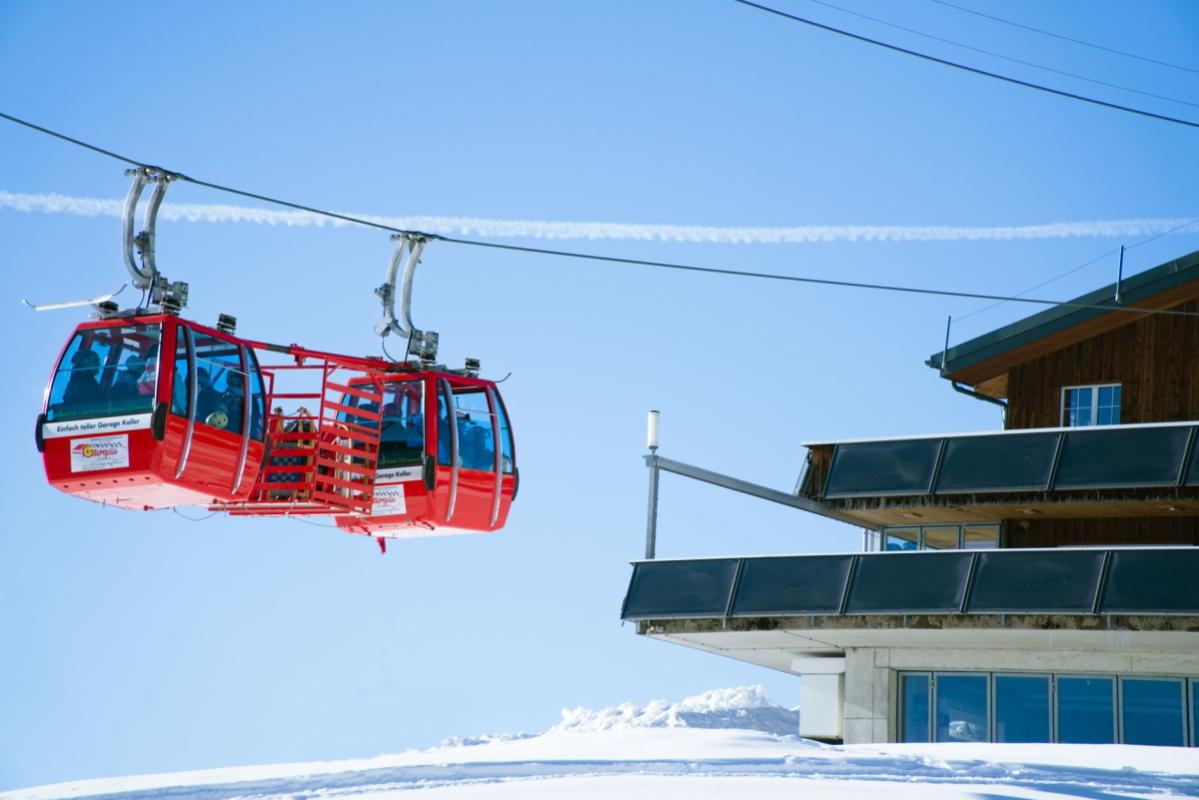
A bike park goes even further towards repeatability. Marked lines, a managed facility and access to uphill transport make it easier to complete many descents in a single day. It is a good environment for practising berms, compressions, jumps and braking before specific sections. However, you should check the gondola’s current operating hours, the rules for transporting bikes and trail availability with the operator before arriving; seasonal infrastructure may operate according to different rules from forest trails.
Sępia Góra demands a different kind of attention. You are not riding from obstacle to obstacle according to a scenario prepared by a designer. You read the surface, observe braking marks, anticipate water running down the slope and remember that after several days of rain, a natural section may have completely different traction.
Equipment and a day plan without unnecessary heroics
For natural enduro, you need a bike in good working order, not necessarily the most expensive one. Before setting out, check the brake pads and rotors, tyre pressure, suspension operation, axle tightness and the condition of the drivetrain. Take a spare inner tube or repair kit, a pump, a multitool, a phone with a charged battery and a map that is also available offline.
A helmet is essential. On rocky terrain, a full-face helmet, gloves and knee and elbow pads are a sensible choice, especially if you do not know the area. Glasses help protect your eyes from branches and stones thrown up by the wheel. Your backpack should have room for water, a light waterproof layer and basic first-aid supplies.
Do not ride alone if you are only just getting to know the terrain. Before setting off, agree where you will wait after more difficult sections, who is carrying the tools and how you will respond in the event of an accident. The person at the back should not be hurried, while the person at the front must remember that disappearing around a corner does not mean the section ahead is safe.
In the event of a problem, the most important things are your exact location and a calm assessment of the situation. A recorded track, the name of the section, a forest compartment number or a distinctive junction can shorten the time it takes for help to arrive. The Świeradów Forest District recommends using forest maps and location features, as getting lost or accidentally leaving the designated route is one of the real hazards in a large forest complex[2].
If you want a prepared line, choose the Bike Park. If you want to learn to read roots, rocks, ruts and steepness, choose Sępia Góra—but only after checking the current signage and conditions. Natural enduro begins not with the hardest descent, but with the decision that you will ride each part of it only when you genuinely know what you are doing.