One Base, Different Ambitions: How to Plan a Sporting Trip to Świeradów-Zdrój for the Whole Group
A shared trip does not require everyone to have the same level of fitness or follow an identical daily schedule. Świeradów-Zdrój makes it possible to combine downhill skiing, cross-country skiing, MTB, singletrack trails, gentle walks and water-based recreation—provided the group agrees in advance on a base, meeting points and a return time.
Ski&Sun on Stóg Izerski and Singletrack Świeradów on Zajęcznik accommodate a shared trip in two different ways: the first centres the day around the gondola and ski slope, while the second allows you to choose a route according to ability and ride length[1][3]. This is an important distinction for a group in which one person is planning a full day of MTB or enduro, another is only just learning to ride forest trails, and the others would rather ski, train at an easy pace, take a walk or enjoy some time in the water.
There is therefore no need to find one activity for everyone. Instead, design the day so that the start, a check-in point and the evening are shared—not necessarily every kilometre in between.
Choose Your Base First, Then the Activities
The most common mistake when organising this kind of trip is to build the programme around a list of attractions. The group puts skiing, bikes, a swimming pool, a long route and a walk on the itinerary, only to discover later that each requires different equipment, pace and starting time.
A better order is the reverse. First decide where you will meet in the morning, where the group will split up and where everyone must return. Only then choose the specific activities.
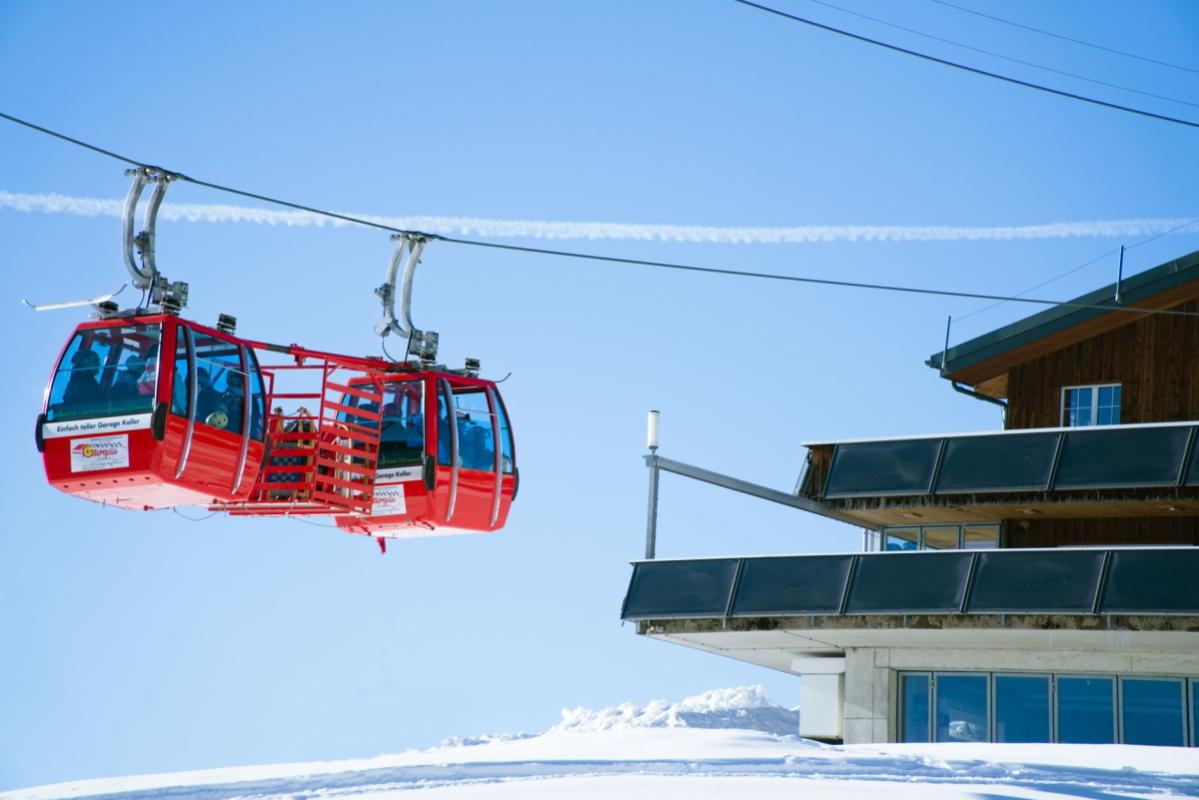
- A base close to the gondola’s lower station makes the day easier when some people are skiing, cycling or taking transport to Stóg Izerski.
- A base closer to the spa centre gives greater freedom to those who want to walk, make use of the spa facilities, linger over coffee or go to the swimming pool.
- A base with easy parking matters when you have bikes, pushchairs, skis and several cars. In a mixed group, moving equipment can take longer than the actual trail briefing.
You do not have to choose one meeting point for the entire stay. Two will be enough: a morning meeting point near your accommodation and an afternoon one in the lower part of town or by the gondola’s lower station. What matters is that everyone knows the address, the time and the fallback option should the weather or fatigue change the plan.
A Simple System for the Group
- Set one departure time, but allow individual subgroups to head in different directions.
- Set a return time independent of whether someone “has one more loop” or “is going to do one more run”.
- Use the group chat for check-ins: start, route change, break, return.
- Each subgroup should have a charged phone, a basic first-aid kit and its own return plan.
- Do not leave transport arrangements until the end of the day. With bikes and winter equipment, agree in advance who will drive, who will collect people and where it is safe to park.
This is not bureaucracy. These small arrangements are precisely what ensure that the person embarking on a six-hour route does not feel pressured to return after two hours, while a beginner is not left without a plan for the rest of the day.
A Winter Day: Stóg Izerski for Some, a More Relaxed Plan for the Rest
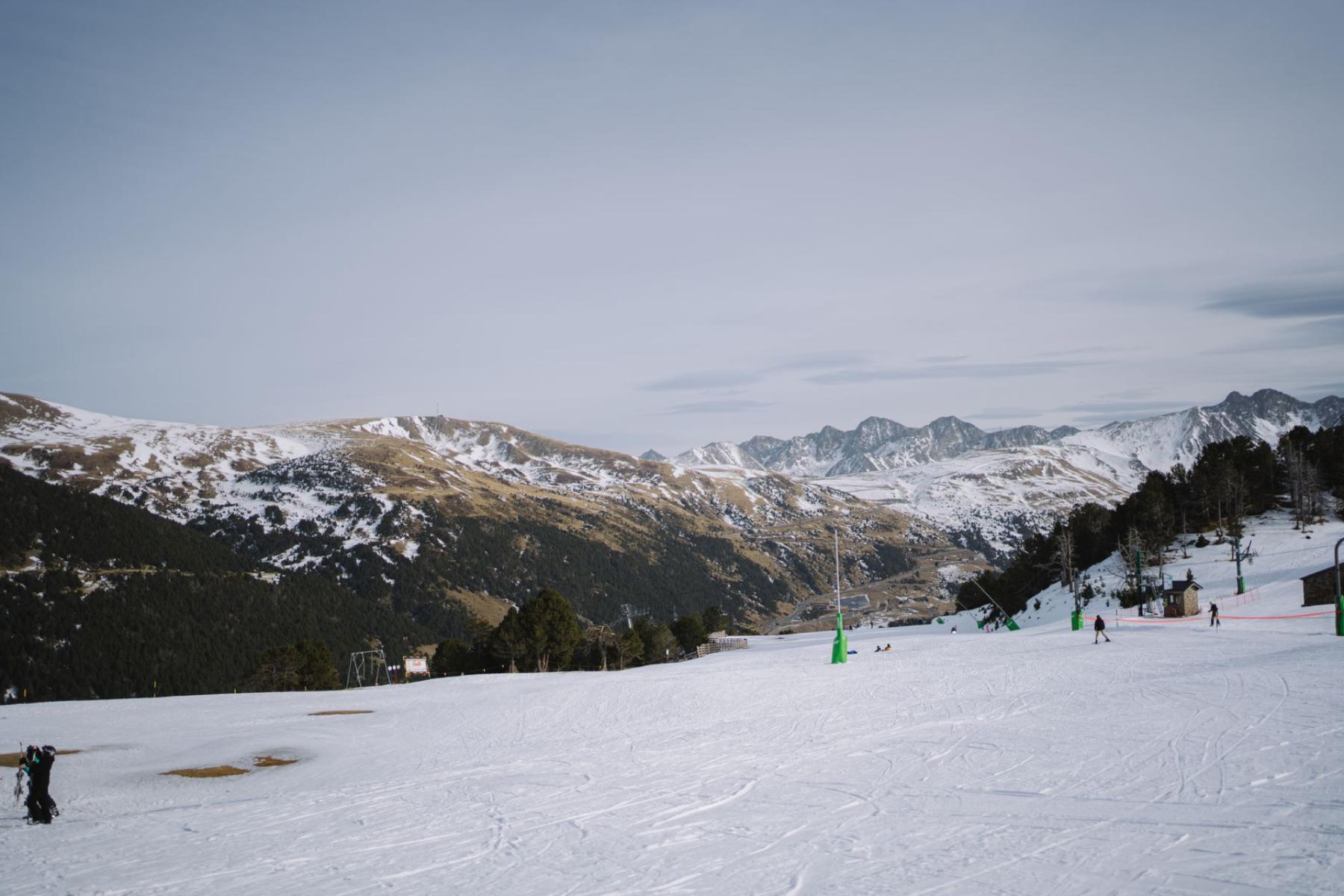
At Ski&Sun, the group can split up almost as soon as they arrive. The resort has a 2,500-metre ski run, three lifts and an average gradient given by the operator as 19%[1]. For confident skiers, this means being able to spend several hours on the slope without having to organise a separate excursion outside town.
Not everyone has to start on the main run, however. The resort has a KidsZone with a conveyor belt and a short, 80-metre training run with a 12% gradient; the facilities are located by the gondola’s lower station and are intended for children and beginners[2]. It is a good option for anyone who wants to find out whether skiing or snowboarding is really for them, without committing to a full day.
In practice, a winter split might look like this:
- Advanced group: start on the main run, set your own pace, take a pre-arranged break and return before the agreed time.
- Beginner group: take a lesson or practise in the beginners’ area, then decide whether to continue skiing.
- Non-skiers: walk around the spa, enjoy an unhurried stay in the centre, book treatments or choose indoor recreation.
- Cross-country skiers: choose a route only after checking which sections have been prepared and are accessible that day.
If your plan includes a longer cross-country option, do not treat it as a “quick” activity. The town’s official tourist guide describes the Izerski Szlak Cietrzewia as a route leading from Stóg Izerski through Polana Izerska, Chatka Górzystów and Orle towards Jakuszyce; the full route is 19.5 km and is divided into sections[5]. For some participants, this will be a full sporting day; for others, decidedly too much. That is why the meeting point should be lower down, rather than at the end of a long trail.
In winter, a return plan is particularly important. The gondola’s operating hours, trail conditions and any potential technical breaks should be checked directly before setting out. Do not arrange to meet “at the upper station” without agreeing what will happen if one person comes down early while another decides to take a few more runs.
A Cycling Day Without a Mandatory Shared Pace
In the summer version of the trip, the easiest way to split the group is by riding style. For advanced riders, you can plan Bike Park Świeradów and downhill routes in the Stóg Izerski area. Beginners will be better served by easier sections of Singletrack Świeradów or a short skills session before setting off on a loop.
The singletrack trails are not one route with one level of difficulty. The town’s description of the network distinguishes four grades: green, blue, red and black. Green sections are wide and gentle, blue ones are described as technically easy, red sections are intended for more experienced cyclists, while black trails include more difficult features, such as riding along a slope and crossing wooden bridges[3]. The routes are natural, predominantly one-way trails, and their maximum gradient is described as 5%.
This classification makes it possible to plan a day in which everyone does something suited to them:
- Shared warm-up: a quick check of the brakes, derailleurs, tyre pressure and riding position.
- Beginner training: a few simple exercises in braking, turning and riding over uneven ground.
- Split up: advanced riders head to the Bike Park, while beginners choose a green or blue Singletrack option.
- Meet after the first loop: only then decide whether anyone wants to extend the route or finish riding.
Singletrack Fun Park may be a good place for the first exercises. The town’s official description lists 31 wooden obstacles arranged in three lines—for children, a standard version and more advanced riders—as well as a dirt track, bike rental and a bicycle service centre[4]. It is no substitute for a mountain trail, but it allows you to assess whether a beginner feels comfortable on a bike before heading into the forest.
It is also worth separating expectations around equipment. Someone riding an easy singletrack does not need the same bike or kit as a participant choosing enduro descents. The shared minimum remains unchanged, however: a helmet, gloves, a spare supply of water, a phone, a basic repair kit and clothing that protects against rapidly changing weather.
Do not assume that a more experienced cyclist will make a good guide for a beginner simply because they know the route. Their pace may be too fast, and their approach to assessing risk entirely different. It is better for a beginner to have a calm riding partner who will not accelerate on every section.
A Family Option: A Long Route, a Short Walk and Water
Families and multigenerational groups need not so much one attraction as several activities of different durations. A long bike ride for one part of the group can be combined with a more relaxed plan on Zajęcznik, a walk around the spa or some time in the water.
Zajęcznik is a good choice for people who want to stay close to town but are not interested in an all-day route. In the town’s official materials, it appears as an area with a forest educational trail, while the cycling network in this part of the Izera Mountains makes it possible to choose a shorter, gentler option rather than immediately planning an ambitious loop[5]. With children, it is worth agreeing on a time rather than a distance: for example, walking to a particular point, taking a break and returning before lunch.
In summer, a water-based alternative in Świeradów-Zdrój itself is Basen Miejski SALAMANDRA. The facility has a recreational and swimming pool, as well as a shallow children’s pool with a slide[6]. This is a practical solution when part of the group wants to rest after a short walk while others are only returning from a longer route. Just make sure to check before setting out that the facility is open on the planned date and what the current rules of use are.
If you are planning a trip to Zalew Złotnicki, treat it as a separate version of the day rather than a quick last-minute substitute. Water means additional transport, different equipment and usually a longer stay than an ordinary walking break. Ideally, the water-based subgroup should have its own car or a clearly agreed return arrangement.
An Example of a Family Day
- Morning: breakfast together, followed by a split into two groups.
- Before noon: a long bike route for the adults and a short educational walk for children or older family members.
- Midday: meet at the agreed point, have lunch and decide whether to continue.
- Afternoon: swimming for those who want it or a relaxed walk around the spa centre.
- Evening: dinner together, without keeping score of who covered the most kilometres.
This arrangement also works for corporate trips. The shared activity can be shorter, with the remaining time left to individual subgroups. Some will choose sport, others relaxation, but everyone will still be taking part in the same trip.
Weather and Equipment: Your Backup Plan Must Be Ready Before You Leave
A backup plan should not be created only once it starts raining. In the mountains, not every activity can simply be postponed by an hour, and cycling routes may require checking current notices and trail-surface conditions. The Singletrack regulations remind users that they are responsible for their own safety, should check the bike’s technical condition and exercise caution on their first ride along an unfamiliar section[3].
Before each day, prepare three versions:
- Plan A: an activity in line with the trip’s main purpose.
- Plan B: a shorter route in the same part of town, without any pressure to achieve a result.
- Plan C: a walk, swimming pool, spa facilities or a quiet day in the centre.
In changeable weather, equipment should be assigned to a person, not to a car. Each participant should bring their own waterproof layer, dry clothes to change into and something to eat. For cycling, spare brake pads, a pump, an inner tube or a repair kit are useful; in winter, bring spare gloves, goggles and a dry layer to put on after riding.
Do not plan activities right up to the last minute. If one group finishes at 3 p.m. while the other “may be back around 5 p.m.”, a shared dinner can quickly turn into a waiting exercise. A safer rule is to finish the sport earlier than ambition suggests, leaving a margin for changing clothes, transport and unforeseen stops.
Two Maps, One Trip
Świeradów-Zdrój is well suited to trips for people with different needs precisely because activity here does not have to be one-dimensional. The gondola, ski slope, Bike Park and singletrack trails provide a base for those who want to train. The spa centre, Zajęcznik, swimming pool and gentler routes allow people who prefer less exertion or need a restorative day to join the trip as well.
So do not begin by asking: “What are we all doing?” A better question is: “Where and when will we be together again?” Once the answer is specific, one person can spend the day on an MTB, another can calmly learn to ride singletrack trails, a third can choose cross-country skiing and a fourth can relax by the water. A shared base does not mean a shared route—it means being able to return to the same place without giving up your own ambitions.