More fun without a car: skiing, cross‑country, singletracks and water — an active day from Świeradów‑Zdrój without a car
Świeradów‑Zdrój is a base from which you can assemble a whole day of activity using only public transport and your own legs/wheels. This is a guide to the rail and bus hubs, trail connectors, the gondola to Stóg Izerski and the peaceful waters of Zalew Złotnicki — complete with practical packing schemes and contingency plans.
The first scent after stepping off the train is resin. The second is wet duff and the chill of a stream. In Świeradów‑Zdrój and on the Izera side of the ridge, a day is made up of the whisper of tires on pine litter, the clack of poles on packed snow and the soft rumble of a gondola gliding over the spruces. And one thought that puts the logistics in order: you really can do more without a car.
Core of the day: train to the ridge, gondola to the ridge, wheels into the valleys
The backbone of the plan is the rail. In the morning take the train to Szklarska Poręba Górna or further — to Polana Jakuszycka (Jakuszyce station). This section, known as the Kolej Izerska, leads straight onto the ridge and on into the Czech Republic; for years it has provided easy access to cross‑country and cycling routes without the need to fire up an engine[3]. From Jakuszyce you can turn into the forest for cross‑country skis or saddle up for gravel tracks, and in the afternoon — via forest lanes and town singletracks — ride down to Świeradów.
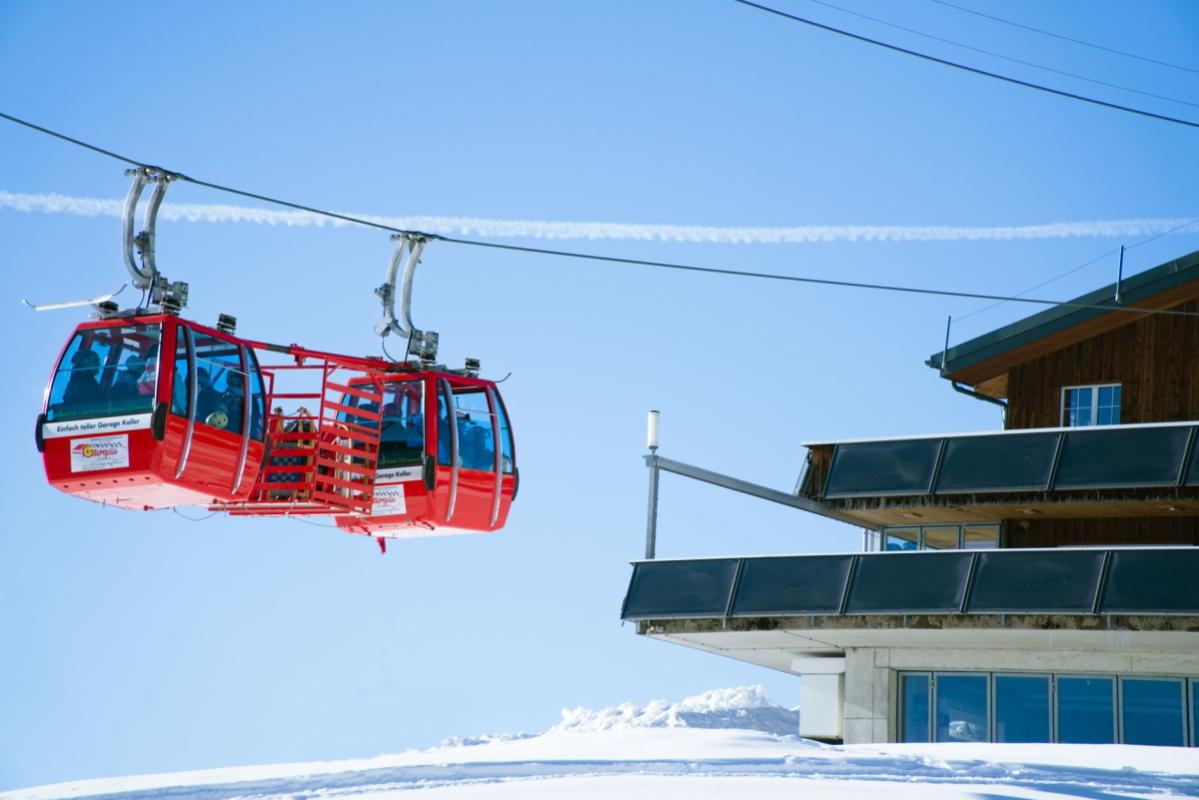
In town another key waits: the gondola to Stóg Izerski, which in summer carries a bike in the cabin at no extra charge with a tourist ticket[1]. From the upper station you can choose quick downhill loops and natural trails around the summit; in winter — walk in boots to the mountain hut or slide down on skis toward the town, following the marked descent route. After an active afternoon you close the loop: by bike or local bus you return to Szklarska Poręba Górna and then take the train home. This rhythm works in every season.
Morning: by train to the trails, straight onto snow or gravel
Szklarska Poręba Górna and Polana Jakuszycka — rail access to the mountains
The morning train from the lowlands reaches Szklarska Poręba Górna; beyond, toward the border and Harrachov, runs the Kolej Izerska with a stop at Jakuszyce. This is the most convenient access to the ridge and to the Izera clearings and peatlands — in practice to the start of cross‑country tracks in winter and long easy gravel roads in summer[3]. Practical tip: plan your morning so you have a 10–15 minute buffer after getting off to check conditions (apps, station boards). Mountain trains have their own rhythm, but also their temperament.
The last mile to Świeradów — bike connectors and ER‑2
After time on the ridge it’s time to fold back to base. The natural corridor is the upper Kwisa valley and a system of forest roads that make it easy to ride toward the spa town. Treat the Euroregional Cycle Route 'Liczyrzepa' ER‑2 as the region’s bike spine — in municipal planning documents it’s marked and considered a route linking Świeradów with the neighbouring valleys[4]. It’s a convenient "last kilometre" to the gondola, to your guesthouse, to the station.
An energy‑saving option: if after the morning train and a loop on the ridge your legs are feeling it, ER‑2 lets you pedal smoothly, without steep climbs, to the lower gondola station or the centre. It’s also smart to plan stops at nodes with shops and drinking spots — you’ll find them within easy reach in Świeradów.
Midday: the gondola to Stóg Izerski — by bike in summer, by skis in winter
Summer: bike in the cabin, at no extra charge
You board and go. A bike is simply part of your luggage — the summer rules explicitly state that carrying bikes (as well as strollers, hand luggage, dogs muzzled and wheelchairs) is free[1]. Cabins take bikes without gymnastics: take off your gloves, open the door, set the wheels parallel to the seat, hold the front brake with your fingers. Windy day? Choose a seat away from the edge and prop the frame with a backpack. And remember courtesy: it’s a short ride and the comfort of fellow passengers is as important as yours.
Winter: one set of equipment and… peace
The winter rules are just as clear: you may carry one set of winter equipment in the cabin, and small items — up to 10 kg — as hand luggage. In strong winds children’s skis or snowboards should be carried inside the cabin rather than on external racks, which improves safety[2]. From the upper station it takes a few minutes to reach the Schronisko PTTK on Stóg Izerski — you can drink tea literally on the edge of an Izera clearing. When the frost bites, you’ll hear the wood sing.
Routes from the upper station: short and characterful
In summer you have two schools of thought: quick downhill loops around the Świeradów Bike Park and slower natural lines that bring you back toward town. The latter option is ideal for an afternoon — the descents smell of damp moss and the light lies in low streaks between trunks. In winter — if you ride with children — choose calm descents to the lower sections and stick to the prepared route; the evening light on the spruce arms supplies the rest of the atmosphere.
Afternoon: return unhurried
When your muscles have had enough, return to Szklarska Poręba Górna by bike (a comfortable descent on forestry roads) or by local bus, and then by train. The most elegant day looks like this: a morning train to the ridge, midday on the gondola and the trails around Stóg, and after 4pm a return to the rail hub — again without a car. If you’ve still got energy, add a short walk along the spa promenade: in the evening the spa house smells again of resin and wood.
A day on the water: Zalew Złotnicki calm and quiet
When the mountains rest in the clouds, switch to water. Zalew Złotnicki on the Kwisa is nearby, and its shores reward the patient — the murmur of waves against stony peninsulas, a single sail, sometimes the splash of a diving bird. Motorboats powered by combustion engines are prohibited on the reservoir, with specific exceptions for services, fishers, tourist boats and authorised training — which makes this a friendly basin for SUPs, kayaks and quiet sailing[5].
How to get there without a car? Most simply by bike — down the Kwisa valley, taking low‑traversing roads with gentle gradients. If you choose a bus or taxi, arrange with the rental or base on the water so the driver knows where to drop you off safely with boards or paddles. After launching, keep away from the dam and no‑entry zones. When the wind dies, you’ll hear everything: a woodpecker in the shore woods and the splash of water against a hull.
Singletrack Świeradów and ER‑2: the region’s cycling spine
The local network of forest trails has one shared advantage: their "natural" rhythm doesn’t tire beginners, yet doesn’t bore advanced riders. Flowing turns, ramps with decent radii, rollers, boardwalks over wetlands — plus many options to link loops into something that will nicely fill an afternoon after riding the gondola. It’s worth thinking of this layout more broadly: as a "last mile" system that allows safe, logical movement between the railway station in Szklarska Poręba, the gondola in Świeradów and the border valleys.
In that sense ER‑2 'Liczyrzepa' works like a bike rail. In Świeradów’s municipal planning you’ll find this marking explicitly — it signals that the route is meant to connect the town with the region and help reach the main nodes[4]. In practice this means: clear directions, good surfaces and easy shortcut variants. It’s a recipe for a day without traffic jams, crowded car parks and expensive access fees to resort centres.
Car‑free logistics: how to approach it step by step
Planning transfers (without stress)
- Sketch an "hour‑by‑hour" plan: when you want to be on the ridge; when you’ll take the gondola; when you’ll descend to town; which train you aim for on the return. Build in margins — 10–15 minutes for each transfer.
- Choose a morning train to Szklarska Poręba Górna (or to Jakuszyce) and return via the same station in the afternoon. For years it has been the most reliable hub for active travellers thanks to the Izera line up to the ridge[3].
- A water day plan should be arranged the other way around: start with logistics for Zalew Złotnicki (call the rental or launch place), then arrange arrival and return.
Smart packing (so you don’t fumble)
- Cross‑country skis and poles in a light carry bag with a shoulder strap — on the train and in the gondola you’ll then have free hands.
- For the bike: two cable ties (or a short bungee) to stabilise the handlebars in the cabin and a soft cover for the derailleur. In rain — a thin saddle "cover".
- Micro winter kit: warm gloves for putting on/removing skis at the gondola entrance, a neck tube and goggles in a pocket — boarding the cabin is quick.
- For the water: a waterproof phone pouch, a buoyancy aid and a thin line (handy at shallow slipways).
Combining activities in one day
- Winter: train to Jakuszyce → 2–3 hours of cross‑country on the clearings → descent (bus/bike) to Świeradów → gondola for sunset and a hot soup at the hut → return to the rail hub.
- Summer: train to Szklarska Poręba Górna → gravel on Izera forest roads → ER‑2 as the access to the gondola → 2–3 short descents from the upper station → a calm return to the train.
- Water: by bike down the Kwisa valley to Zalew Złotnicki → SUP/kayak (remember the quiet zone)[5] → return by bike to base or to the nearest rail hub.
Emergency scenarios: what if that bus or train doesn’t run
- Alternate route to the station: have in mind (or in offline navigation) a bike variant to Szklarska Poręba Górna. It’s a logical descent that works in almost any condition — without hair‑raising gradients.
- If the gondola stops (wind)? In winter the rules allow skis to be carried inside cabins, but if operations are suspended, walk down the nearest road to town and watch your return time[2].
- Plan B on the water: agree an earlier pickup window with the rental. If the weather turns, return via a shorter loop along the shore; remember the reservoir is a quiet zone with exceptions defined by local law[5].
Urban "nodes" and connectors that make the difference
- Schronisko PTTK on Stóg Izerski: a few minutes from the upper gondola station. An ideal checkpoint for the day — here you’ll decide whether to do another loop or descend for recovery.
- The lower gondola station: a natural gateway to the town’s singletracks and the ER‑2 "last mile." Around it you’ll find service points and a quick coffee before the next section.
- Szklarska Poręba Górna and Jakuszyce: the rail hub on the ridge — the start/finish for most day scenarios[3].
- Zalew Złotnicki: a quiet alternative for a windy or overcast mountain day; plan calm loops here and remember the rules that apply on the water[5].
A few rules that make a car‑free day
- Think in axes: train to the ridge → ER‑2 and forest lanes as connectors → gondola as the "lift" between the world of trails and the town.
- Keep the day’s rhythm: two intensities (morning and midday) plus one calmer return. It’s a formula that works for families and for advanced riders alike.
- Respect the rules: a bike in the cabin in summer is free, in winter one set of equipment and common sense in the wind[1][2]. On the water — quiet is a value protected by law[5].
The best thing about all this is that nothing is a race. When you close the day at the station you smell of forest, not exhaust. You come down with images: shafts of light between trunks, the smooth surface of the reservoir, the sound of gondola rollers that briefly drowns out your own breath. And with the thought that here logistics are not an end — they are a tool that lets you truly be in the mountains.