Sacred paths in Bad Flinsberg: churches, chapels and the spa's quiet places
In Świeradów‑Zdrój spirituality is woven into the spa's daily rhythm. This essay-guide leads from the neo‑Gothic Church of St. Joseph through the simple mass of the church in Czerniawa‑Zdrój to traces of the regional cult of St. John Nepomucene — protector of bridges and waters.
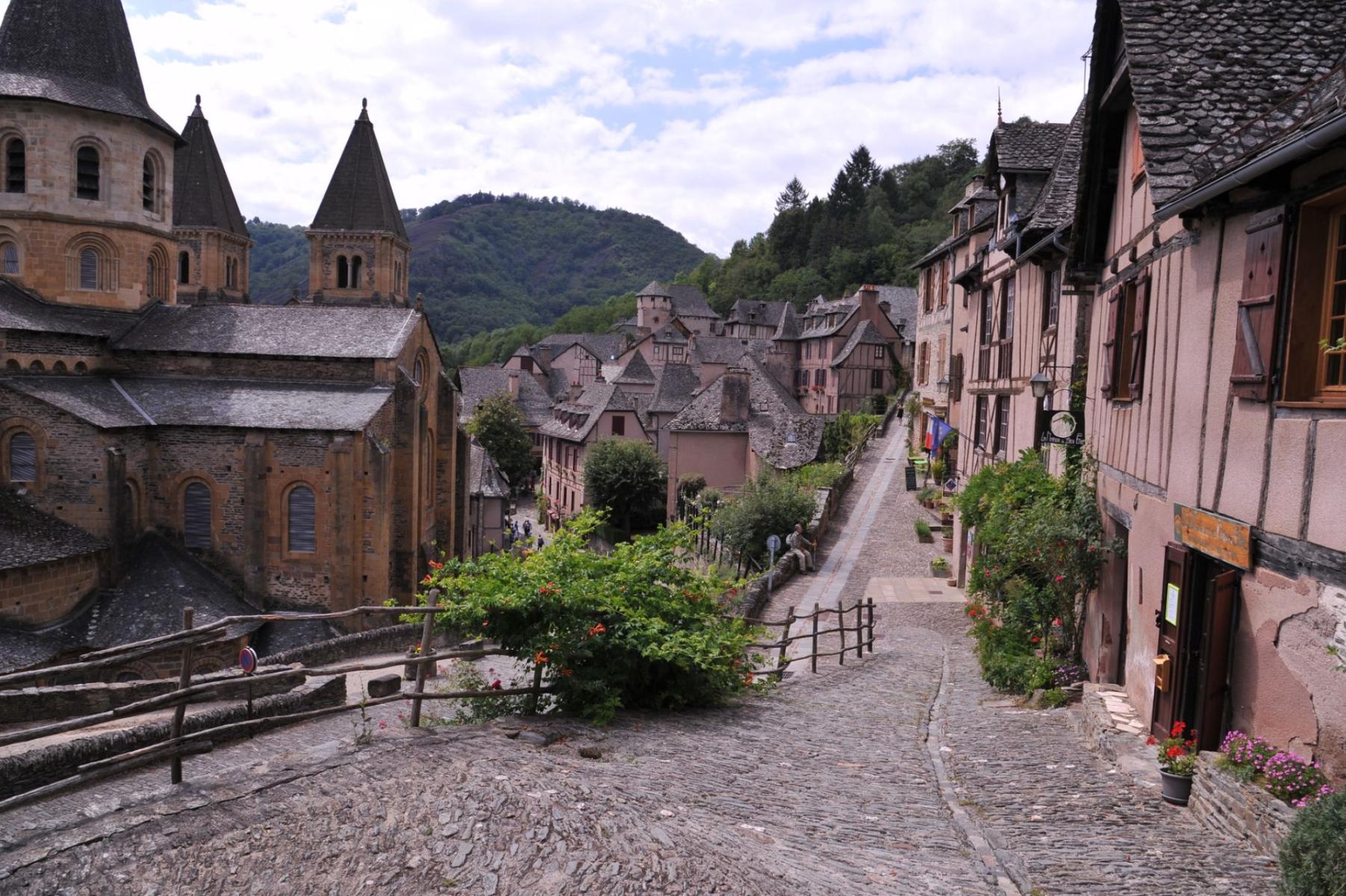
The first thing you hear in the morning in the spa town centre is the soft sound of bells mingling with the rustle of spruces and the click of footsteps on gravel paths. The town’s spa axis — park, pump room, guesthouses — has its focal points where the routine of the cure gains silence and breath. The sacred paths here are unobtrusive, woven into the landscape like ribbons of light between the red of brick and the green of tree crowns.
Church of St. Joseph: the heart of spa daily life
The neo‑Gothic Church of St. Joseph grows out of the fabric of the resort with a naturalness that surprises. The brick mass, soaring lines and two towers create a vertical accent on the skyline, but inside intimacy dominates: the warmth of wood, the shimmer of glass, the smell of wax. It is a parish church that for years has been visited not only by locals but also by spa guests; both often come straight from a spa walk, scarves still on their shoulders. ([de.wikipedia.org])
Today's church is the result of two phases. The older part was built of red brick at the end of the 19th century, in 1898–1899, thanks to the initiative of a countess of the Schaffgotsch family — the owners of the surrounding estates. Inside you will find four stained‑glass windows and a Stations of the Cross, and the main altar refers back to an earlier, smaller chapel, from which the tradition of invoking St. Joseph passed into the new church. [1] ([de.wikipedia.org])
The second phase was an expansion carried out in 1974–1978 to designs by architects Tadeusz Zipser and Waldemar Wawrzyniak. On 29 September 1979 it was consecrated by Bishop Tadeusz Rybak, firmly situating the church in the postwar spa landscape and its community. [2] Within these walls, shaped by the generosity of parishioners and visitors, one hears echoes of many seasons: people came for treatment, stayed for retreats, returned home with the memory of the organ’s voice. ([swieradowzdroj.pl])
Indeed, the organ is one of the discreet treasures here: the Schlag & Söhne instrument from 1899 gives a bright, carrying tone — in the small nave it sounds like a conversation, not a proclamation. If you happen upon a rehearsal or a short musical etude, sit at the back and listen to how the sound rebounds off the brick. [3] The details of craftsmanship also draw the eye: the design of the tracery, the chisel marks on wooden frames, the matte skull mirror on the Stations of the Cross. ([de.wikipedia.org])
Silence and light in Czerniawa: Church of the Exaltation of the Holy Cross
Czerniawa‑Zdrój breathes more quietly. Walking along Główna Street, you see a modest, single‑nave mass that does not compete with the greenery — it only highlights it. The Church of the Exaltation of the Holy Cross is simple to read, focused, as if made of silence. That form pairs well with the spa rhythm of the district: morning mist, the sounds of the graduation tower, the slow step of spa guests heading to the park. ([swieradowzdroj.pl])
The church was built in 1934–1937, and in 1986–1990 it was remodelled to suit the needs of a contemporary community. [4] That pragmatic touch is still audible in the space: light enters evenly, nothing distracts the eye, the materials whisper — brick, wood, stone. Inside, pay attention to elements of old Baroque altars moved from the old church in nearby Pobiedna — they are like the region's memory woven into a new arrangement. [5] ([swieradowzdroj.pl])
This is a church that "holds" the neighbourhood's axis without dominating the greenery and paths. In summer, with the doors ajar, you can hear from the nave the rustle of leaves and drops from the graduation tower; in winter a faint scent of incense lingers against the walls, perceptible even outside as you pass the fence and head toward the park. ([swieradowzdroj.pl])
Nepomucen: patron of bridges and waters — a Lower Silesian thread in the spa
St. John Nepomucene, guardian of confessional secrecy and advocate of people living by the water, has for centuries been the patron of bridges, rivers and travellers. From his figures you probably recognise characteristic attributes: a cross at the breast, the cassock and stars encircling his head. [6] In Silesia, where rivers could be capricious, the cult of Nepomucene naturally intertwined with everyday life — including spa life. ([en.wikipedia.org])
In Świeradów‑Zdrój the oldest tradition connected with this saint remains the spa chapel dedicated to him, built of larch wood in 1786 and serving guests for over a century. [7] Memory of that chapel survived in local stories and sources, as did a depiction of Nepomucene by Bernard Krause, which found its way to an altar — a trace of the region’s sensibility, where water heals and bridges connect. [8] ([swieradowzdroj.pl])
In nearby Czerniawa‑Zdrój — today a district of the spa town — the saint’s name also appears in old names of workplaces. In 1785–1787 the Schaffgotsch family exploited a small cobalt mine here called "Jan Nepomucen". [9] It is a detail, but a telling one: Nepomucen in this region was not merely a "landscape monument" but part of the language used to tell everyday stories. ([swieradowzdroj.pl])
Between the pump room and the nave: short routes of silence
This path often starts banally: a cup of water in the pump room, a bench in the park a moment later. From the resort centre to the Church of St. Joseph you can walk at an easy pace — along the way passing old spa houses and patches of greenery that, like frames, fix the gaze on the two towers. In the evening, when light settles on the brick, the sound of footsteps quiets sooner than usual. (Leave loud conversation for later; here it's nicer to listen than to speak.)
In Czerniawa‑Zdrój it’s worth doing a loop: the spa park, the graduation tower, the church. Sometimes activity in the park falls still — that half‑shade, the splash of water and the creak of benches create a natural space for a short prayer or a breath after treatments. Then a brief entry into the church interior, through a covered vestibule, as if passing a threshold between two daily rhythms. ([swieradowzdroj.pl])
For those who prefer a route of memory, a walk to the cemetery can be equally moving. The history of the Evangelical church and necropolis — with a now‑gone Baroque church dismantled in 1973 — teaches humility before time. The site is immediate: a few steps, a short reading of the plaques, a moment of silence. Afterwards you return to the spa bustle in a different way. ([swieradowzdroj.pl])
What you'll see inside (and how to look)
St. Joseph
- Stained glass and light. Four coloured glass windows bring soft, diffused light into the nave — in the morning it gives a rust‑coloured glow to the brick; in the afternoon it settles as gold on the wood. [1] ([de.wikipedia.org])
- The organ that speaks quietly. The Schlag & Söhne instrument (1899) is not monumental but is clear: when the principal sounds, you immediately feel the order of phrase in the small space. Sit at the back and listen to the pauses. [3] ([de.wikipedia.org])
- Craftsmanship. Up close you will see the handmarks on wooden frames and a slight asymmetry in details — traces of workshops that liked to combine precision with softness. (Don't "correct" these traces with a photographer's eye — let them be.)
Exaltation of the Holy Cross (Czerniawa‑Zdrój)
- Simplicity of the mass. The single‑nave layout and the calm rhythm of the walls help focus the gaze on the altar — this is where the light leads. ([swieradowzdroj.pl])
- Baroque echo of the region. Altar elements moved from the old church in Pobiedna add a note of historical warmth to this modest space. If you like details, look for the twisted small columns and gilding. [5] ([swieradowzdroj.pl])
Guest etiquette: how to be well here
- Enter as you would into someone's home: unhurried, phone‑free. In spa towns churches are part of a landscape where time flows more slowly.
- If you want to photograph, ask. Both churches host services and rehearsals, and sometimes individual prayers by spa guests.
- In summer carry a sweater — in the shade of naves and by stone walls the cool can be surprising.
Returning from these places, it becomes easier to understand what the spa once was: not only a stage for treatments but also a community of practices and signs that blend with everyday life. It is they who give walks rhythm and meaning — between the park and the nave, between the bench and the altar, between silence and the sound of bells. In Świeradów‑Zdrój the sacred paths are close. You only need to step off the main avenue and let them lead you.
Notes (selection):
[1] Construction of the older part of the Church of St. Joseph in 1898–1899; stained‑glass windows and Stations of the Cross.
[2] Expansion 1974–1978 and consecration on 29.09.1979 by Bishop Tadeusz Rybak.
[3] Schlag & Söhne organ (1899).
[4] Dates of construction (1934–1937) and rebuilding (1986–1990) of the church in Czerniawa‑Zdrój.
[5] Origin of altar elements from the old church in Pobiedna.
[6] The role of St. John Nepomucene as patron of bridges and waters, attributes.
[7] Spa chapel dedicated to St. John Nepomucene (1786).
[8] Painting of Nepomucene by Bernard Krause in the altar.
[9] "Jan Nepomucen" mine in Czerniawa (1785–1787).