After the Treatment, You Go Home: How to Maintain the Benefits of a Spa Stay
The most challenging stage of a spa stay begins after departure — when a doctor’s and physiotherapist’s recommendations must be translated into ordinary days, your own home and real-life possibilities. Find out what to take home from Świeradów-Zdrój and Czerniawa-Zdrój, how to continue exercising safely and which treatments should not be repeated without medical advice.
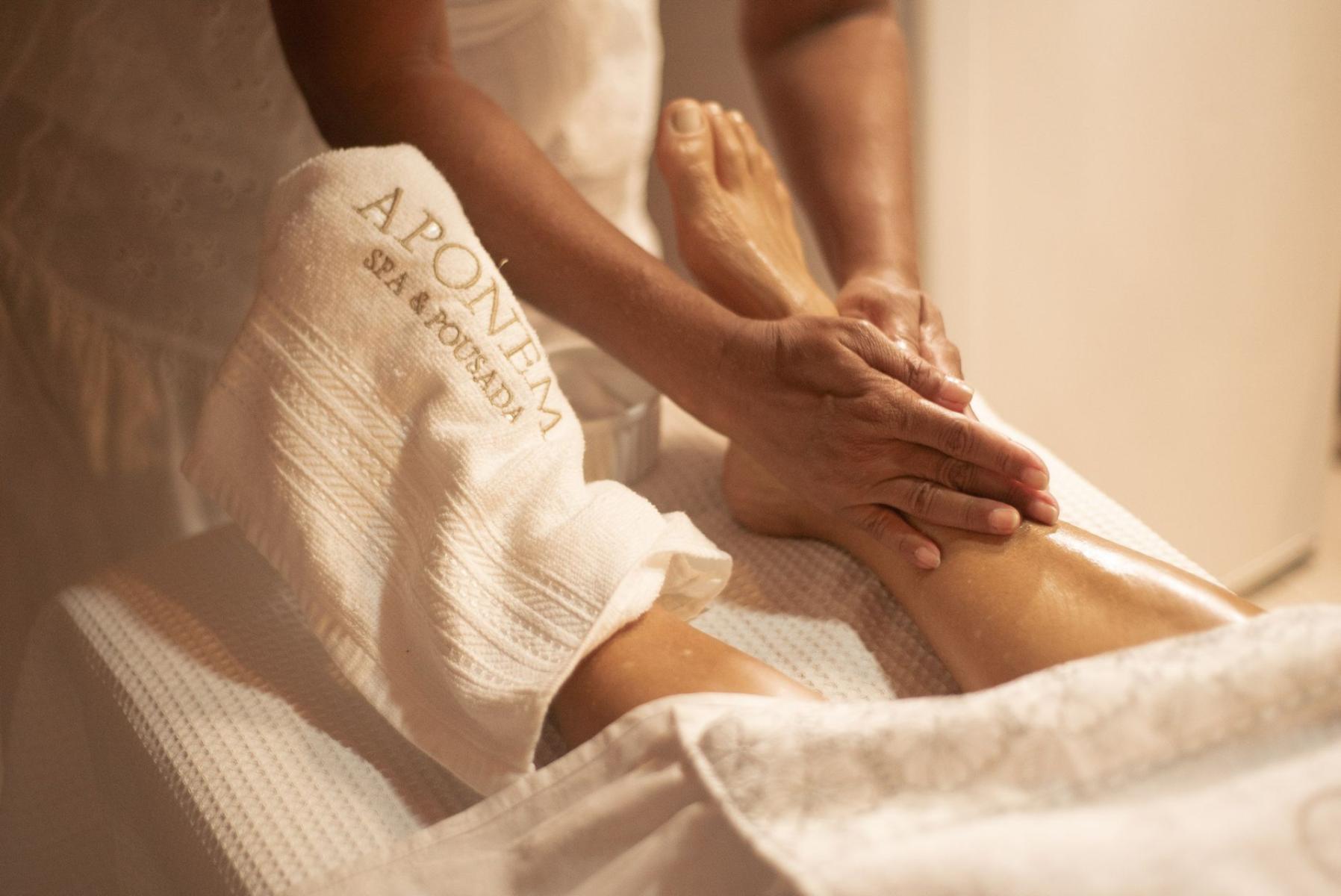
The most challenging stage of a spa stay begins after departure. At a sanatorium, the patient has a set schedule, access to a doctor and physiotherapist, and treatments take place in conditions designed for therapy; at home, they must decide for themselves what to continue, what to change and when to ask for help. This is precisely why the Ministry of Health describes spa treatment as a continuation of hospital or outpatient care, rather than as a separate, self-contained wellness episode[1].
In Świeradów-Zdrój and Czerniawa-Zdrój, a stay may draw on several different elements: physiotherapy, kinesitherapy, climate, hydrotherapy, peat therapy and local medicinal waters, including radon-bearing carbonated waters that also contain iron and fluoride[2][3]. Their roles, however, are not the same. An exercise prescribed by a physiotherapist can — once properly explained — be performed at home. A radon bath, drinking cure or peat treatment is not simply a hygiene routine to be replicated without thought after returning home.
A Spa Is a Stage of Treatment, Not a Promise of Permanent Recovery
The safest way to think about a treatment programme is as one stretch of a longer journey. A stay may help restore fitness after illness or injury, reduce symptoms, improve exercise tolerance or teach a patient exercises they had not previously performed. It does not automatically remove the cause of a chronic disease, nor does it mean that follow-up appointments with the treating doctor can be skipped.
This distinction is particularly important in conditions affecting the musculoskeletal system. Someone who can rise from a chair more easily after several weeks of exercise may conclude that the problem has been solved. In reality, improved fitness often requires continued work, and stopping activity after returning home can quickly undo part of the progress made. Conversely, someone who felt better after water treatments may overestimate their exercise tolerance and return too quickly to heavy work or long mountain routes.
It is worth distinguishing four concepts:
- spa treatment — medical care that uses, among other things, natural medicinal resources, climate and physiotherapy;
- physical rehabilitation — work on function, strength, range of motion, balance or independence;
- climatotherapy and moderate activity — time spent outdoors and movement adapted to the state of one’s health;
- wellness — relaxation and treatments that improve comfort but do not replace diagnosis, treatment or individual rehabilitation.
These elements may exist alongside one another, but they are not interchangeable. A relaxing massage is not the same as therapy prescribed after an injury, and a walk through the Spa Park does not replace stabilisation exercises if those are the exercises the patient was assigned.
Planning the Journey Home: What to Sort Out Before Leaving the Spa
The final day of a stay should not be devoted solely to packing. It is a good moment to gather recommendations in a form that can be used after returning home — including when the patient is a senior and the family is organising their ongoing care.
Before leaving, ask for clear answers to several questions:
- What was the main diagnosis or rehabilitation goal?
- Which exercises should be continued at home?
- How often should they be performed, and how can you tell that the load is too great?
- Is further outpatient or home physiotherapy needed?
- When should a follow-up appointment with the treating doctor take place?
- Have medication dosages been changed or additional tests recommended?
- Which symptoms should prompt earlier contact with a doctor?
Remembering the name of a treatment is not enough. Its purpose and limitations are more important for what happens next. If the patient performed exercises in a pool during the stay, they should know whether, at home, these are to be replaced with exercises on land, walking, balance training or rest. If they used pain-relieving treatments, it is important to establish whether the improvement makes it possible to increase activity, or merely reduced the sensation of discomfort temporarily.
It is worth keeping your own medical records together with a list of medications and test results. Patients have the right to access medical records concerning their health and the services they have received[5]. If the recommendations are illegible or it is unclear who is to take over ongoing care, it is best to clarify this before leaving, rather than waiting until the next appointment.
A practical approach is to prepare a single sheet of paper — physical or electronic — with three columns:
- continue: specific exercises, walks, medications and follow-up dates;
- modify: how you sit, lift weights, rest, sleep or organise your day;
- do not repeat independently: treatments requiring medical assessment, including procedures using medicinal waters.
This record helps prevent two common mistakes: abandoning everything after returning home and attempting to recreate the entire treatment programme without supervision.
Radon-Bearing Waters, Peat and Baths: Why You Should Not Copy the Treatment Programme
Świeradów-Zdrój makes use of natural medicinal waters with a specific composition. The spa describes its local carbonated waters as low-mineralised, bicarbonate-calcium-magnesium waters containing, among other elements, iron, fluoride and radon[3]. They are used for drinking cures, baths and inhalations. This does not mean, however, that everyone can independently determine the dose, frequency and method of using such water.
A drinking cure is not the equivalent of drinking ordinary mineral water throughout the day. Its composition, quantity, temperature and timing may matter for a particular patient, especially if they take medication or have diseases of the digestive, cardiovascular or renal systems. Medicinal water is not a dietary supplement. If a patient wants to continue the treatment after returning home, they should obtain individual advice from a doctor or medical professional familiar with their state of health.
Radon baths, inhalations, peat treatments and intensive water treatments should be approached in the same way. The fact that they brought relief during the stay is not sufficient reason to repeat them regularly. The National Health Fund stresses that spa treatment has a stimulating effect, and that some diseases may worsen under its influence[2]. Suitability is determined by the patient’s current condition, not by the memory of a successful stay several months earlier.
In practice, this means following a simple rule: a medical treatment should be continued only when it is clear why it is being performed, for whom it is safe and who is responsible for the ongoing assessment. Home baths in warm water may be relaxing, but they should not be presented as a substitute for a therapeutic bath. A wellness package may improve your sense of wellbeing, but it does not recreate the full programme conducted by a doctor and physiotherapist.
Exercise After Your Stay: Less Ambition, More Consistency
The easiest things to take home are those that have been demonstrated properly. Patients should be able not only to repeat a movement, but also to understand why they are doing it and which version to choose when they are not feeling their best. Exercises prepared by a physiotherapist should take pain, range of motion, balance, coexisting conditions and current fitness into account.
National Health Fund educational materials on independent exercise stress that they are intended for people ready to work at home, but do not replace an individual assessment of the patient[4]. A ready-made video from the internet may therefore provide inspiration, but it should not automatically replace the programme provided by a physiotherapist.
A good home plan is usually simpler than the patient expects. It may consist of several exercises performed in a safe position, short walks and breaks from prolonged sitting. If, after a stay in Świeradów, a patient wants to walk in the Spa Park or the Czerniawa-Zdrój Spa Park, they should treat the route as part of their activity, not as a test of endurance. For one person, a gentle walk on level ground will be appropriate; for another, several short walks throughout the day.
It is worth establishing with the physiotherapist:
- how many repetitions to begin with;
- whether to exercise every day or take rest days;
- how to reduce the range of motion when pain flares up;
- whether a chair, walking stick, resistance band or light weight may be used;
- when to stop exercising and contact a specialist.
The most common mistake is trying to make up for lost time. A patient returns feeling better, performs the entire routine at high intensity for several days, then gives it up because of pain or fatigue. A safer approach is to choose an amount that can also be repeated on a weaker day. It is helpful to keep a brief record: which exercises were performed, how the body responded and whether symptoms worsened the following day.
Family members can help organise the space, remind the patient about exercises and get them to appointments. They should not, however, change the programme themselves or encourage a senior to push through pain. A carer’s support should increase safety, not replace the physiotherapist’s judgement.
When to See a Doctor Instead of Waiting for Another Spa Stay
After a treatment programme, it is easy to attribute any deterioration to travel fatigue or a “reaction to the treatments”. New or clearly worsening symptoms should not, however, be ignored simply because the stay has recently ended. These include increasing pain, a clear deterioration in walking, new balance problems, shortness of breath, fainting or neurological symptoms. In such situations, contact with a doctor is needed; in the event of a sudden emergency, seek urgent medical assistance.
A follow-up appointment does not necessarily mean that the treatment programme has failed. It may be used to assess whether the improvement is lasting, whether exercises need to be changed, medication adjusted or further rehabilitation planned. If a patient still requires rehabilitation, the system provides for outpatient rehabilitation and, in certain situations, home physiotherapy as well[6]. A spa stay should not be treated as an alternative to these forms of care, but as a complement to them.
At the next consultation, it is worth bringing the discharge summary, a list of treatments and your own notes from the first few weeks after returning home. The doctor will then receive more than the general statement that “things were better”; they will also learn how long the improvement lasted, which exercises could be performed and what caused difficulties.
Do not stop taking medication or change its dosage on your own, and do not replace a follow-up appointment with another spa stay. If improvement makes greater activity possible, increase it in line with recommendations, not according to a friend’s programme, an advertisement or a previous treatment course. The body does not respond in the same way during every phase of an illness or at every level of fitness.
The most challenging stage really does begin after departure — not because the stay was insufficient, but because this is when its benefits must be translated into everyday decisions. Three clearly recorded exercises, a follow-up date, a sensible amount of movement and an understanding of which treatments must not be repeated without consultation may mean more than the promise that a single treatment programme will solve the problem forever.