A Place to Stay That Understands Bikes: How to Choose a Truly Bike-Friendly Base in Świeradów-Zdrój
A good cycling accommodation is more than a covered bike rack: it is the entire logistics of the day—secure storage, washing, drying, e-bike charging, breakfast before departure and help in case of a breakdown. This guide explains how to assess a property in Świeradów-Zdrój, understand the Bike-Hotel, Bike-Point and Bike-Partner designations, and choose a base suited to your riding style.
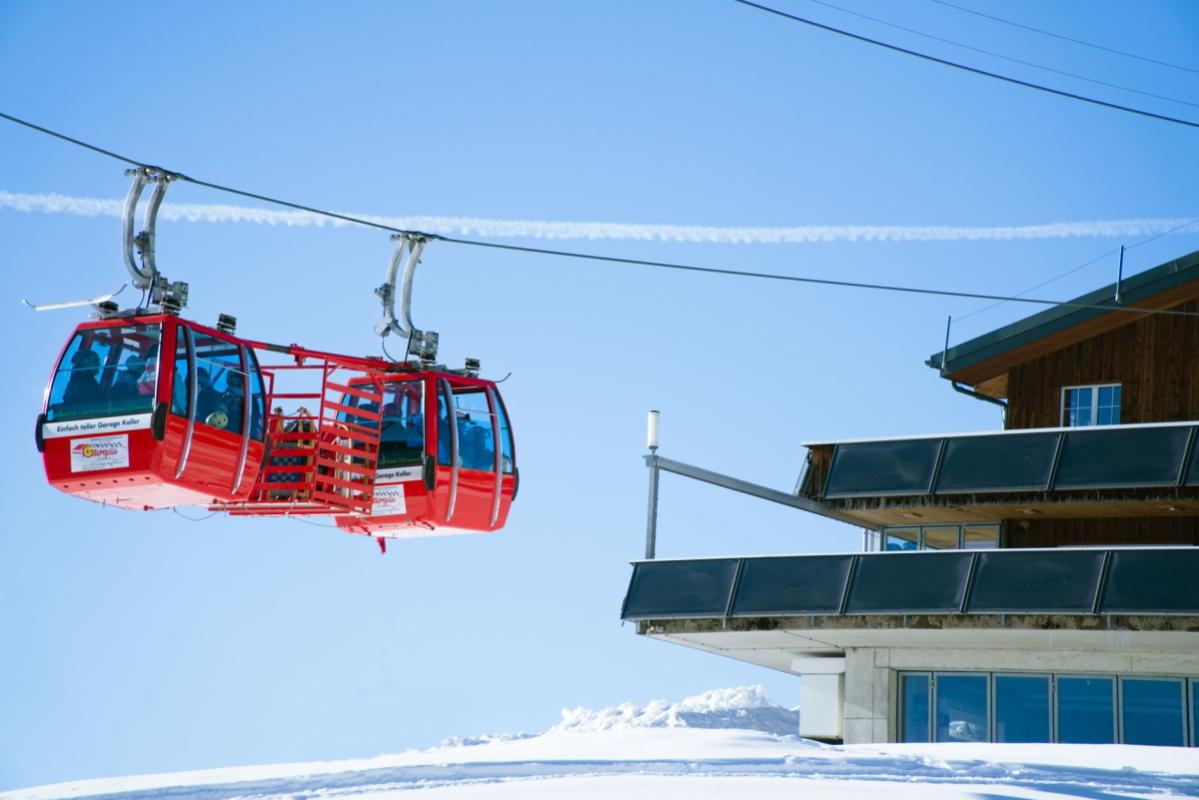
If your day revolves around the gondola, its closing time matters more when choosing accommodation than the length of the planned route: in July and August 2026, SKI&SUN lists the lift as operating until 5:00 p.m. Monday to Friday and until 6:00 p.m. at weekends.[1] That kind of constraint—the operating hours of the infrastructure, the season, the weather, the fitness of the participants or the time the service centre closes—should be the starting point for your booking.
Accommodation for cyclists is not simply an address close to a trail. It is a base that needs to work before you set out, after you return and when the plan stops being perfect. The bike has to be stored somewhere, washed after a wet stretch, charged and sometimes adjusted. Clothes need to dry, and breakfast cannot start an hour after the planned departure.
In Świeradów-Zdrój, then, it is worth choosing not by the room photo alone, but by a short checklist.
First, establish what really limits your day
The same property may be excellent for a couple on a weekend, inconvenient for a group with four e-MTBs and completely impractical for people planning to ride across to the Czech side. Location matters, but only in combination with your daily plan.
A base by the gondola and downhill trails
If the aim is Bike Park Świeradów, gondola rides or an intensive day in the mountains, the priorities will be: a short journey to the lower station, the option of setting off quickly with your bike and the certainty that, on your return, you will not have to carry muddy equipment into your room. The SKI&SUN gondola has a route 2,172 m long and is equipped to carry bicycles.[2] That is good news, but it does not solve the whole logistics of the day.
Ask whether the property can serve breakfast early, where the bike room is located and what returning after reception has closed looks like. On weekdays, the difference between the gondola closing at 5:00 p.m. and the weekend closing time of 6:00 p.m. can change the length of your loop, the decision about your final ascent and the time of dinner.
A base close to the centre
The centre wins when the bike is only one part of the trip. It is easier to combine a ride with a restaurant, shopping, the tourist information point or an evening stroll. It is also a sensible choice for couples in which one person rides while the other prefers treatments, a café or a quiet day away from the saddle.
In this case, you do not need to look for accommodation directly beside the trail. More important are storage inaccessible to unauthorised people, somewhere to wash the equipment and quick contact with a rental shop or service centre. The town’s official accommodation database allows you to filter properties by, among other things, “bike storage”, but treat that as the beginning of the selection process, not a ready-made recommendation of quality.[4]
A base for bikes and spa time
Świeradów-Zdrój is particularly well suited to a stay in which riding alternates with recovery. In that case, the property should be able to handle both modes: receive wet equipment, dry clothing and still provide normal conditions for rest.
This raises an important question: is the bike room a real, lockable space, or merely a rack by the entrance? Second: can wet shoes and gloves be dried in a designated place, or is the guest expected to manage in the bathroom? Third: does combining cycling with a wellness area mean additional restrictions concerning mud, towels and the hours when the facilities may be used?
A checklist for a good cycling property
The description “cyclist-friendly” is not enough. A good listing should answer specific questions. If it does not, write to the property before booking.
1. Secure storage
The most important item on the list. A bike should spend the night in a lockable room, not on a publicly accessible terrace, balcony or beneath a carport. It is worth establishing:
- whether the storage room is inside the building;
- who has access to it;
- whether it can be accessed after returning late in the evening;
- whether the racks rest the bike against delicate frame or derailleur components;
- whether there is room for several bikes without them knocking against one another.
Capacity also matters for a small group. A “bike room” for two bicycles may not be enough for a team arriving with five bikes and luggage.
2. Washing without falling out with the host
A bike wash station should mean more than a tap in the garden. Ask where mud can be rinsed off, whether you may use your own cleaning products, whether the drainage is prepared for dirty water and whether washing is available after every ride.
Do not assume that you can use the shower in your room. That is a quick route to a blocked drain, a flooded bathroom and a misunderstanding with the owner. A property that genuinely understands cyclists’ needs provides a separate designated area.
3. Drying clothing
After rain, accommodation is judged not by the number of pillows, but by whether your shoes are dry in the morning. Look for a heated or ventilated room, hooks, shelves and space for a helmet, pads and gloves.
With e-MTBs, drying also has a practical dimension: wet clothing should not be left beside chargers, extension cords or batteries. Ask whether electrical equipment is charged in a separate, safe place and whether the owner sets rules for using the sockets.
4. Charging an e-bike
“Charging available” needs clarification. Can a removed battery be charged? Does the charger stay in the room, in the bike room or at a designated charging station? Are sockets available to several people at the same time? Does the accommodation charge an additional fee for this?
It is worth bringing your own charger and not assuming that the property has compatible equipment. With a small group, also agree on the charging order. Four batteries being plugged into a single socket in the evening is not a minor detail, but part of planning the stay.
5. Tools and emergency spares
A basic kit should include a pump, Allen keys, tools for the most common adjustments, tyre levers and a place where the bike can be set down securely. Not every property needs to run a full service centre. It should, however, clearly state what is available on site and what is not.
Even better if reception staff or the host can point you towards a local service centre, rental shop and a way of transporting a damaged bike. In Świeradów, there are outlets offering MTB bikes and e-bikes, while Lech Sport also states that it delivers equipment and provides technical support on the trails.[5] That does not mean every accommodation has its own service centre. It does mean that it is worth checking whether the property knows the local network of services.
6. Breakfast that does not miss the start
The best question is: “What time can I eat if I want to set off early?” The answer “from 8:00 a.m.” may scupper your plan, even if the property is close to the trail.
Check whether an early breakfast, a takeaway pack or access to basic provisions is possible. For e-MTB riders, space for bottles and the option to refill water will also matter. This is not about a special sports menu. It is about predictability.
7. Maps, GPX and up-to-date information
A cycling property does not have to organise guided tours. It should, however, be able to help with basic planning: point you towards a map, provide current information about closures and explain where the chosen loop begins.
For singletrack routes, ask about the direction of travel, the level of difficulty and how up to date the GPX file is. The town’s official materials describe the Świeradów singletracks as natural, one-way trails up to 1 m wide, with a maximum gradient of 5%, divided into variants ranging from easy to difficult.[3] That is reason enough not to assume, without checking, that every “cycling trail nearby” will be suitable for the whole group.
How to read the Bike-Hotel, Bike-Point and Bike-Partner designations
Within the Singletrack Glacensis ecosystem, certified places are intended to create something larger than a single trail: a network connecting accommodation bases, service points, rental shops, service centres and food outlets.[6] For guests, however, what matters most is not the logo itself, but the role a particular location plays during the trip.
Bike-Hotel should indicate accommodation that understands the presence of a bike in the day-to-day service it provides guests. Check storage, washing, drying, charging and breakfast. The name alone does not say whether all these elements are available year-round or whether they require advance notice.
Bike-Point should be treated as a signal that a given place may offer bike assistance or a brief technical stop. Do not automatically assume a full service centre. Ask about tools, parts, a pump, a wash station and the possibility of repairing the specific fault.
Bike-Partner indicates a useful connection with the region’s cycling infrastructure. For someone planning a stay, this may mean cooperation with accommodation, a rental shop, a food outlet or a service supporting the route. Always check whether the partnership offers a concrete benefit: equipment reservations, a discount, a transfer, advice or help after a breakdown.
The simplest rule is this: certification is a good filter, but it does not replace a conversation. The property should be able to translate the designation into a clear answer: “yes, the bike is kept in a lockable bike room; yes, we have a wash station; yes, you can charge the battery; yes, we can give you the number of a service centre”.
Three stay models in Świeradów-Zdrój
Model one: as much riding as possible
Choose a base organised around the trails, the gondola or Bike Park. The priorities are a quick start, early breakfast, storage and the option to return without being constrained by reception hours. An additional distance from the centre will not be a problem if you spend most of the day on the bike.
- best for MTB and e-MTB users;
- good for a short, intensive weekend;
- requires checking the gondola and service-centre hours;
- walkable evening attractions matter less.
Model two: the bike as part of a city weekend
Balance is what matters here. You set off on a route in the morning, can have dinner without starting the car after you return, and choose a different activity the following day. This option suits couples and small groups with varying levels of experience.
- look for a central location and a good bike room;
- check whether a rental shop or service centre operates nearby;
- ask about storing bikes on the day of departure;
- do not overpay for extensive facilities if you are bringing the bike for only one day.
Model three: bike plus spa
This is the option for people who do not want to choose between exertion and recovery. After a ride, you need a shower and somewhere to dry your equipment and clothing, followed only then by the pool, sauna or treatment. At such a property, ask about the rules for using shared areas after returning from a ride and whether the bike room is easily accessible from the car park.
A good spa stay should not mean that the bike becomes an awkward extra. If the property cannot answer questions about washing, storage and charging, its wellness offering may be excellent, but not necessarily its cycling facilities.
A message to send before booking
Five minutes of conversation can save half a day of improvisation. Send a short message instead of asking generally whether the property is “bike-friendly”.
Hello, we are arriving with two MTB bikes, one of them an e-bike. Is there a lockable storage room on site that is also accessible after returning in the evening? Can we wash the bikes and dry our clothing? Where can the e-bike battery be charged? Are a pump and basic tools available? Is an early breakfast or takeaway pack possible? If we have a breakdown, which local service do you work with—a service centre or rental shop?
The answer should be specific. “We have a rack”, “you can bring it into your room” or “please call us when you arrive” are signs that you need to ask further questions. By contrast, information about a lockable bike room, a washing area, battery charging and a service-centre contact allows you to assess the property without guessing.
In Świeradów-Zdrój, the best cycling accommodation does not have to be the most expensive hotel or the one closest to the pin on the map. It has to suit the constraint that truly governs your day. If that is the gondola, choose a base that shortens your morning start and does not complicate your return. If it is mud, look for a wash station and drying room. If it is an e-bike, start with charging. Only then choose the view from the window.