A Bed, a Dormitory or Just a Buffet? How Overnight Stays Really Work in the Izera and Karkonosze Mountains
A mountain hut marked on the map does not always mean a bed. Wysoki Kamień now operates primarily as a viewpoint with a buffet, Stóg Izerski has few rooms and strict arrival rules, while Hala Szrenicka, Szrenica and the Czech properties in Jizerka represent entirely different models of a mountain stay.
The most promising place on the map is not always somewhere you can spend the night. Wysoki Kamień bears the name and history of a mountain hut and draws visitors like a fully fledged hiking destination, but its current offering does not include accommodation—it operates as a buffet and viewpoint.[4] This is precisely the example that best demonstrates why, before setting out into the Izera or Karkonosze Mountains, you need to check not only a place’s name but also its actual function.
Some places offer beds in shared dormitories. Others have two- or three-person rooms, apartments, a restaurant, a reception desk and rules more reminiscent of a guesthouse. There are also huts where you effectively rent the entire building, while arranging food is your own responsibility. For route planning, the difference is fundamental: a lack of available rooms may mean changing the next stage of your journey, while mistaking a buffet for an accommodation base may require descending into the valley.
What follows is a practical map of standards. It is not a catalogue of every property in the region, but a guide to reading what they offer: who will find good conditions there, how early you need to act, what to pack and where you must not assume that “it’ll somehow work out”.
Not Every Mountain Hut Is the Same
In travel parlance, the word “hut” encompasses several different experiences. The simplest division looks like this:
- day-use property — primarily a buffet, a place to rest and a viewpoint, with no accommodation;
- classic accommodation hut — beds, often in shared rooms, communal spaces and food served on site;
- hut with private rooms — fewer beds, private bathrooms, advance reservations and more precise rules for guests;
- guesthouse-style property or group chalet — a private bathroom, kitchen or restaurant, sometimes with the requirement to rent the entire building.
The greatest misunderstanding comes from equating a buffet with accommodation. The fact that you can go inside, eat a hot meal and buy a drink does not mean there will be a spare bed in the evening. Wysoki Kamień is the textbook example: its role on the route is a daytime one, not an overnight one.[4]
The second mistake is assuming that every hut will take hikers without a reservation. In popular mountain ranges, the opposite may be true. The smaller the property and the more private the room standard, the less likely you are to find a place on a walk-in basis.
Wysoki Kamień: The Hut Where You Don’t Reserve a Bed
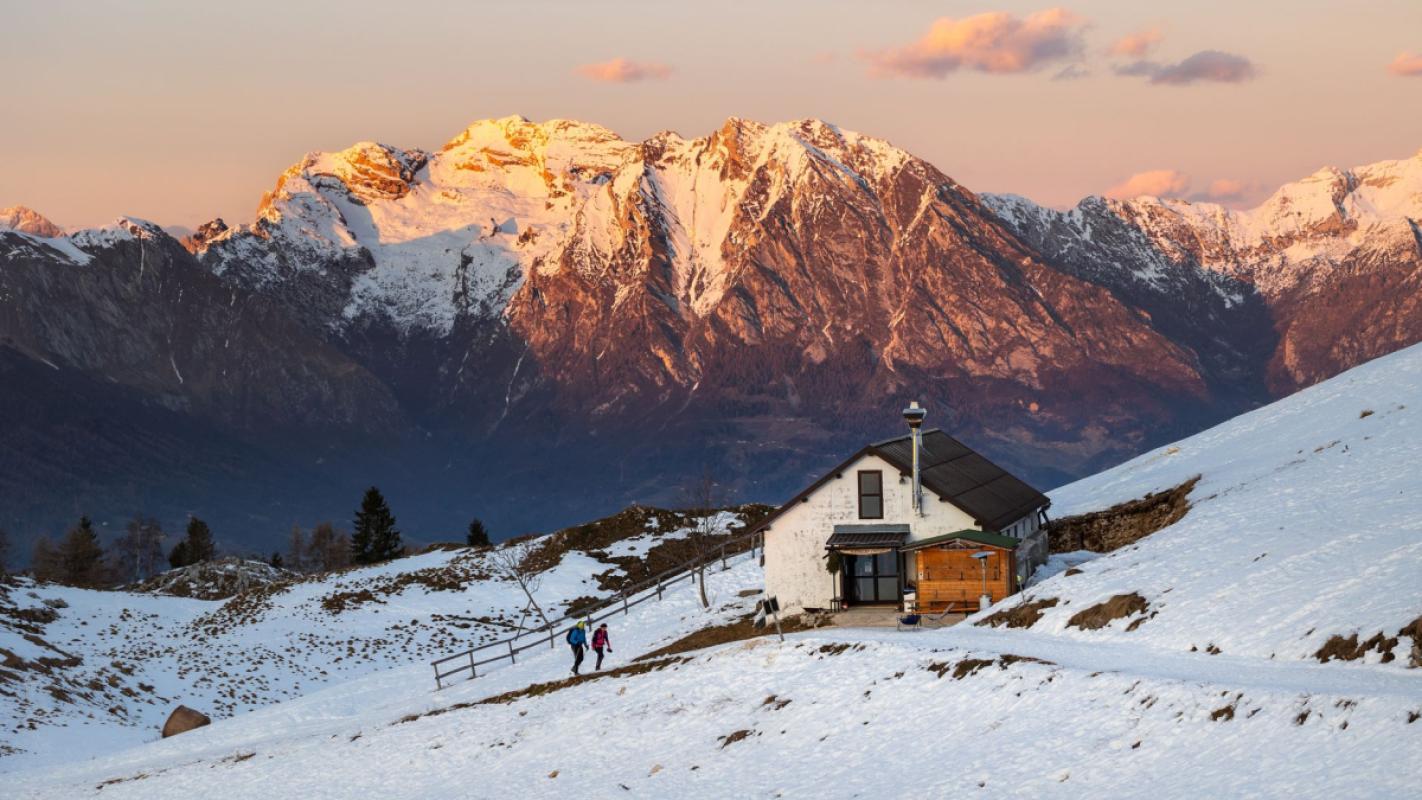
Wysoki Kamień is one of the most misleading points on the Izera map. The property, situated on a summit at 1,058 m above sea level, has a mountain name, a long history and functions as a hiking destination, but its current offering does not include accommodation. There is a buffet on site, and visitors can rest and enjoy the views, but you should not plan to end the day there in the hope of finding a room or a place on the floor.[4]
For day-trippers, this is good news: Wysoki Kamień is a clear point on the route, not a property requiring complicated arrangements. For anyone planning a journey from Szklarska Poręba through the Izera Mountains, however, it means making the decision earlier. If Wysoki Kamień is to be just a stop, you need to plan the onward section to a genuine place to stay. It is not worth relying on the word “hut” to solve the problem after sunset.
Who is it for? People planning a day trip, a meal break and a viewpoint stop.
How should you plan? Treat it as a gastronomic or sightseeing stop, not as an intermediate overnight stay.
What should you bring? A reserve of water, your own emergency snack and a plan for the rest of the route. A sleeping bag will not replace a reservation that simply does not exist.
Stóg Izerski: Genuine Accommodation, but Not by Chance
The PTTK mountain hut on Stóg Izerski operates according to an entirely different model. It is an accommodation property with rooms, bathrooms and meals, located below the summit of Stóg. Official municipal information indicates several dozen beds, rooms with bathrooms and full board.[1] The property’s current offering is nevertheless more intimate than the name alone might suggest: available rooms accommodate two, three or four people, and the number of beds is limited.
In practice, this means that Stóg Izerski is not somewhere you should arrive without having made a phone call or received confirmation. A reservation requires advance contact, and the stay is guaranteed only once availability has been confirmed and the required payment made. Nor is there a safe back-up plan of sleeping on the floor—the property explicitly makes no provision for this.
The most important rule concerns late arrival. The hotel day begins at 3 p.m. and ends at 10:30 a.m., while guests with reservations should arrive no later than the property’s closing time. A later arrival requires prior agreement and should not be treated as an automatically available service.[1] This has a direct impact on route planning: if the crossing of Hala Izerska, Polana Izerska or the section from the Czech side may take longer than expected, you need to notify the hosts before setting out.
Stóg is more comfortable than a classic shared dormitory, but it does not operate like a hotel in the valley. The reservation covers the room, without transport or meals automatically included. Food is available at the buffets, while breakfast and dinner can be arranged with the staff outside the kitchen’s main opening hours. Bed linen, pillowcases and towels are included in the room price, so there is no need to pack a full set of overnight equipment for this section.[1]
Who is it for? Couples, families and small groups who want their own room and bathroom.
How far in advance should you plan? As far in advance as the date requires—with so few beds, a weekend can disappear from the calendar faster than rooms at a larger hut.
What should you bring? Standard trekking luggage; your own sleeping bag is not necessary, but it is worth bringing a headlamp, lightweight footwear for changing into and extra snacks in case of a late arrival.
Hala Szrenicka and Szrenica: Two Overnight Stays, Two Levels of Hut Comfort
Hala Szrenicka — A Choice Between a Dormitory and Privacy
The mountain hut on Hala Szrenicka is one of the properties that best illustrates the transition from classic hut-based tourism to a more varied offering. It provides both shared rooms and smaller options, as well as apartments. There is a buffet on site, and the property serves as a base for people heading towards Szrenica, Śnieżne Kotły and the main ridge of the Karkonosze.[2]
The cheapest and most traditional option means bunk beds and a shared bathroom. Smaller rooms offer more privacy, while an apartment is for those who want to retain a mountain location but minimise the typical inconveniences of a hut. You should not, however, assume that every room has its own full bathroom—you need to check the description of the specific category.
Reservations are taken by telephone, and reception operates at specified hours, even though the property declares that it is open year-round. For anyone planning a late arrival, two things matter: a confirmed room and an agreed arrival time. “Open all the time” does not necessarily mean that checking in at any hour will work in the same way as at a hotel by the railway station.
At Hala Szrenicka, bed linen is part of the accommodation offering, but information about towels should not be left to guesswork. Your own small towel takes up very little space and solves the problem without further arrangements.
Szrenica — A Large Property, Many Options and Food Served On Site
The mountain hut on Szrenica, situated at an altitude of 1,362 m above sea level, is larger in scale than Stóg Izerski. It offers around 90 beds in rooms ranging from single to shared, as well as an apartment. It operates year-round and welcomes both individual hikers and groups.[3]
It is a good choice for people who want to walk along the Karkonosze ridge without limiting themselves to a single category of accommodation. You can choose a small room, reserve a larger space for a group or use the property as a base before heading onto the main trail. At the same time, the standard remains that of a mountain hut: most rooms do not have private bathrooms, and the bathrooms are located along the corridors. Some rooms have washbasins.[3]
Food is one of the strengths of this option. Hot meals are served during the day, while the buffet operates longer than the kitchen. Hours may change, so you need to check the latest information before setting out, especially if you are planning a late lunch after ascending from the direction of Szklarska Poręba.
Bed linen is also important. At Szrenica, it can be ordered for an additional fee, as can a towel. When making a reservation, you therefore need to check not only the room price but also whether it includes bed linen. It is a minor detail that, after a full day of walking, stops feeling minor.
Who is Hala Szrenicka for? People who want to choose between a traditional dormitory and a smaller room, with a buffet right beside the trail.
Who is Szrenica for? Larger groups, families and hikers who need a broad choice of room sizes and full food facilities.
Jizerka: A Guesthouse, a Restaurant or a Chalet with Its Own Kitchen
Czech Jizerka requires yet another way of thinking. In the settlement, you can find guesthouse-style properties with restaurants, breakfast, private bathrooms and additional services, as well as standalone chalets intended for larger groups. These are not two versions of the same overnight stay. They are two different ways of spending time in the mountains.
The guesthouse model is represented by properties such as Panski Dom and Pyramida. Guests reserve a room, use a private bathroom, restaurant and wellness facilities, and meals may form part of the package—in summer, most often breakfast, and in winter extended to half board. This is an option for people who want to hike in the Jizera Mountains without organising every meal or carrying a full set of camping equipment.[6]
A standalone chalet works in the opposite way. You reserve it for a group, use a shared kitchen, prepare your own food and accept greater responsibility for tidiness and equipment. At some properties, you need to arrange bed linen and towels in advance, as well as the minimum length of stay and how the keys will be handed over. Such accommodation may be more convenient for six or a dozen people than several separate rooms, but it works far less well for a solo hiker travelling through.
On a cross-border route, Jizerka is therefore a good place for a planned, rather than necessarily spontaneous, overnight stay. A guesthouse provides a restaurant and service. A chalet provides privacy and a kitchen, but requires advance contact, shopping and agreement on the details. The mere presence of a building in the settlement does not answer the question of which of these models is available on your chosen dates.
A Decision Map Before You Book
Rather than memorising names, it is worth matching the property to the way you travel.
- Do you only want to rest and eat? Wysoki Kamień fulfils this function, but do not plan to spend the night there. You need a further destination for the night.
- Are you travelling solo or as a couple and do you want your own bathroom? Check Stóg Izerski or a smaller room at Hala Szrenicka. In both cases, booking in advance is more sensible than hoping for a spare bed.
- Are you travelling in a larger group? Szrenica offers a broad choice of room sizes, while a chalet in Jizerka may be more advantageous if the group wants to cook for itself.
- Are you planning a late arrival? Arrange it before setting out. At Stóg Izerski in particular, the arrival time is part of the practical conditions of the reservation.
- Do you not want to carry bed linen? Stóg provides bed linen and towels in the room price. At Hala Szrenicka, check exactly what your chosen option includes, and at Szrenica verify the charges for bed linen and a towel.
- Do you want reliable access to food? Choose a property with an operating buffet or restaurant, but check the meal-serving hours. A buffet may not operate for as long as the building is open.
Before paying a deposit, it is worth sending a short message with five questions: does the reservation cover a specific room, is the bathroom private, are bed linen and a towel included in the price, what is the latest possible arrival time and do meals need to be ordered in advance? This contact takes only a few minutes and may save you from having to change your entire plan.
The safest luggage for an overnight stay in a mountain hut is not the lightest possible, but luggage that is properly matched to the place. For Stóg, standard trekking gear is enough. At Hala, it is worth bringing your own towel. At Szrenica, you can bring your own bed linen or order it from the property in advance. In Jizerka, you need to decide whether you are heading for a restaurant or a kitchen where you will prepare dinner yourself.
Wysoki Kamień is neither a disappointment nor a “worse hut”. It is simply a different category of place. Once you treat it as a daytime stop, Stóg as a small property with genuine reservations, Hala Szrenicka and Szrenica as two levels of hut comfort, and Jizerka as a choice between a guesthouse and a chalet, the map begins to tell the truth. A bed does not follow from the name of a building—it follows from a confirmed offering.