Four Scenarios for a Night in the Mountains: From Arriving After Work to Setting Out at Dawn
A night in a mountain refuge is planned not by the length of the route, but by the time of arrival, reception hours, dinner and the plan for the following day. Four practical scenarios show when to choose Stóg Izerski, Hala Szrenicka, Szrenica or the Czech village of Jizerka.
In 1572, Leonard Thurneysser described the mineral waters of Świeradów — it was a reference to a spring, not the date the town was founded[1]. The distinction is a useful reminder of how to plan a stay in the mountains: accommodation is not an add-on to a route, but a logistical point in its own right.
It is not only the number of kilometres to the refuge that matters. Equally important are the time of arrival, the possibility of collecting the key, the last hot meal, somewhere to hang a wet jacket, the room layout and whether, the next day, you want to cover a short section, set out along the ridge or cross the border.
In the Izera Mountains and the Karkonosze, these differences are particularly clear. The PTTK mountain refuge on Stóg Izerski can be combined with a walk from Świeradów-Zdrój or a ride on the Świeradów gondola lift. Hala Szrenicka and Szrenica allow you to begin the day high up, but require you to check separate rules concerning access, reception hours and the operation of the lifts. Jizerka, meanwhile, is a settlement on the Czech side, where accommodation may mean a room, a guesthouse or a self-contained chalet.
Three clocks that need synchronising
Before booking, it is worth planning your stay around three times. The first is the trail time: when you will realistically finish the approach, taking breaks, a lost pace and ground conditions into account. The second is the property’s time: check-in, reception, the buffet, meal service and access to the drying room. The third is the morning departure time, which depends on the length of the planned route, the season and restrictions on the trails.
On Stóg Izerski, the red trail from Świeradów-Zdrój runs for approximately 4.5 km each way according to the town’s description, and takes around 2.5 hours[2]. This means that with a late start, you must not rely solely on the time shown in an app. You also need to allow for the walk to your accommodation, finding the entrance, formalities and any possible delay.
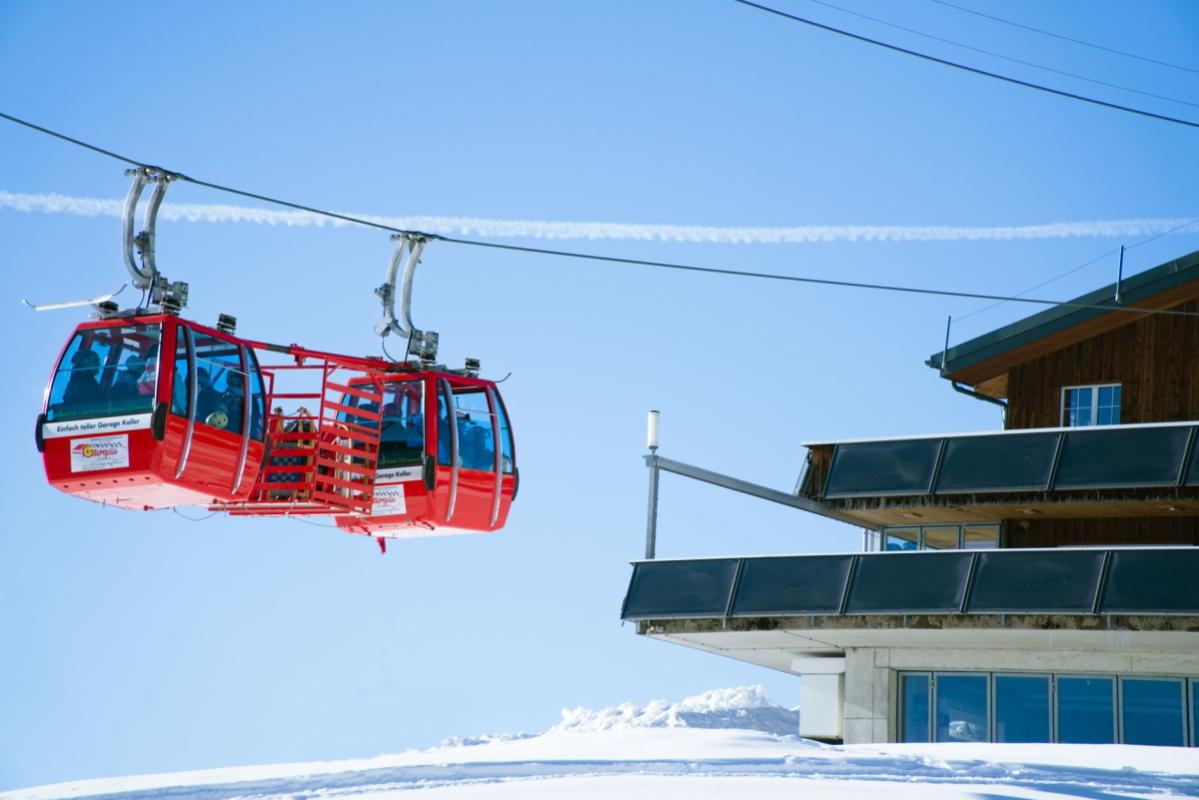
The gondola lift cuts the journey to Stóg Izerski to around eight minutes, but its timetable is not a round-the-clock safety net. The operator publishes separate operating hours for weekdays and weekends, so the ride should be treated as a specific means of transport with a final departure time, not as an emergency plan for every hour of the day[3].
The situation is similar in the Karkonosze. Karkonosze National Park maintains an up-to-date list of accommodation facilities, together with contact details for refuges including Szrenica and Hala Szrenicka[4]. Before setting off, check not only room availability but also current trail information, changes to their routes and closed sections.
Scenario 1: your first night in the mountains
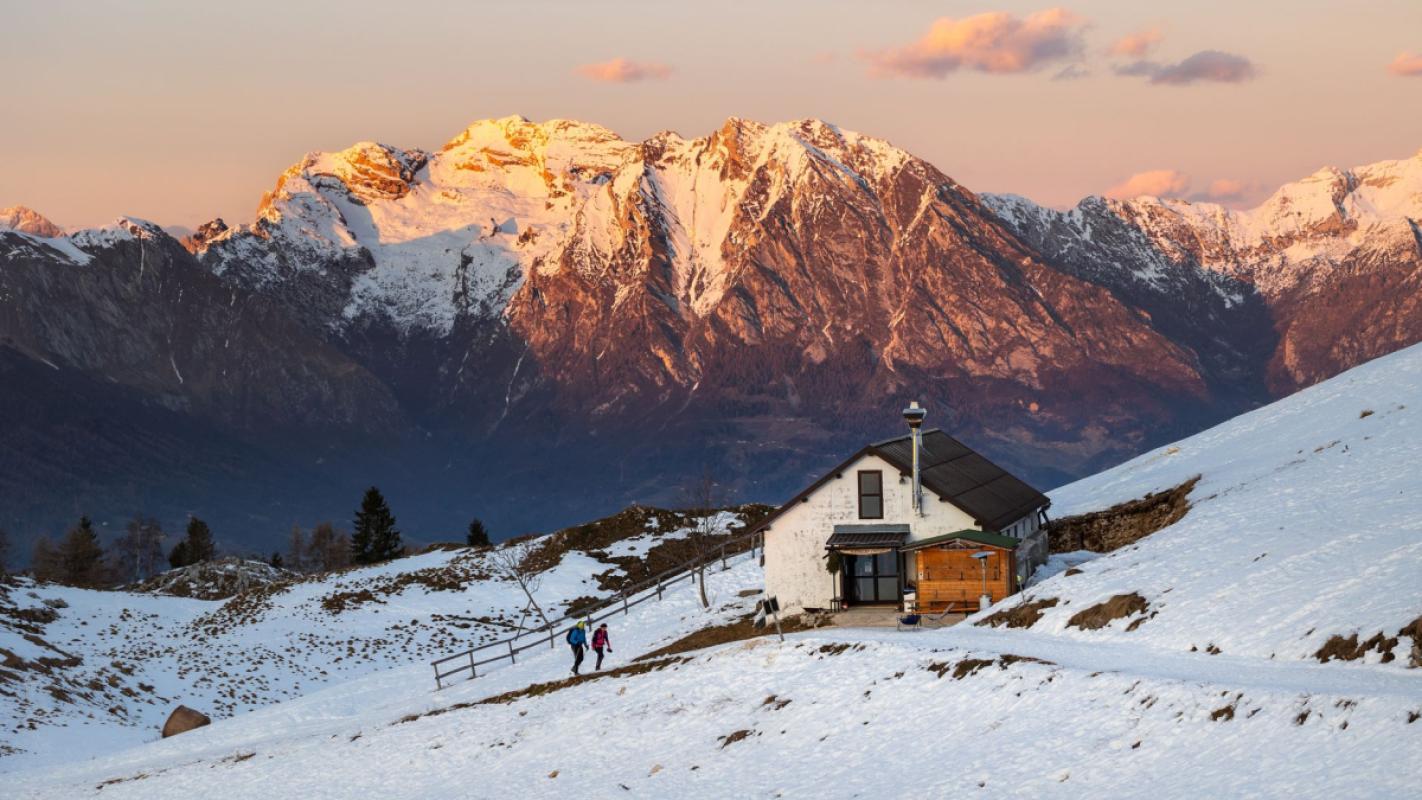
For a first night, it is best to choose a place that can be reached without complicated navigation and where, on arrival, you will receive clear information about your room, meals and the following morning’s departure. The PTTK mountain refuge on Stóg Izerski works well in this role, particularly if your plans begin in Świeradów-Zdrój.
That is not to say the route is short. On the contrary: the climb from the centre is substantial enough to teach you the essentials of proper planning straight away, while still leaving you the choice between walking and taking the gondola. The property lies below the summit of Stóg and is connected to several trails and the upper lift station[2].
When booking, ask about something beginners often overlook: by what time you must physically arrive at the refuge. A reserved bed does not automatically mean that you can turn up at any hour. The host should know if you are planning to arrive in the late afternoon, and you need a clear answer about what to do in the event of a delay.
- book your accommodation in advance, especially if you want a particular room;
- agree on your arrival time and the procedure for late check-in;
- ask whether bed linen, a towel and an additional set are included in the price;
- check whether the room has its own bathroom or whether the facilities are shared on the corridor;
- establish where you can hang wet clothing and leave your backpack;
- confirm what time dinner is served until and whether provisions can be ordered for the following day.
What to eat and what to pack
For your first stay, do not plan to rely entirely on dinner at the refuge. Take a small reserve: a sandwich, an energy bar, dried fruit and a drink. Not because every mountain refuge has a limited offering, but because the walk may run beyond buffet hours.
Your backpack should contain dry socks, a thin spare layer, a headlamp, a charger, a bag for wet clothing and a paper map. At a mountain refuge, drying equipment does not always mean that you can hang out everything in your backpack. Wet items need to be packed so that they do not soak documents, electronics or your sleeping bag.
Questions for the hosts: Can I leave my luggage before check-in? Is a drying room available? Can wet shoes be stored outside the room? Is breakfast served at a fixed time, or can I receive a packed meal for the trail?
Scenario 2: arriving late after work
A late arrival in the mountains begins in a spreadsheet, not in the car park. If you finish work in the afternoon, calculate the drive, preparations, approach, breaks and a safety margin. If the result means arriving after reception or the buffet has closed, do not treat this as a minor risk.
Stóg Izerski appears easy to reach thanks to the gondola, but the lift operates at set times. Once they are over, the remaining option is to walk, and the route from the centre of Świeradów-Zdrój takes around 2.5 hours according to the town’s description[2]. With a late start, a possible solution is to collect the key earlier, bring dinner from town or — if the property has not confirmed that it accepts late arrivals — stay lower down and set out in the morning.
In this scenario, choose accommodation not for the view from the window, but for the certainty that you will be able to get inside. A refuge that formally permits late arrivals is a better choice than a more attractively situated property that you may reach after it has stopped accepting guests.
- call the property on the day of arrival and confirm your expected time of arrival;
- ask for instructions on entering, collecting the key or making emergency contact;
- do not assume that the buffet will remain open as long as the building itself;
- take a ready-made dinner and breakfast if you will arrive after food-service hours;
- set out with a headlamp, even if your plan says you should arrive before dark;
- leave someone information about your route and expected time of arrival.
When Hala Szrenicka is the better choice
Hala Szrenicka may suit people who want to climb high and find themselves among the Karkonosze trails the next day straight away. It is not, however, a good place for an improvised late arrival. Before booking, you need to confirm separately the reception and buffet hours, the rules for late arrivals and the current access arrangements.
The key question is: will I still be able to check in and eat something hot once I arrive? If the answer is unclear, move your overnight stay lower down. In the mountains, a sensible change of plan is part of planning, not a failure of it.
Scenario 3: an early start for a long route
If you are planning a long ridge walk the next day, staying high makes sense even when the evening itself requires more precise organisation. Szrenica and Hala Szrenicka are bases for people who want to limit the morning ascent and get onto a Karkonosze trail quickly.
The Szrenica refuge lies beside the main Karkonosze trail, with Hala Szrenicka and the Czech Vosecká bouda refuge among the places nearby. From this location, you can plan either a walk towards Śnieżne Kotły or a longer hike on the Czech side, but the route needs to be adapted to the park’s current rules and conditions on the ridge.
In Karkonosze National Park, some sections may be closed in winter or spring, while certain trails have altered routes for safety or nature-conservation reasons. A long-distance plan should therefore not be based on a single route saved in an app. You need a primary option, a shorter retreat and information about which crossings are currently available.
- book a room that allows you to leave quickly without waking the entire group;
- ask whether breakfast or a packed meal can be prepared before regular meal service begins;
- establish where to leave larger luggage if you are continuing onwards the next day;
- check whether the property has space for skis, poles, a helmet or other equipment;
- confirm current trail access, whether the lift is operating and the rules for moving through the park;
- write down the refuge’s telephone number and an emergency descent option.
Dinner, sleep, departure
For a long route, dinner should be simple and predictable. Eat enough, but do not plan your evening around a multi-hour meal. Lay out your clothes for the morning, pack your backpack before going to bed, fill your bottle and agree on a departure time with the group. In the morning, you should not be searching for gloves or a charger.
It is also worth asking about the room’s acoustics and bed layout. A shared room may be a good-value option, but an alarm before dawn requires greater discipline. If you are planning to leave considerably earlier than the rest of the group, a smaller room or a place from which you can leave without switching on the main light will be a better choice.
Scenario 4: a group in a Czech chalet in Jizerka
Jizerka is not a single mountain refuge, but a Czech settlement in the Izera Mountains. Today it functions as a destination for summer and winter tourism; it has accommodation and dining facilities, among them, while local listings include Pyramida, Panský dům and Pesakovna[5].
This is a completely different model of stay from an overnight stop at a refuge on the Polish side. A group can rent rooms with meals or choose a chalet where some of the organisation falls to the guests. In that case, you need to establish not only the number of beds, but also the kitchen, refrigerator, crockery, heating, bed linen, equipment storage and the rules for arriving by car.
Jizerka works particularly well for a group of several people when some participants want to cook, someone needs an early breakfast and the day’s plans are not dictated by the opening hours of a single buffet. The price of greater independence is a longer list of things to agree on.
- appoint one person to be responsible for contact with the host;
- divide the group among the rooms before arrival, not at reception;
- establish whether the property provides bed linen, towels and basic kitchen equipment;
- check where bicycles, skis, boots and wet clothing can be stored;
- ask about restaurant hours and the possibility of ordering breakfast to take away;
- confirm the rules for parking, access and any winter restrictions on the road;
- prepare payment in accordance with the host’s requirements, as well as a cash reserve for emergencies;
- if you are planning to cross the border, check the current rules and whether the chosen section is accessible.
What to take to a chalet
In a chalet, things that you would not take to a classic mountain refuge come in handy: a small bottle of washing-up liquid, a cloth, a waste bag, spices, a lighter, an extension lead, a power bank and a labelled bag for shared provisions. Do not assume that the kitchen will be equipped in the same way as the one at home. Ask about a kettle, hob, oven and space in the refrigerator.
With a larger group, it is worth planning dinner before arrival. A restaurant is more convenient after a late walk, but your own food gives you independence when setting out early. The best arrangement often looks like this: dinner on site on the first evening, a simple breakfast prepared yourselves and a packed lunch for the trail.
Questions to ask before paying for accommodation
Whatever the scenario, send the hosts a short, specific message. It is worth keeping their replies on your phone and copying the most important information onto a piece of paper.
- By what time must I arrive to check in?
- What should I do if I am delayed by weather conditions or a hold-up on the route?
- What time do reception, the buffet and the kitchen close?
- Can breakfast be ordered before the standard serving time?
- Is there a drying room or somewhere for wet equipment?
- Can I leave my luggage after checking out?
- What is the room layout and where are the sanitary facilities?
- Can I leave very early the next day without additional formalities?
- On the day of arrival, will the gondola, lift or other transport on which the plan relies be operating?
- Do current trail conditions allow the planned route to be completed?
In 1572, water was described in Świeradów, not a finished spa resort. A similar principle applies when planning accommodation: the map shows a location, but only the hours, facilities and the following day’s plan reveal whether it is the right base. A good stay therefore begins not with booking the prettiest room, but with choosing a refuge from which you can genuinely set out in the morning.