From the Spa to the Mountain Hut: Gentle Approaches and 'Wellness' Stops between Świeradów, Szrenica and Czech Jizerka
A mountain day doesn't have to mean a strenuous climb. In Świeradów-Zdrój you pair a warm-up in the Hala Spacerowa with short walks to mountain huts in the Izera and Karkonosze ranges — gondola to Stóg Izerski, an easy route to Hala Szrenicka and the quiet of Czech Jizerka. This is a guide to routes that feed the view and spare your knees.
The first steps after rain smell of larch. The Hala Spacerowa in the Dom Zdrojowy — as long as a morning breath and bathed in soft light — acts like a natural warm-up. Here the pace is set by wood, not an altimeter. Soon you will head into the mountains, but you begin in the rhythm of a spa town that for centuries has taught patience and short, calm steps[1].
Start under the palms: Hala Spacerowa and the warm-up
In Świeradów-Zdrój you can start a mountain day under palms — literally. The 80-metre Hala Spacerowa, the longest in Lower Silesia, links the two wings of the Dom Zdrojowy and invites a few warm-up circuits before your boots meet the pine duff[1]. Straighten your spine, take a few slow bends, walk five minutes "there and back." It’s a simple way to get circulation going without haste.
If you like to combine movement with micro-rituals, there are two more 'spa' touches at the start or finish: terraces above an artificial grotto right by the Hall and the newly revitalised park in Czerniawa-Zdrój with a new graduation tower. The latter — seasonal — is ideal for a short, ten- to fifteen-minute breathing stop after returning from the hills[6]. Don’t plan a 'therapy' here; think of it as salty, cool air that nicely closes the day.
Ridge within gondola reach: Stóg Izerski without the breathlessness
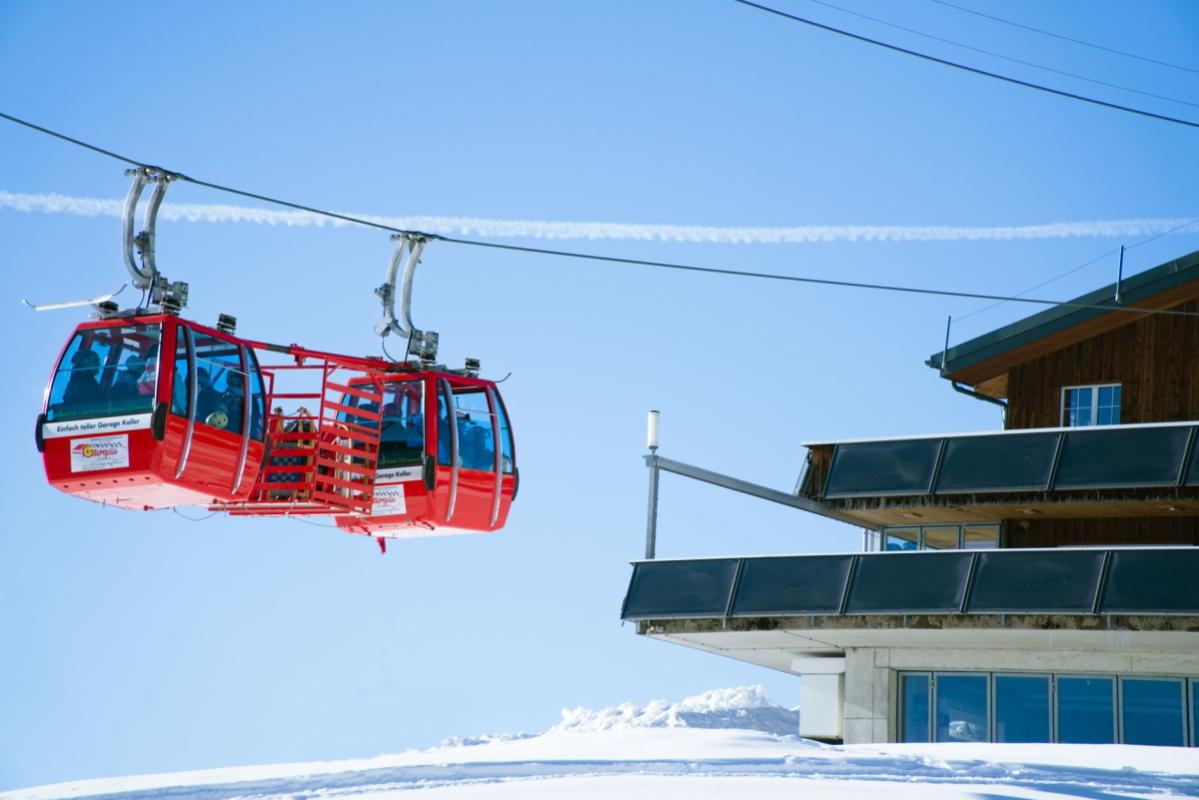
The simplest scenario for a full 'mountain' experience without a long ascent? The Ski&Sun gondola. In eight minutes you gain several hundred metres and step out onto a wide ridge: wind, spruces, a slightly flattened Izera horizon. A lift into a world of grass and sky[2].
From the upper station a short, intuitive walk across the clearing leads to the PTTK shelter 'Na Stogu Izerskim'. You don’t have to scramble up steep faces; the path meanders gently, and after a few minutes you stand before a wooden porch. This is where soups taste best — perhaps because you sit just below the summit and the wind brings resin scents. Sit by the window. On a cloudless day light falls in patches on benches and maps, and table conversations slow down along with the breathing.
The 'up by gondola — down on foot' plan works great with one caveat: choose a forest road or a gentle track for the descent, not the ski run. The slope can be hard, gravelly and long — your knees will thank you for a less steep surface. In dry summers the wide track from the upper station towards town works well; after rain pick variants with less mud and fewer roots. If you feel the day might be too long, simply ride the gondola back down — there is no sporting 'must' here.
It’s also useful to know what you’re actually sitting on. Stóg Izerski is a sprawling, easy-to-read massif of the High Ridge. The summit, which many hikers associate with the name 'Stóg Izerski', is sometimes recorded with slightly divergent heights in guides and maps, but in practice something else matters: it is an upper, airy balcony of the Izera Mountains with access to a shelter literally 'under the peak'[3].
Scenario for a relaxed half day
- Warm-up in the Hala Spacerowa (10–15 minutes) and a short walk to the lower station.
- Gondola ride to the ridge and a stroll to the shelter on Stóg Izerski.
- Warm meal, tea, view from the terrace; if you have energy left — a leisurely circuit of the clearing and return to the upper station.
- Ride the gondola down or descend by one of the gentle tracks. Finish again beneath the larch canopy of the Hall.
A longer day in the Karkonosze: Hala Szrenicka and Szrenica
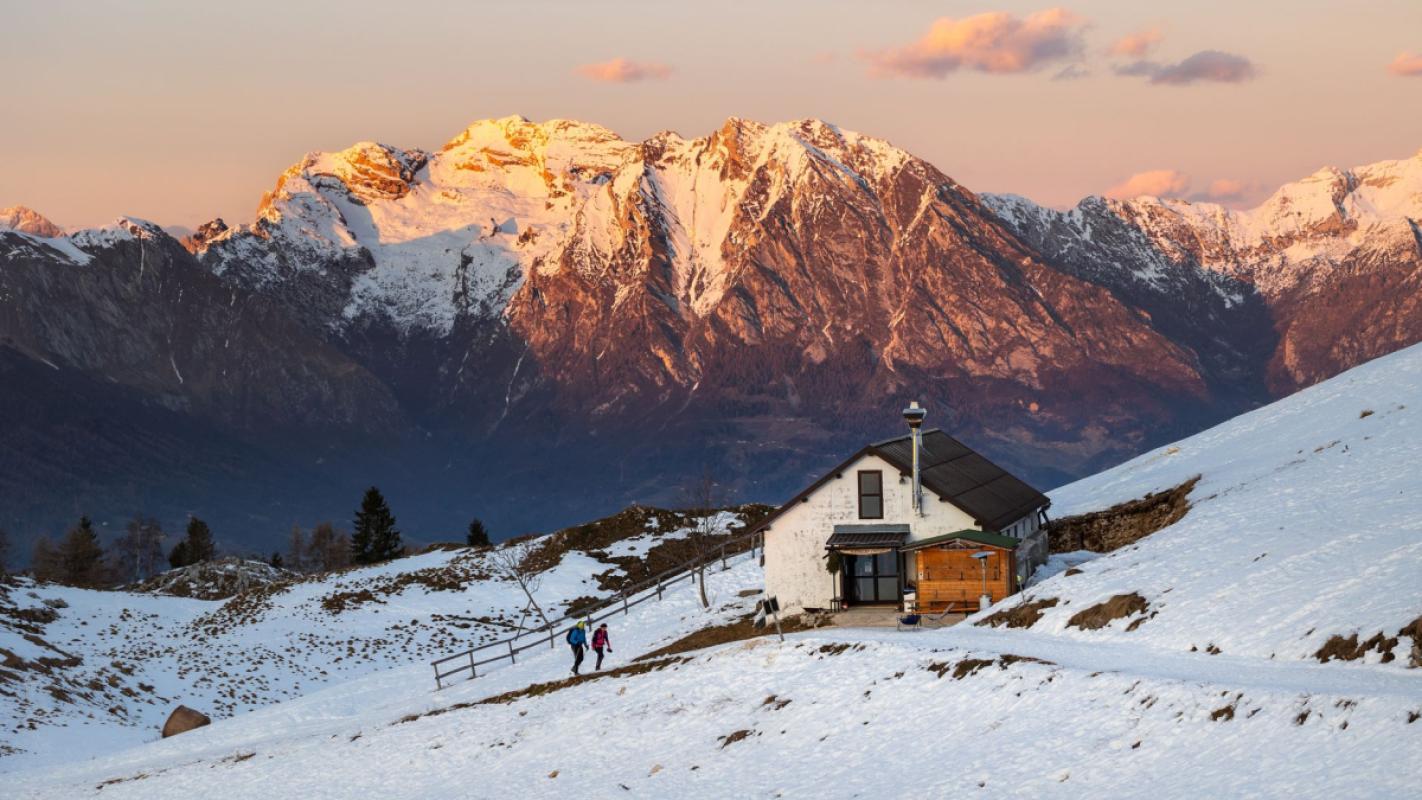
If you want to lengthen the day, head to Szklarska Poręba and plan a short walk onto the Karkonosze ridge. The two nearby shelters — on Hala Szrenicka and on Szrenica itself — let you alternate views with breaks at mountain buffets. Szrenica sits at 1,362 m above sea level and lies within the Karkonosze National Park, on an exposed section of the ridge — windy, more severe, with granite scree that plays beautifully in the sun[4].
The most 'wellness' option is to make Hala Szrenicka the main objective: a space that in winter becomes a ski meadow and in summer smells of grass and warm stone. It’s not far from Hala to Szrenica, but remember: the higher you go, the more often you encounter rocky steps. If you want to save your knees, treat Szrenica as a 'squat' halfway — go up to the Hala, rest, only turn onto the ridge if your legs still 'want it', then return by the same familiar path. In worse weather it makes more sense to postpone the final push and stay on the Hala; the shelter has everything needed to make a slow mountain day truly good.
On the Karkonosze ridge three rules act like a safety belt. First: choose even, exposed trails (fewer trip hazards), and on descents avoid steep, rocky variants. Second: if the weather turns quickly, shorten the loop and return to the nearest shelter — here the huts stand close together, which makes for an easy 'soft landing'. Third: don’t chase the clock; accept a pace that allows full sentences in conversation.
Minimum plan and the 'if energy holds' plan
- Minimum plan: reach Hala Szrenicka, take a longer break, return the same way.
- If energy holds: a short ridge section to the shelter on Szrenica and back to the Hala for a relaxed lunch, then descend by a gentler route.
Silence and wide clearings: Jizerka for the afternoon
If you’re after a landscape that’s more expansive than steep, head to Jizerka on the Czech side of the Izera Mountains. This settlement sits on a plateau among meadows and peat bogs, with wooden buildings where the loudest sounds are the babble of a stream and the creak of boards beneath your feet. Getting there is simple: normally you park at the designated paid lot Jizerka – Pod Bukovcem (Mořina), from which it’s a short walk to the village centre along an easy road[5].
Jizerka feeds on silence. You don’t need a long loop to feel 'in the mountains' — just walk from the car park to the heart of the settlement, sit on one of the porches, cross a meadow for a few hundred metres and let your eyes rest on the horizon. It’s a good afternoon destination after an Izera morning: you come over from Poland, leave the car, stroll unhurriedly to the wooden porches and return when the light begins to soften.
How to read the 'effort map': energy budget for a mountain day
'Wellness' walks are the art of composing a day so movement and rest reinforce each other. It’s not about kilometres, but about the quality of your steps. Here’s a simple, proven layout.
1) Start soft, not fast
Begin in the Hala Spacerowa: a few minutes walking on the larch floor warms the joints and 'awakens' balance sense[1]. Before you board the gondola or step onto the trail, take a sip of water and loosen a warm layer. You’re going out not 'for a result' but for panoramas and calm.
2) Choose short ascents with rewards
Stóg Izerski with a shelter beneath the summit and the Karkonosze duo Hala Szrenicka–Szrenica are exactly such places: a few to several quiet minutes are enough to step into the landscape and sit at a table with a view[2][3][4]. When the day is meant to be light, choose ridges over gullies.
3) Plan descents for your knees, not the clock
It’s better to descend on dirt roads and forest tracks than on steep, rocky stretches. It’s simple but saving: an even walking rhythm, less 'braking'. On Stóg Izerski this means choosing paths parallel to the slope rather than the ski run; in the Karkonosze — descend via the Hala rather than the shortest 'wall-like' options. If you feel your energy reserves dropping, cut the loop short: a warm meal and a moment of wind on a porch are better than quick metres 'at any cost'.
4) Treat breaks as part of the programme
What in the valleys might be 'coffee on the way' becomes a full component of the hike in the mountains. Stop at a shelter, order a soup, step out to the terrace for a moment. You’re in a place designed precisely for trails and people to meet. And on the return — a short inhalation by the graduation tower in Czerniawa-Zdrój, if it’s operating: a natural 'pause button' after a day in sun and wind[6].
5) Layers, water, map
Weather in the Izera and on the Karkonosze ridge can be harsher than in town. Take a thin hat, a wind jacket and a bottle of water. Above all — keep a mental 'effort map': small ascents (gondola or gentle trail), a short time on the ridge, a secure descent and a breath in the spa. It really works better than ambitious kilometres.
Back to the spa: light, salt, wood
The best thing about Świeradów is that the mountain day doesn’t end 'in any old way'. You return to town where the wood in the Hall reflects the last light, and in the park — if it’s the warm season — the graduation tower tinkles with drops. Close your eyes for a minute: you hear a hush, feel a faint salty scent. In the morning there was a panorama, now there is silence. Tomorrow you can repeat the same — or simply change the order of the stops.
The mountains teach that less often means better: a shorter effort tastes as good as a long one when accompanied by wind, a hot soup and wood underfoot.