From Świeradów to the Valley of Palaces and Gardens: a slow, elegant day among parks and porticos
Base yourself in Świeradów-Zdrój’s spa rhythm, then drift down to the Jelenia Góra Basin for an unhurried day of landscape parks, museum-palaces and café pauses. This evergreen route weaves Bukowiec’s walking paths, Łomnica’s museum and folwark, a spa-park stroll in Cieplice, and a golden-hour linger at Wojanów.
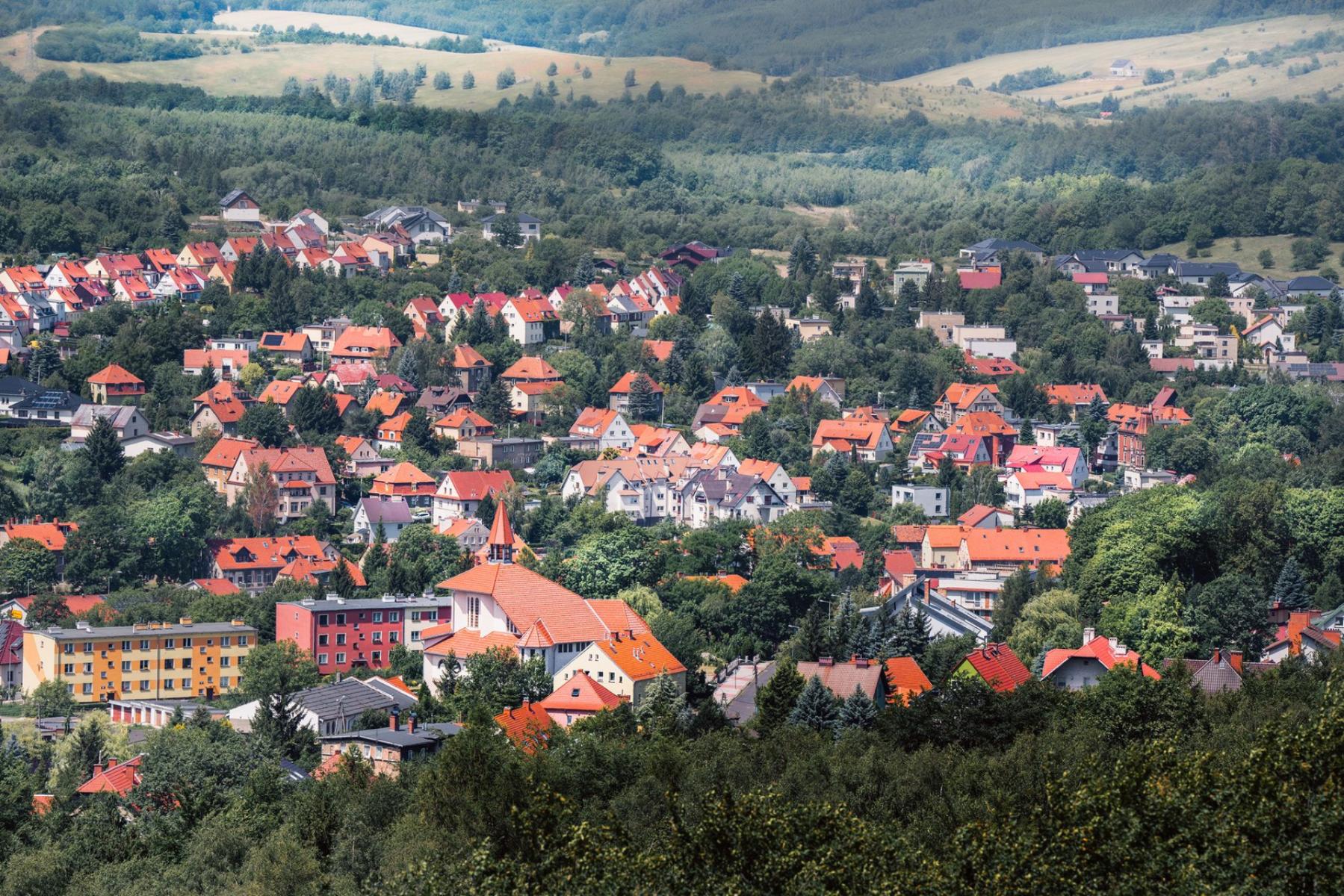
The day begins where the air smells faintly of spruce and mineral water. In Świeradów-Zdrój the long timber gallery of the Spa House draws soft light across its floorboards; you’ll notice people moving at a measured pace, as if set to the town’s own metronome. It’s the kind of morning that makes you linger over coffee, then set out—calmly—for the Valley of Palaces and Gardens, where architecture dissolves into landscape and the horizon keeps one foot in the mountains.[6]
What the “Valley of Palaces and Gardens” really is
To the east of Świeradów the Jelenia Góra Basin opens like a green amphitheatre, its rim lifted by the Karkonosze (Giant Mountains) and, further round, the Rudawy Janowickie and Izera ranges. In the 19th century this valley became a stage for princely taste: palaces newly rebuilt, parks redrawn in the fashion of the English landscape garden, views cut like corridors toward the blue ridge beyond. Today the palaces and landscape parks of the Jelenia Góra Valley are protected together as a Polish national Historic Monument, a formal recognition that fixes the area among the country’s most important cultural landscapes.[1]
You’ll see grand names recur in guidebooks—Schinkel sketching elevations, Lenné extending alleys and sightlines—but on the ground the effect is quiet: meadows feathered by wind, a bridge thrown casually across a stream, a beech-lined walk that turns the mountains into a planned vista. This is not a sprint through attractions; it’s a choreography of pauses.
A gentle loop from a spa base
Think of the day as four acts, each with room to breathe:
- Act I: Bukowiec. Arrive late morning for an unhurried landscape walk through one of the valley’s most evocative parks, revived as a cultural-educational center in historic farm buildings. The paths are soft underfoot; water, lawn and clusters of trees stage long views.
- Act II: Łomnica. Continue a short hop to explore museum rooms inside a baroque palace and then wander its working folwark with craft workshops and a café. Lunch can be simple and local; the courtyard is for lingering.
- Act III: Cieplice. Mid‑afternoon in the spa district of Jelenia Góra, where the Zdrojowy and Norwegian Parks offer smooth promenades, shade, benches and the curative calm that spa towns cultivate.
- Act IV: Wojanów. As the light turns warm, end in a palace courtyard set within a landscape park. The geometry of façades meets meadows and the low run of the Bóbr valley—architecture framed by sky.
It’s a circuit designed for slow travel. No reservations required to enjoy the parks and courtyards; the only timing that truly matters is the light.
Bukowiec: walking an English landscape, reading a story in the land
At Bukowiec, the transition from road to park works like a deep breath. Paths slip between stands of trees, voice-soft lawns give way to reflective water, and the mountains are a patient presence—never shouted, always suggested. The 19th‑century taste for the “English landscape” is legible in the composition: serpentine lines, open glades, a cadence of viewpoints. The former farm, rejuvenated as a cultural‑educational center, anchors the experience: exhibitions and programming help visitors read the landscape as a narrative, not just a backdrop.[2]
Walk without hurry. The circuit around the ponds and lawns is level, with benches tucked where the view opens. Even small details feel tended to: a clipped edge, a gravel crunch underfoot, the quiet passage of clouds mirrored in water. On a still day you hear birds and the soft scrape of shoes on path. If you’re travelling with someone who prefers gentle exertion, this is an ideal first act—flat routes, easy pauses, and the sense of moving through a designed picture rather than trudging to a single “sight.”
Łomnica: a museum‑palace and a living folwark
Łomnica reintroduces interiors to the day. The main palace, a 17th‑century baroque residence reshaped in the 1800s, now serves as a museum of interiors—rooms that let you pass at your own pace from one era’s taste to the next. Don’t rush. Decorative schemes hover between restraint and flourish; staircases have the polish of many hands. Next door, the so‑called Widow’s House holds a hotel, restaurant and café, an elegant pause before you step back into the light.[3]
What makes Łomnica special is how the life of the folwark has been revived. In the surrounding farm buildings you’ll find stalls and workshops: baking, textiles, a blacksmith’s door swung open to air. It’s not just retail; it’s a deliberate echo of the estate economy that once fed the house, now recast for contemporary visitors. If your energy feels more contemplative than ambitious, let lunch be here—bread still warm, something simple, a table in the yard where the gravel keeps its own slow time.[3]
Cieplice: promenades, shade, and the art of doing very little
By mid‑afternoon the best activity is almost no activity at all. Cieplice, now a district of Jelenia Góra, is a classic spa ensemble where parks and architecture meet with decorum. The Zdrojowy Park took shape along an avenue laid out in 1796 and was later reimagined in the English style; the nearby Norwegian Park carries a wooden pavilion with boat‑like details, a charming anomaly among the trees. Together they form a green salon with benches set just far enough apart for quiet conversation.[4]
Here the walk is the point. You trace a loop beneath plane trees, pause by a fountain, listen to a page turning on a nearby bench. For travellers fresh from treatments in Świeradów, the spa grammar will feel familiar: time stretched, body unhurried, senses dialled gently up.
Wojanów: architecture where the meadow begins
Late light suits Wojanów. Approached along lanes that flirt with hedgerows and farm fields, the palace rises with towers and a tight, almost musical symmetry. You don’t need to go indoors to feel the place; stand in the court and let your eye roll outward, over the terraces and into the landscape park threaded by the Bóbr. Many visitors treat it as an architectural set‑piece: look, sit, look again as the façade slips from white to honey in the moving light.[5]
If you’ve kept to an easy tempo, this is where the day’s composition resolves—hard lines dissolving into soft distances, the valley’s long lawns pointing the way back toward the mountains. On a clear evening the ridge of the Karkonosze reads like a horizon drawn with a steadier hand than ours.
Practical notes for an evergreen day
How to pace it
- Morning in Świeradów: keep the spa tempo. A stroll beneath the long Walking Hall of the Spa House is an atmospheric start before you drive—unhurriedly—toward the valley.[6]
- Late morning at Bukowiec: build your day on landscape rather than checklists. The cultural‑educational center in the restored folwark complements the park walk; explore either first depending on energy.[2]
- Midday at Łomnica: the palace museum is self‑paced; the folwark yard is ideal for lunch and a brief sit‑down before moving on.[3]
- Afternoon in Cieplice: aim for a full hour of meandering through the Zdrojowy and Norwegian Parks—level paths, easy benches, no rush.[4]
- Golden hour at Wojanów: plan to arrive when the light falls across the façades and the lawns; most visitors enjoy the exterior setting and park, with interiors functioning primarily as hotel space.[5]
Understanding the heritage you’re walking through
- A protected cultural landscape: the palaces and their parks in the Jelenia Góra Valley are protected together as a Polish national Historic Monument, a status that recognises not just buildings but the designed relationship between house, garden and the mountain horizon.[1]
- Reading Bukowiec: the park’s restoration and the creation of a cultural‑educational center in the historic farm buildings make it an ideal first stop to “learn the code” of this landscape before seeing other estates.[2]
- Łomnica’s double life: museum upstairs, working folwark around it; exhibitions indoors build context, while the yard and workshops translate estate life into today’s rhythm.[3]
Accessibility and effort
- Gentle terrain: the suggested stops favour level or gently undulating surfaces—park paths in Bukowiec and Cieplice, palace courtyards and lawns—well suited to those interspersing sightseeing with treatments.
- Flexible duration: if you find your energy dip after Łomnica, you can trim the loop to a shorter triangle: Bukowiec–Łomnica–Wojanów. If the day stretches, add a short pause on the arcaded square of Jelenia Góra Old Town on the way back for an espresso beneath the townhouses.
For the aesthetically inclined
- Light matters more than lists: this is a landscape conceived for views and edges—stand where alleys frame the mountains rather than chasing “the best” room or ruin.
- Look for the joinery of house and ground: terraces that fall into meadows, rivers drawn into the picture, tree groups that hide and then reveal the skyline. At Wojanów, the relationship to the Bóbr and the surrounding park is the composition’s quiet climax.[5]
Variations and small detours
- Swap in a town pause: If the weather turns, exchange Cieplice’s parks for a short wander under the arcades of Jelenia Góra Old Town; the square concentrates the city’s baroque-and-classical elegance under one sky.
- Extend to glass country: If the day invites a little more driving, angle toward Szklarska Poręba for a late‑afternoon look at the glass‑making valley town tucked at the Karkonosze’s foot—then return to Świeradów by the Izera flank at dusk.
Return to Świeradów in the blue hour. The timber gallery glows again, windows lit like a string of lanterns. It’s the same day you left, only slower and deeper: palaces absorbed without hurry, parks read like essays in light and line, a loop through the valley that leaves its architecture where it belongs—in the open air, pointed back to the mountains.