Museums of the Extraordinary Around Świeradów-Zdrój: Automata, Nativity Scenes, Transport and Design
Four Czech institutions let you plan a day around objects best viewed up close: mechanical instruments, nativity scenes, trams, bicycles and prototypes. This is a guide for curious adults, families with teenagers and anyone who, on a rainy day, would rather explore a collection of oddities than a traditional gallery.
Four institutions on the Czech side of the border are enough to build a museum day made up not of historical periods but of objects—and they immediately suggest that it is not worth trying to see them all at the same pace. Around Liberec, you can choose a museum where an instrument starts playing by itself, a hall filled with cars and trams, a small collection of nativity scenes or a family home telling the story of car design through prototypes, mobility and engineering.
It is an important shift in perspective. You are not going on a “sightseeing tour of Liberec”, but in search of a specific kind of experience: for design—MUZA; for technology—Technické muzeum Liberec; for tradition and intimate scale—the Nativity Scene Museum in Kryštofovo Údolí; and for the history of design—the Ferdinand Porsche Birthplace in Vratislavice nad Nisou. Each of these places has a different weight, a different standout exhibit and a different ideal visiting time.
Before setting out, it is worth checking current opening hours, photography rules, the languages of the descriptions and any combined tickets. The IT Tourist Information Point in Świeradów-Zdrój may be helpful, especially when your plans depend on the weather, the border crossing or your return time[4].
MUZA in Liberec: a museum that begins with an object
MUZA, the North Bohemian Museum in Liberec, is a proposition for people who do not want to choose between applied art, local history and nature. The institution was founded in 1873 as the first museum of applied art in the Czech lands, and its present building opened towards the end of the nineteenth century[1]. Today, it does not function as a single, linear narrative. It is more like a carefully organised storehouse of ideas: you can move from glass and ceramics to photography, from regional nature to mechanical instruments, pausing along the way at details that are easily overlooked.
Who is it for? Lovers of design, craft, photography and the history of everyday life. Teenagers may need some encouragement if they are interested only in exhibits “that can be switched on”, but that is precisely when it is worth starting with the automata rather than with the chronology of applied art.
The highlight: the collection of automata. These are mechanical devices and self-playing instruments: player pianos, polyphons, barrel organs, hand organs and orchestrions. Their value lies not only in the fact that they produce sound. They reveal the precision of their execution, the inventiveness of their constructors and the moment when music no longer requires the presence of a performer. Some of the exhibits remain in working order, and visitors can learn more about how they operate than they typically could behind a glass case[1].
The second essential stop is Metelka’s mechanical nativity scene. It grew out of the nativity-scene-making tradition of the western Krkonoše and combines craftsmanship, narrative and the simple theatricality of moving figures. It is an exhibit that works on different levels: children follow the mechanism and the moving characters, adults notice the construction and local context, while those interested in design can analyse the proportions, materials and way the scene is built.
In the section devoted to applied art, it is worth slowing down. Glass, ceramics, porcelain, textiles, tapestries, furniture, clocks, posters, jewellery and metalwork do not form decorative background here, but a record of changing tastes, technologies and aspirations. The natural-history displays and “Fragments of Liberec”, meanwhile, allow you to see the city and region not through one grand symbol, but through a selection of smaller, tangible objects.
How long? Around 60–90 minutes is enough for the most interesting elements. To take your time with the automata, nativity scene, applied arts and regional section, it is better to plan for two hours or more. This is a museum for attentive visitors: you do not have to see everything, but it is worth choosing your own route.
Technické muzeum Liberec: from bicycle to tram
If MUZA demands concentration on material, detail and form, Technické muzeum Liberec works through scale and the recognisability of its objects. The exhibition is spread across four pavilions. Cars, motorcycles, bicycles and hundreds of vehicle models dominate one; another presents the textile industry, contemporary production, the history of aviation and a display connected with the cable car to Ještěd. A separate pavilion is devoted to public transport, while the next focuses on historic luxury cars[2].
Who is it for? Families with teenagers, fans of motoring, railways and urban transport, and people who learn best by comparing real objects. It is also a good choice for groups with varied interests: one person can linger by the motorcycles, another by the trams, and a third by Liberec’s industrial history.
The highlight: the urban-transport pavilion. A car can easily be treated as a collector’s object, whereas a tram and a bus immediately summon a sense of place. The exhibition charts the development of transport in the region, historic vehicles, models and control components. For younger visitors, the chance to look closely at control panels and solutions that have now been replaced by electronics is particularly appealing.
In Pavilion A, do not overlook the bicycles. Their history is clear even to people who are not professionally interested in technology: the frame, drive system, rider’s position and understanding of mobility all change. Motorcycles and cars from different decades of the twentieth century stand alongside them. It is a good lesson in industrial design, because each object reveals a compromise between function, production costs, safety and the idea of modernity.
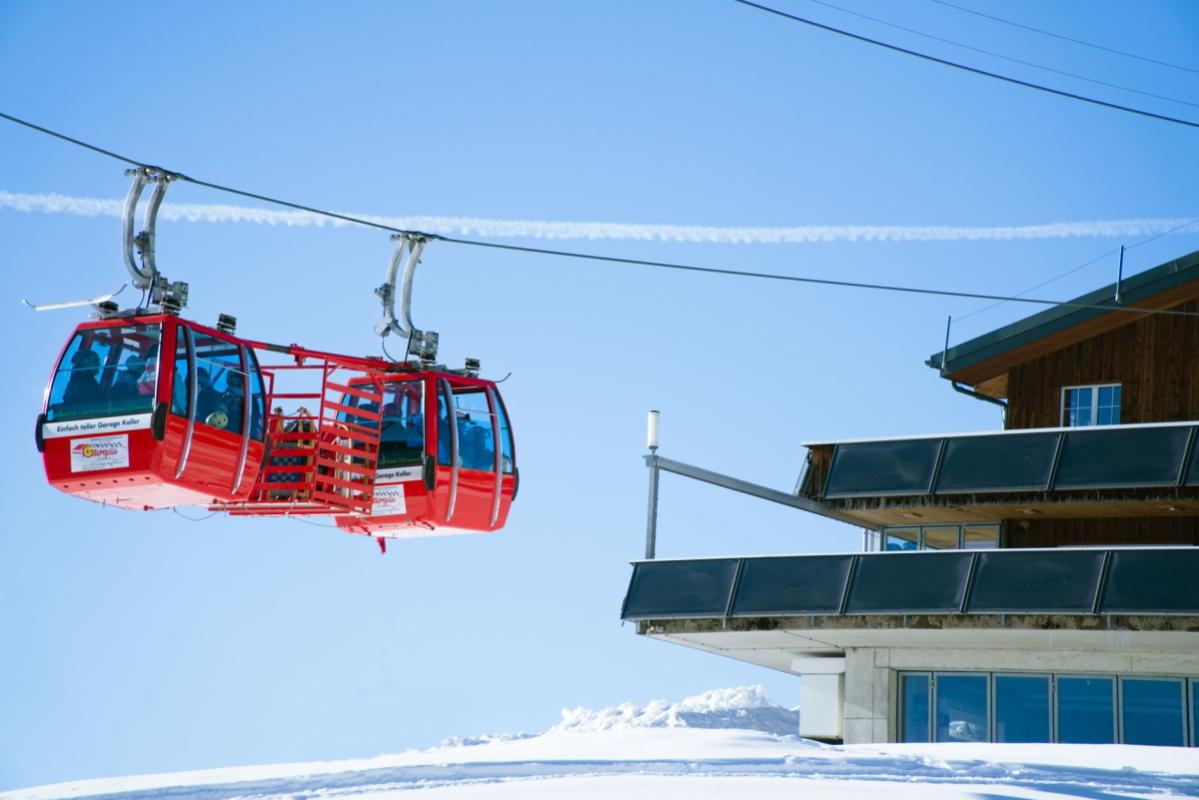
In Pavilion B, the local strand may prove most interesting to visitors from outside Liberec: the textile industry, contemporary production and the history of the cable car to Ještěd, complemented by the first and last cabins used on the line. This is no longer simply a museum of old vehicles. The exhibition shows how the city changed under the influence of factories, transport, technical education and new technologies.
How long? At least 90 minutes if you want to see the cars, motorcycles and public transport. Two to three hours will allow you to go through all the pavilions without rushing. On a cold day, remember that the exhibition space has an industrial character, so practical clothing is advisable.
The Nativity Scene Museum in Kryštofovo Údolí: small scale, great precision
The Nativity Scene Museum in Kryštofovo Údolí is a completely different experience from the Liberec collections. It does not compete in size or number of departments. Its strength lies in concentration: you look at objects made on a scale where the most important things become the figures’ faces, the way the mechanism is concealed, the arrangement of the scene and the local details.
Who is it for? People interested in craft traditions, families with children, collectors and anyone who enjoys intimate museums. It is also a good stop for tourists who find large exhibitions and dozens of rooms tiring. The visit requires no advance preparation, but offers more if you approach it as an encounter with handicraft rather than seasonal decoration.
The highlight: the juxtaposition of different ways of constructing a nativity scene. The collection brings together objects connected with local tradition and works representing other periods and regions. Look for more than just the central Nativity scene: notice what is happening at the edges—the everyday activities, architecture, animals and small jokes concealed among the figures.
In 2025, a glass nativity scene depicting Kryštofovo Údolí was added to the collection. The handmade figures portray local people and places, and some have been captured in motion and with a sense of humour[3]. It is a good example of how tradition can be reinterpreted in a new material without pretending that the present does not exist.
It is here that you can best see that a “museum of oddities” need not mean an exhibit that is strange. The extraordinary may lie in the scale, the patience of the work and the way an object preserves an image of a town. After your visit, leave time for a walk through Kryštofovo Údolí, known for its preserved vernacular architecture and wooden Church of St Christopher[3].
How long? Around 30–60 minutes. That is long enough to examine the details without hurrying, yet short enough for the museum to be easily combined with another stop. It is best to confirm availability and opening hours before setting out, especially outside the main season.
Ferdinand Porsche Birthplace: design instead of brand worship
Ferdinand Porsche’s family home in Vratislavice nad Nisou belongs in this selection because it is not a classic biographical museum. Ferdinand Porsche was born in 1875 in what is now part of Liberec, and the contemporary exhibition uses this fact as the starting point for a story about engineering, mobility and design[2].
Who is it for? Car enthusiasts, industrial-design aficionados, historians of technology and families with teenagers who like to ask why an object looks the way it does. It also works if you are not interested in a particular brand. The focus here is not a collection of cars, but the way the process is presented: from tool and idea to a solution that transforms everyday mobility.
The highlight: the exhibition’s three-part structure—“The Art of Engineering”, “Mobility” and “Family”. The mobility section includes a car associated with the Porsche name, but also development work, styling studies and projects concerning the cars of the future. This allows visitors to follow not only the finished product, but also the decisions that led to its creation.
The family section is equally effective. A large table, photographs and keepsakes shift the story from the level of the designer’s legend to that of biography: home, relationships, successive locations and the environments in which his career developed. Interactive materials available on site help fill in the context without requiring visitors to read long blocks of text.
This is an exhibition particularly well suited to a day when you want to combine a museum visit with conversation. By the car, you can ask about aerodynamics; by the prototypes, about design compromises; and alongside the biographical materials, about how family and regional surroundings influence a designer’s later work.
How long? Around 60–90 minutes. A shorter visit is enough if you are primarily interested in the car and design. Families with teenagers should allow more time for the interactive materials and for discussion after viewing the exhibition.
How to turn these places into one good day
The most sensible approach is not to plan four full visits in a single day. MUZA and Technické muzeum Liberec are substantial enough for either one to serve as the main focus of an outing. The Nativity Scene Museum and Porsche’s family home are better treated as intimate additions—the first combined with a walk through Kryštofovo Údolí, the second with time in Liberec.
- For design: choose MUZA and focus on applied art, glass, ceramics, textiles and automata.
- For technology: start at Technické muzeum, then decide whether you still have the energy for Porsche’s family home.
- For a family with teenagers: combine the urban-transport pavilion with the automata or the mobility exhibition.
- For a relaxed, shorter outing: choose Kryštofovo Údolí and one museum in Liberec.
- For a rainy day: begin with the institution requiring the most attention and leave the smaller museum for later.
In practical terms, it is best to save the Czech names of the places in advance and check whether all the pavilions or temporary exhibitions are operating that day. Nor should you automatically assume that every institution offers Polish descriptions or follows identical photography rules. At MUZA and Porsche’s family home, it is worth asking about the interactive materials; at the nativity-scene museum, ask about the current availability of the collection.
The most interesting itinerary therefore does not lead from the “largest” museum to the “smallest”. It leads from a question to an object: how music works without a musician, how a city is recorded in a tram, how tradition fits inside a glass figurine and how an idea becomes a car. That is precisely why these institutions complement a stay in Świeradów-Zdrój so well—they do not repeat the mountain landscape, but show what people have managed to build, design and preserve.