Borderland glass holidays: a festival-and-craft guide from Szklarska Poręba to Czech Desná
From a spa base in Świeradów‑Zdrój, trace a living glassmaking culture that bridges the Izera and Karkonosze. Furnace shows, hands-on workshops, and weekend craft markets flow from Szklarska Poręba’s Leśna Huta to Czech studios and small towns across the ridge.
The first thing you notice on a damp morning in Świeradów‑Zdrój is the clean, resin-scented air. The second is the soundscape: a trampling of boots in the Walking Hall, birds worrying the spruce, a thin clink of glass from a shop window. This is a mountain spa that doubles as a perfect springboard for an art form born of fire and sand. Spend a weekend here and the region’s glass culture reveals itself like a cooled vessel in the annealer—slowly, with a shine you don’t forget.
Where the furnaces still glow in Szklarska Poręba
Just over the ridge from Świeradów, Szklarska Poręba wears its name like a thesis statement: “glassmakers’ clearing,” a town that grew with wood, water and silica and never quite left them behind.[1] The historic pattern was simple and relentless: mobile huts pushing deeper into the forest in search of fuel, streams driving mills and polishing wheels, families learning the craft at the bench. Hike its streets today and you’ll still pass kilns, galleries and small workshops where the language of gathers and punts is everyday speech.
Make your first stop Leśna Huta, where the choreography of hot glass is performed within arm’s length of the public. The masters work by eye and muscle memory—dipping the blowpipe, turning the gather with that quiet, even breath, rolling the incandescent mass on the marver until it answers the tool. Here, hand-formed, mass-coloured glass is the specialty; demonstrations run regularly, and hands-on workshops can be arranged in advance.[3] You’ll leave with the smell of warm metal on your sleeves and a cooled tumbler in your bag.
If you find yourself wanting the factory-scale story, trace the valley of the Kamienna to neighboring Piechowice, where a historic crystal works interprets cutting, polishing and pattern traditions for visitors. The route itself—past spruce, stone and water—makes tangible the resources that built a Silesian glass empire.[1]
Festivals, markets, and the pleasure of looking slowly
Glass, even when it’s moving at 1,100°C, teaches patience. So does the region’s calendar. Instead of anchoring your plans to a single date, think in patterns: spring and summer weekends when town squares host craft fairs; off-season Saturdays when the weather flips and local culture moves under a roof.
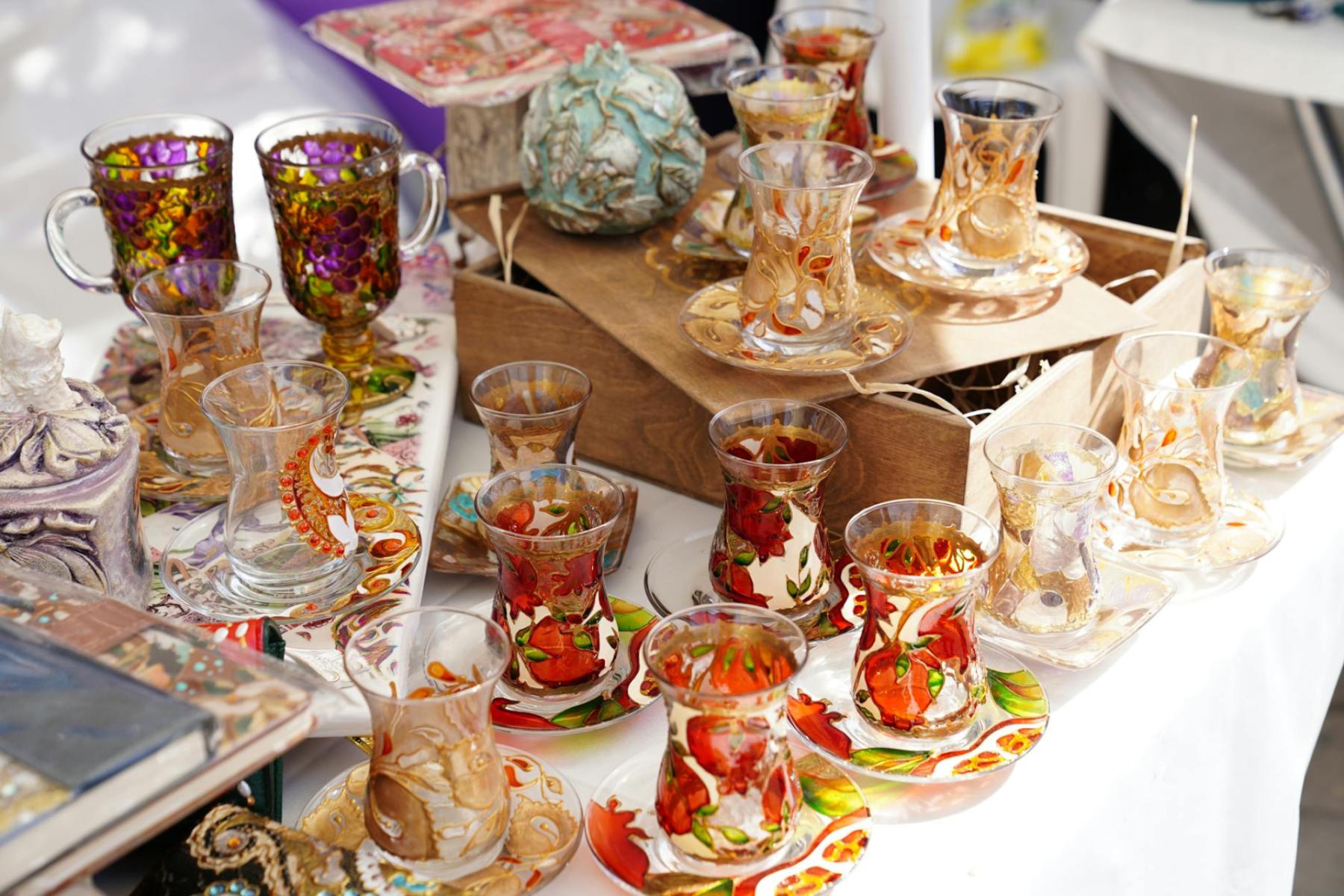
Świeradów’s Walking Hall—the spa’s timber-and-glass heart—does this beautifully. Several times a year it fills with stalls for the Izerski Jarmark Rękodzieła i Sztuk Wszelakich, a local handcraft market that brings weavers, woodworkers, potters and jewellers in from the hills. Expect workshops for children, the hum of small talk, and shelves stacked with the sort of everyday objects that make travel memories last: a beech-handled brush, a piece of pressed glass that throws morning light across a breakfast table.[6]
Between events, wander at leisure. Small galleries in both spa towns tend to show studio glass alongside painting and sculpture; you’ll often see works that mix the mountain palette—smoky greens, iron reds, frost-white—into contemporary forms. If rain rolls in, that’s your cue to duck into a cafe and watch the weather pass on the other side of a pane made not far from here.
Across the ridge: the Czech side of the glass story
The Izera Mountains themselves are a lesson in what glassmaking can do to a landscape. For centuries, furnaces demanded wood ash and charcoal; the industry both shaped and scarred these slopes, leaving a cultural imprint that’s outlasted the clear-cuts.[2] Today you can feel the old borderland rhythm—Polish villages facing Czech hamlets across a high, wet plateau—by stepping over to places where Czech glass remains a living language.
Point your compass to Desná in the Liberec Region, a small town set among mountain streams and spruce where the habits of hut and atelier still read as normal life.[5] Continue to hill villages and former glass colonies tucked above the valleys, or swing south toward towns whose identities orbit kilns and schools. Don’t rush it. Part of the pleasure is simply noticing how shop windows change, how an ordinary tumbler’s lip differs from one valley to the next.
There’s a quiet continuity in these cross-border trips. The railway helps. The historic line linking Szklarska Poręba with the Czech network, long closed after World War II, was reconstructed and reopened to passenger traffic in 2010, with services connecting across the ridge via Kořenov and on to Liberec.[4] Even if you go by car, that fact frames the day: a reminder that trade, technique and people have moved through these mountains for centuries with the same ease you feel now.
What live furnace shows and workshops are really like
The first surprise is scale. A workshop might be no bigger than a barn, its heat held in a single furnace, a bench, and a few tools with names that sound like nicknames—jacks, shears, blocks. In a public demonstration you’ll see the full grammar: gathering molten glass, marvering to shape, inflating the bubble with one steady breath. Colour is introduced in the mass or by overlay; a second worker warms a punty for transfer, the piece flips, the lip is tooled open, a foot coaxed into being from a small, coaxed disk. The performance ends with a note of restraint: the new work goes into the annealer to cool slowly. No triumphant plunge into cold water. No instant souvenirs.
Hands-on sessions—offered by local huts to visitors who’ve booked ahead—strip the mystery without killing the magic. You may try a paperweight or a small vessel, and you’ll do it guided by a maker who can read heat as easily as you read a street sign. The best lesson you take away is respect: for the materials, for the timing, for the way a tool sings when it meets hot glass. In Szklarska Poręba, Leśna Huta has built an approachable version of this experience; it’s the kind of place where your curiosity feels like part of the fuel.[3]
A “glass weekend” built from light and time
Day 1 — Spa base, market morning, furnace afternoon
- Morning in Świeradów‑Zdrój: Start under the timber vaults of the Walking Hall. If your visit aligns with the Izerski Jarmark, browse for handthrown mugs, woven table runners, or a piece of lampworked jewellery while a rainshower drums the panes.[6] No market? The Hall still rewards unhurried time—people-watching, sipping, plotting the afternoon.
- Midday interlude: Step into the past at Czarci Młyn (Devil’s Mill) in nearby Czerniawa-Zdrój, a working witness to the region’s craft economy and a good counterpoint to glass: flour instead of sand, wheel instead of furnace. The creak of wood and the smell of warm bread put you in the right, tactile frame of mind.
- Afternoon in Szklarska Poręba: Drive or bus over the serpentine road and settle in at Leśna Huta. Catch a demonstration, then take a short walk through town to scout galleries and small studios. If the weather opens, the mountain light will do the rest—greens and greys slipping into the glass like a second pigment.[3]
Day 2 — Over the ridge to Czech ateliers
- Morning crossing: Head for Desná. On the way you’ll read the borderlands in real time: Germanic eaves on Polish houses giving way to Czech gables; roadside shrines trading places with timber barns. Keep your plans loose enough to stop where a studio door stands open.[5]
- Midday wandering: Pair a studio visit with a small-town museum or gallery; in this corner of the Liberec Region, public collections often hold glass alongside design and applied arts. If you prefer the open, the Izera uplands cradle hamlets like Jizerka where glassmaking once shaped a whole settlement plan—another kind of museum, this one of landscape and labor.
- Late afternoon return: Loop back toward the spa. If you’re traveling without a car, consider the reconstructed cross-border railway routes as a scenic alternative for at least part of the journey; timetables change, but the infrastructure is there to be used by curious travelers.[4]
Why this borderland still matters for design lovers
Because the story here isn’t a postcard of “old crafts.” It’s a live set of skills, still taught, still adapted, still embedded in everyday life—from a hotel tumbler to a gallery piece with the mountain sky trapped inside. The material culture spans scales and price points: a pressed-glass bottle that feels soft at the neck; a cut-crystal bowl whose light is as sharp as snow; a studio object that makes you tilt your head because you haven’t seen glass quite that colour before.
If you’re traveling with children, the region is a gift. Demonstrations are visual and immediate, and the rhythm of a market morning followed by an active workshop is kind to short attention spans. If you’ve come for the spa and the climate, glass is a perfect bad-weather alternative: indoors, local, and gently educational without feeling like a lecture. Świeradów’s balneary tradition and radon therapies may be what brought you here, but it’s the glow of the furnace that will add a second layer to your stay.
One last note. The Izera and Karkonosze are not a museum under glass. They are lived-in mountains whose ecosystems once bent under the needs of an industry that also gave them a culture. Traveling thoughtfully—taking the train where it’s practical, buying directly from makers, respecting the slowness that glass requires—is part of honoring that inheritance.[2][4]
Stand outside Leśna Huta at dusk, and you’ll hear it all in one breath: the hush of the forest, the soft rasp of tools, the furnace’s heart. On the other side of the ridge the same sound runs under a Czech roof. Two countries, one craft. The glow is the same.