A mountain hut is not a restaurant with rooms. Who really runs a mountain refuge?
The most common mistake guests make is treating a mountain hut like a restaurant with rooms. Yet behind a hot meal, a dry bed and functioning utilities stand the work of hosts, cooks, storekeepers, technicians and people who must make decisions when the weather and transport stop cooperating.
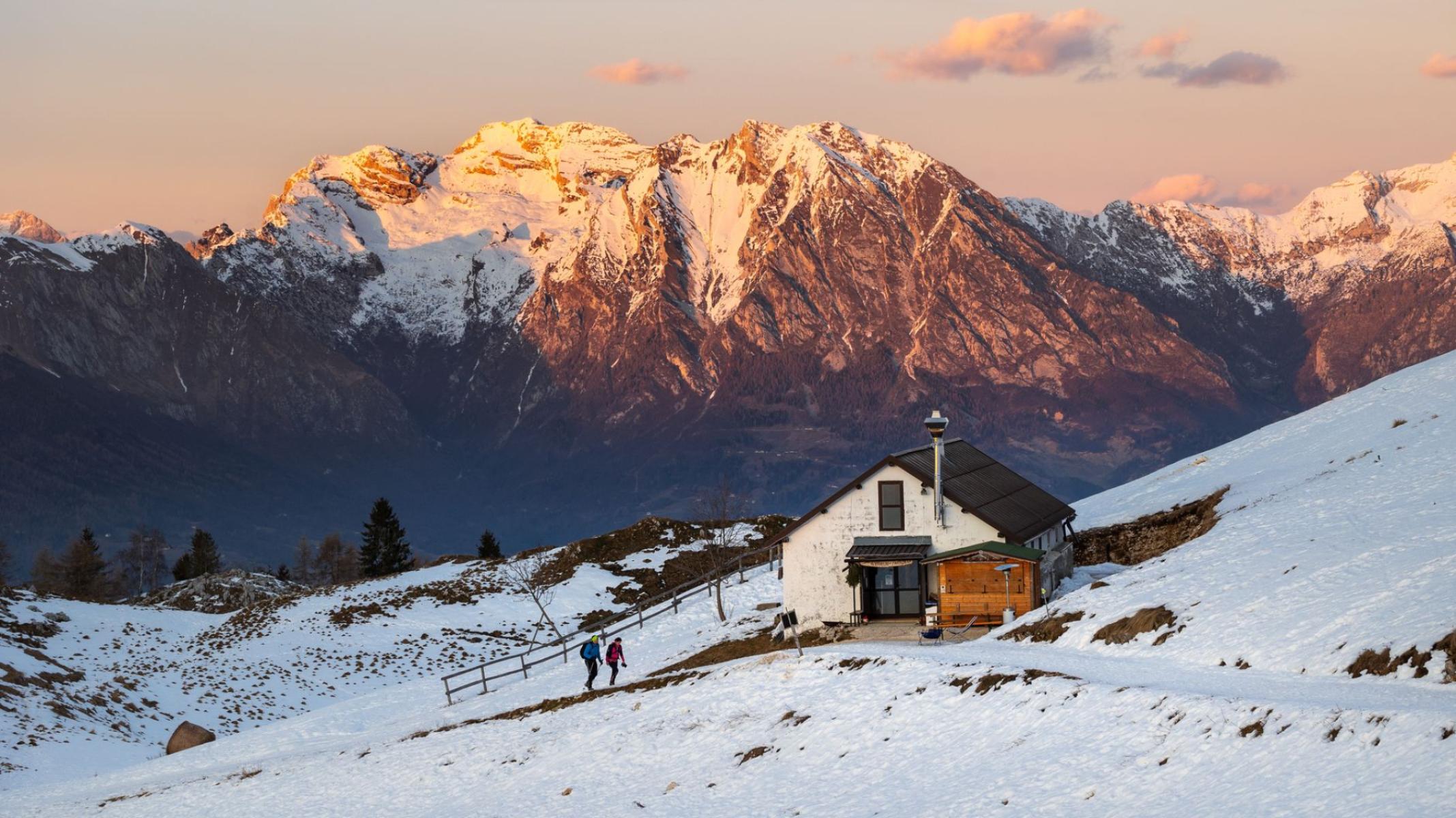
The most common mistake guests make at a mountain hut is to see it as a restaurant with rooms. The cost of this oversimplification is straightforward: they do not understand why, at altitude, it is impossible to replenish supplies immediately, repair a breakdown or serve everyone as one would in a property on a city street.
In the Sudetes, the word “host” means far more than the person standing behind the counter. It describes someone who looks after the building, its people, deliveries, heating, water, kitchen and the decisions made in unpredictable conditions. Sometimes they run a family property rebuilt over decades. Sometimes they work within a large organisation. They may also be the owner, leaseholder, manager, cook and caretaker all at once.
This becomes clearest when four very different stories are set side by side: Wysoki Kamień, Szrenica, the PTTK mountain hut on Hala Szrenicka and the property on Stóg Izerski, directly associated with Świeradów-Zdrój.
A host does not begin the day by welcoming guests
A tourist’s visit is only the most visible fragment of the work. Before anyone orders tea, it is necessary to check that the building is ready to operate: that the rooms are heated, the utilities are working, the kitchen can begin preparations and the goods have arrived in the right quantities. If something is not working, the problem does not disappear simply because the doors are about to open.
In a city-based hostel, some of these tasks can be assigned to specialised teams. In a mountain property, the scope for self-reliance is greater. The host must be able to determine whether a breakdown requires immediate intervention or can wait until transport is safe. They must also know which supplies are critical, how to limit consumption and when to suspend some services in order to keep the building functioning at a basic level.
That is why a mountain hut is not merely a place that sells accommodation and meals. It is a small economic organism. The kitchen depends on deliveries, deliveries on the road, the road on conditions—and everything on people capable of operating without a convenient technical infrastructure close at hand.
A glossary of hut operations
- Host — the person or family responsible for running the property day to day.
- Operator — the entity that organises the operation, employs people and is responsible for administration.
- Supplies — not only food, but also fuel, cleaning products, spare parts, bed linen and materials needed for repairs.
- Technical infrastructure — everything that allows the property to function beyond the dining room: heating, water, power, drainage, storage areas and transport routes.
- Seasonality — the need to plan work differently during periods of heavy traffic and when there are fewer tourists, even though the building still requires maintenance.
The most important skill a host possesses does not always produce an effect that can be photographed. It is the ability to anticipate problems.
Four operating models, four kinds of responsibility
Wysoki Kamień: rebuilding as everyday work
The story of Wysoki Kamień is one of a private initiative run by a family. The first mountain hut on the summit was built in 1837 on the initiative of the Schaffgotsch family, and after the war the property gradually fell into ruin. In 1963, it was dismantled. In 1996, the Gołba family from Szklarska Poręba bought the land and began the long process of rebuilding the site.[1]
It is an important example because it shows a mountain hut not as a finished product, but as an undertaking spread over many years. On the property’s contact page, Dorota and Józef Gołba are named as the hosts.[2] Their story is not limited to serving visitors. It also encompasses organising construction, maintaining the grounds, improving access and making ongoing investment decisions.
At Wysoki Kamień, the difference between a place visited for a few hours and one that must be maintained all year is especially clear. The guest sees the terrace, dining room and panorama. The host also sees the roof, road, store room, tools, costs and the things that still need to be brought to completion.
Szrenica: a private property at the boundary between tourism and high-mountain logistics
The mountain hut on Szrenica operates according to a different model. The property was built in 1922, after Franz Endler lost the opportunity to run a hut on the Czech side of the border. Following a period of post-war administration by PTTK, it has been privately run since 1992.[6]
Its location at an elevation of approximately 1,362 metres above sea level changes the scale of everyday problems. Every delivery, repair and staffing decision must take into account not only the number of guests, but also the more demanding working conditions. A property high in the mountains is more dependent on the weather, the availability of transport and the experience of those who know the terrain.
In a private mountain hut, responsibility is usually highly concentrated. The host’s name becomes part of the place’s reputation, but it also entails personal risk. A difficult day does not end when the kitchen closes. Deliveries still have to be accounted for, the condition of the building assessed, the following day prepared for and decisions made about which problems can be postponed and which must not be ignored.
Hala Szrenicka: a PTTK property as a system
The PTTK mountain hut on Hala Szrenicka represents a third model. The property stands at an elevation of approximately 1,200 metres above sea level, within Karkonosze National Park. Its history reaches back to a shepherd’s hut dating from 1787, while its present form is the result of successive reconstructions and rebuilding after a fire in 1976.[4]
This is not the story of a single family rebuilding its own home, but of a property operating within a larger organisation. Sudeckie Hotele i Schroniska PTTK manages the properties and facilities belonging to PTTK; according to its own information, it operates 23 properties in three provinces.[3]
In this model, the host on site is still responsible for everyday operations, but works within a broader system of procedures, budgets, renovation decisions and work organisation. The guest sees a single dining room. Behind it stands a structure that must coordinate numerous properties, people and technical problems.
At Hala Szrenicka, the scale of its functions alone is significant: the property offers full-day catering, accommodation and event organisation.[4] This means several parallel worlds of work—kitchen, room service, reception, storage, building maintenance and contact with tourists.
Stóg Izerski: Świeradów-Zdrój’s mountain hut
Stóg Izerski is the nearest major mountain destination for Świeradów-Zdrój. The mountain hut lies below the summit and was opened on 24 October 1924. Its first hosts were the Kober family, who ran the kitchen and served tourists until the end of the hostilities.[5]
In municipal materials from 2015, Grażyna and Piotr Bielewicz were named as the hut’s hosts.[5] This is an example of a model in which the character of a property is shaped not only by its formal owner, but also by the person or family present on site for many years. For tourists, this means continuity of memory: knowledge of the trails, local problems, the building’s history and the habits of people who return to the mountains.
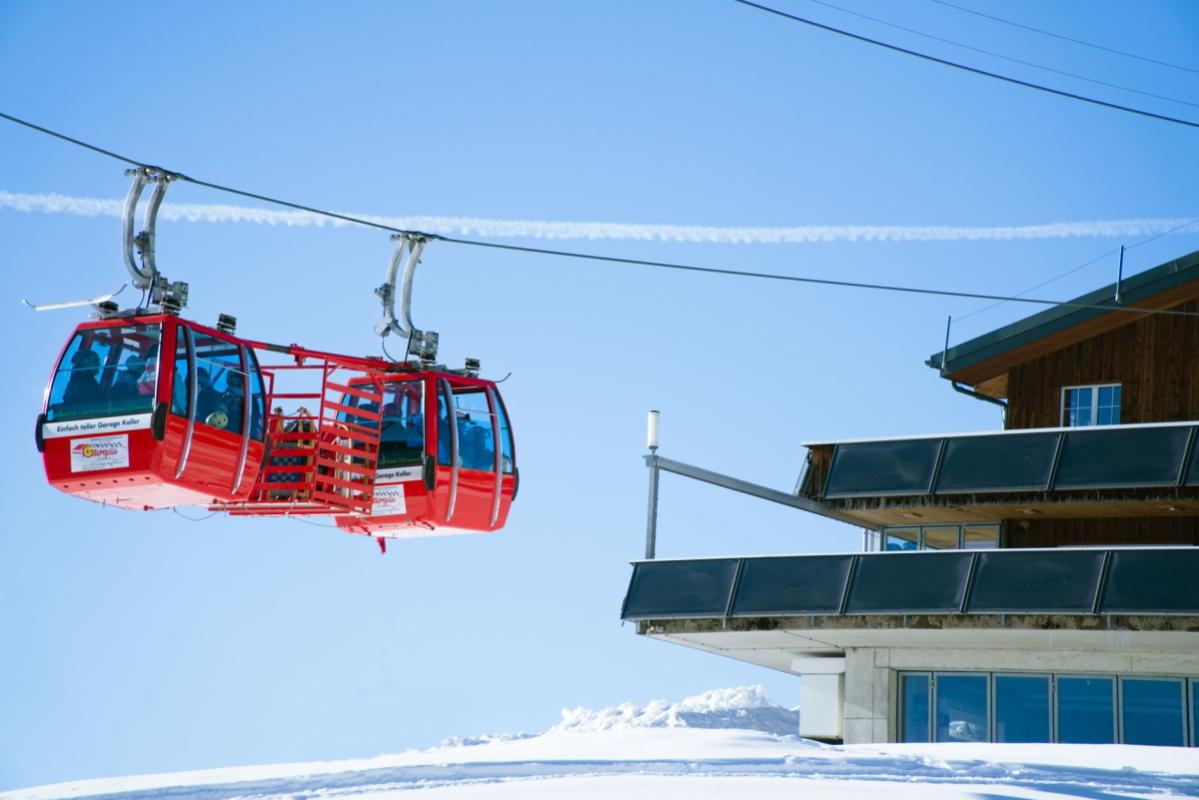
Stóg has another feature that distinguishes it from more remote mountain huts. It is closely connected with the spa town and easily accessible to day visitors. The gondola is approximately 2,171 metres long, while the route from Świeradów-Zdrój leads both along a trail and by an access road.[5] This increases the number of visitors, but does not eliminate the problems of the back-of-house operation. Heavy traffic at the entrance does not automatically mean easier supplies or simpler work.
What really happens off-season
Off-season, a mountain hut does not go into hibernation. Only the nature of the work changes. Instead of continuously serving meals, there are inspections, cleaning, painting, repairs, stocktaking and delivery planning. It is the moment when things can be done that are impossible with a full dining room and occupied rooms.
Off-season, it is also easier to see that a host must think simultaneously like a hotelier, storekeeper and building manager. Food has use-by dates. Fuel must be ordered in advance. Parts for utilities cannot always be bought immediately. Staff must be arranged so that the property continues to operate even if one person falls ill or someone is unable to reach the mountain.
A lack of water in such a place is not an inconvenience comparable to a tap being briefly turned off in an apartment. It means determining the cause, safeguarding guests, limiting consumption and calling for help or a technical crew. Heating is similar: a breakdown in the valley is a service issue, whereas in a mountain hut it can quickly become an organisational and safety problem.
Transport, too, does not end with bringing products to the door. It is necessary to plan what travels together, what requires special protection, what can wait and which supplies should be kept in case conditions deteriorate. That is why a cook in a mountain hut does not work solely from a recipe. They also work with a limited storeroom and the need to use products without waste.
In a crisis, experience matters. The host must distinguish an ordinary delay from a situation in which someone may need help. They must know when to open the doors later, when to direct a tourist to the emergency services, when to limit kitchen operations and when not to take a risk simply to maintain a normal schedule.
What to notice as a guest
There is no need to turn into a back-of-house inspector during your visit. It is enough to pay attention to a few things.
- Who knows the answer without checking their phone. An experienced host can often say immediately what the approach is like, where problems may arise and which route makes sense in the given weather.
- How the kitchen operates. A meal is not merely a menu item. It is the result of delivery planning, teamwork and the use of supplies that had to reach the site beforehand.
- What happens at the door. Welcoming a late-arriving tourist, a tired person or someone who suddenly changes their plans requires an assessment of the situation, not simply a mechanical reading of the rules.
- Whether things are repaired as they go. A squeaking door, damaged handrail, heating problem or leak is not background to the visit. These are tasks that someone must carry out or organise.
- What the relationship is between the building and the terrain. The road, snow, mud, wind and distance from the nearest shop are part of the property’s operation, even though they do not appear on the accommodation bill.
It is also worth remembering that the word “mountain hut” describes a function, not a single operating standard. Wysoki Kamień is a story of private rebuilding. Szrenica is a private property on a high ridge. Hala Szrenicka operates within the PTTK system, while Stóg Izerski remains one of the best-known places associated with Świeradów-Zdrój. Each of these models requires different decisions, but none operates alone.
A guest comes for a few hours or a single night. The hosts remain with the building, utilities, supplies and responsibility even when the trail grows empty. That is why a mountain hut is not a restaurant with rooms. It is a place where a meal, a bed and a sense of security are the final outcome of work by people invisible to most visitors—and where the true owner is sometimes not the person holding the key to the door, but the one who knows how to make sure it can be opened again the following day.