Balneo A–Z of the Sudetes: Radon, Acidulous Springs and Peat — a Practical Guide to Świeradów, Czerniawa, with Context from Cieplice and Lądek
How to read a treatment list in the Western Sudetes without the hype. From radon baths and inhalations in Świeradów–Czerniawa to thermal hydrotherapy in Cieplice and the classic radon–fluoride–sulfide waters of Lądek, this A–Z explains what each procedure is, what it’s based on locally, what you feel, and which therapeutic profiles it’s commonly folded into.
The first thing you notice after stepping into Świeradów’s Promenade Hall is the scent: resin and larch, a faint mineral tang on the air. Light winks off glass as someone fills a cup at the drinking spring; down a quiet corridor, the treatment wing hums softly — warm water moving through pipes, a door latch, the hush of a waiting room. This is where the region’s mountain geology becomes felt on the skin, breath by breath.
The raw materials: what each spa actually works with
Świeradów–Zdrój and its Czerniawa district base their practice on licensed curative waters that include radon-bearing and naturally carbonated acidulous waters, alongside peat (borowina) and traditional spruce decoctions. Access to procedures that draw on those licensed waters — radon baths and inhalations, therapeutic mineral baths, and the drinking spring — is provided within the resort’s own facilities under concession.[1] Peat wraps and baths, iodine–bromine inhalations, hydromassage and whirlpools, the radon–saline inhalation chamber, and the spruce bath all appear on the current treatment schedules.[2] Geologically, the acidulous (CO₂‑rich) springs here are part of a broader Sudetic belt of bicarbonate waters; Czerniawa and Świeradów sit among classic localities in that map of carbonic resources.[5]
Cieplice Śląskie–Zdrój, folded into Jelenia Góra, is the thermal outlier nearby: hydrotherapy there is conducted on the resort’s own licensed therapeutic thermal waters, captured and used on site. In the regional tourism board’s summary for the operator’s portfolio, the Cieplice sanatorium is explicitly identified as the entity authorized to extract and use those thermal waters for treatments.[3] In practice, it means that water-based procedures in Cieplice (from pool exercise to therapeutic bathing) run on the fluoride–silica, low‑mineral content waters of its local field — not on imported brines or generic mains supply.
Lądek–Zdrój, over the Kłodzko Pass and into the Golden Mountains, is a different encyclopaedia again. Its thermal medicinal waters combine several “swoiste” components: radon, fluoride and sulfide among them. The national geological service’s 2023 balance sheet lists Lądek’s system explicitly in those terms and notes the gamut of uses — classic tub and pool baths, radon inhalations, and a drinking cure.[4] In other words, within one compact historic quarter, you can move between waters whose dominant physiochemistry differs quite meaningfully.
How to read a treatment list here
Think in layers:
- The solvent (water) — its temperature and mineral content.
- The solutes and gases — CO₂, fluoride, sulfide, trace radon, iodine–bromine brine.
- The medium beyond water — peat packs, paraffin, fango, and the forest’s own spruce.
Then map each local spa to its raw materials. Świeradów–Czerniawa: acidulous waters, radon procedures, borowina and spruce. Cieplice: thermal fluoride–silica waters used exclusively for hydrotherapy on the spa estate.[3] Lądek: thermal waters with radon alongside fluoride and sulfide fractions in the classic bathhouses and the pump room.[4] With that frame, the alphabet of procedures below starts making tactile sense.
A–Z of Western‑Sudetic balneotherapy
A — Aerosol
What it is: Inhaled mist carrying dissolved or fine‑droplet mineral constituents. At Świeradów–Czerniawa you’ll see radon inhalations as well as iodine–bromine aerosol sessions on the price board.[2]
What you feel: A cool, saline or neutral vapor on the palate; quiet, rhythmic machine hiss. Ten minutes pass quickly.
Where it fits: Frequently in respiratory and ENT profiles; also prescribed as a gentle complement to outdoor walking in the park pines. (No medical promises here; this is context.)
A — Aquatherapy (pool exercise)
What it is: Guided movement in a warm pool to offload joints and cue range‑of‑motion. In Świeradów’s timetable it appears as group or one‑to‑one sessions; in Cieplice, pool work is conducted in the resort’s own thermal water.[2][3]
What you feel: Buoyancy meets instruction; the water feels softly dense as you push against it.
Where it fits: Musculoskeletal and post‑injury rehabilitation sets; sometimes paired with whirlpools or hydromassage.
B — Borowina (peat)
What it is: A natural peloid — organic‑mineral mud matured over time — applied as heated wraps or used as a warm bath medium. In Świeradów the menu lists full and partial peat wraps and an individual peat bath.[2]
What you feel: Heavy, even heat; the wrap has a mossy, earthy scent and leaves the skin pink and warm after removal.
Where it fits: Often included for musculoskeletal complaints, some dermatological and gynecological programmes. It’s a heat‑retentive medium more than a spa “mask.”
C — Carbonic‑acid bath (kąpiel kwasowęglowa)
What it is: A bath in CO₂‑rich mineral water (acidulous water); bubbles cling to the skin as dissolved carbon dioxide diffuses in the boundary layer. The Sudetes’ belt of CO₂‑bearing bicarbonate waters includes Świeradów and Czerniawa.[5]
What you feel: A fine fizz on shins and forearms first, then a steady, warming stillness; skin often looks slightly stippled by bubbles when you stand.
Where it fits: Common in circulatory and peripheral vascular sets; also in general “conditioning” regimens.
D — Drinking cure (kuracja pitna)
What it is: Supervised consumption of specific mineral waters from a pump room. In Świeradów the drinking spring is part of the licensed‑water offer within the resort’s own buildings.[1]
What you feel: Warmth in the esophagus; metallic or slightly tangy notes depending on iron and CO₂. Carafes click back onto marble counters; you sit with a view of the promenade.
Where it fits: Usually scheduled away from meals, and integrated into broader programmes by spa physicians.
D — Dry CO₂ bath
What it is: You sit (clothed to the waist) in a sealed, waist‑high bag that’s filled with carbon dioxide; the gas acts on skin vasculature without water immersion. Not every spa offers it. In the Sudetes, Długopole‑Zdrój (Kłodzko Valley) publicises dry CO₂ sessions as one of its attractions.[6]
What you feel: A warm envelope of still air; a faint, chalky smell; many people notice gentle leg warmth first.
Where it fits: Often substituted where water baths are limited or combined with walking therapy. As always, follow on‑site guidance.
E — Emanatorium (radon–saline inhalation chamber)
What it is: A dedicated room or installation where radon‑bearing and/or saline aerosols are dispersed in a controlled space. Świeradów’s current schedule lists a “tężnia radonowo–solankowa (Emanatorium)” alongside other inhalation formats.[2]
What you feel: A stable, conditioned microclimate; saline on the tongue, low ambient sound.
Where it fits: Typically within respiratory and general restorative sets.
F — Fango and other heat packs
What it is: Mineral muds and paraffin‑based packs applied warm to specific areas. Świeradów’s list includes “okłady Fango” and paraffin for hands and feet.[2]
What you feel: Targeted heat with a waxy or clay texture; a focused, comforting weight.
Where it fits: Localized joint, tendon and soft‑tissue protocols; adjunct to exercise.
H — Hydromassage
What it is: Directional jets under water or a bed‑type dry water massage. Both appear in Świeradów’s line‑up.[2]
What you feel: Pulsed pressure and warmth; a steady drum of water against muscle knots.
Where it fits: Recovery days, general relaxation, low‑load circulation work.
I — Inhalations (radon; iodine–bromine)
What it is: Nebulized curative waters inhaled through a mouthpiece. Świeradów–Czerniawa runs both radon and iodine–bromine options on its price list.[2]
What you feel: Cool mist; a salt‑sweet trace for the brine; sessions are short and quiet.
Where it fits: Respiratory sets; sometimes in ENT programmes.
J — Jet showers (bicze szkockie)
What it is: Alternating hot–cold high‑pressure jets directed by a therapist. Świeradów offers classic “Scottish showers,” with and without a curtain spray.[2]
What you feel: A bracing choreography of temperature and pressure. The room steams, then you hit crisp cool.
Where it fits: Conditioning, circulation and toning themes.
M — Mineral bath; mineral–saline bath
What it is: Immersion in local mineral water, sometimes enriched with iodine–bromine brine. Both variants are standard in Świeradów’s schedule.[2]
What you feel: Gentle lift and warmth; brine leaves a soft film on the skin.
Where it fits: General restorative sets; sometimes cardiovascular programmes under supervision.
P — Peloid
What it is: The technical umbrella for therapeutic muds — peat among them — matured in water, used as baths, masks or wraps. In practice here: peat wraps, baths and local hand/foot applications.[2]
What you feel: See Borowina, above — the archetypal peloid in Polish spas.
Where it fits: Musculoskeletal and skin‑related programmes; a classic of the treatment day.
R — Radon bath; radon pool
What it is: Immersion in water containing dissolved radon from local sources. Świeradów–Czerniawa is a designated radon resort, offering individual baths and access to a radon pool, together with radon inhalations under concession.[1][2]
What you feel: Nothing dramatic in the water itself — temperature and buoyancy are the cues — which is why the ritual and pacing of the bath matter: the quiet room, the way time is measured.
Where it fits: Typically within musculoskeletal, neurological and some autoimmune‑adjacent programmes as used in Central European spa tradition. The point here is provenance and controlled dosing.
S — Spruce bath
What it is: A warm bath prepared with a decoction of spruce bark/needles; in Świeradów it’s an individual procedure, a nod to the forests that ring the town.[2]
What you feel: A resinous aroma, slight astringency to the water, and a lingering woodland scent on the skin.
Where it fits: General relaxation and respiratory‑adjacent sets; often chosen for comfort as much as for tradition.
W — Whirlpool; water‑jet massage
What it is: Local whirlpools for hands/feet (listed as “masaż wirowy KKG/KKD” in Świeradów) and under‑water jets in a tub.[2]
What you feel: Gentle drag and spiral pressure round joints; a warm, rhythmic envelope that quiets the limbs.
Where it fits: Peripheral circulation, hand therapy, or a soft landing between more intensive sessions.
Świeradów–Czerniawa versus Cieplice and Lądek: how the offers differ
Świeradów–Czerniawa is built around two signatures: radon and carbonic acidulous waters — then peat and spruce as a local texture. It’s the classic Sudetic pairing: a CO₂‑rich base for circulatory conditioning and the option of radon doses in bath or inhaled form, delivered under the resort’s long‑held concession.[1][5] Reading its schedule, you’ll see those elements braided into a day: e.g., radon bath in the morning, whirlpool mid‑afternoon, peat pack before supper.[2]
Cieplice reads differently because everything wet runs on the estate’s own thermal water. You’ll feel that in the pool halls and the treatment baths — an internally coherent hydrotherapy built on a single fluoride–silica field, rather than on multiple imported media. The operator is the licensed extractor and user for treatments there, which is a neat through‑line from geology to practice.[3]
Lądek is the regional polymath: the geological service’s inventory lists its thermal waters as weakly mineralised yet “swoiste” — explicitly fluoride, radon, sulfide — and documents their use in tub baths, pools, inhalations and the drinking cure.[4] When locals speak of “taking the waters” in Lądek, they’re not being figurative; the combination of radon baths and, separately, sulfur–fluoride waters is the town’s spine.
What you actually feel in the treatment rooms
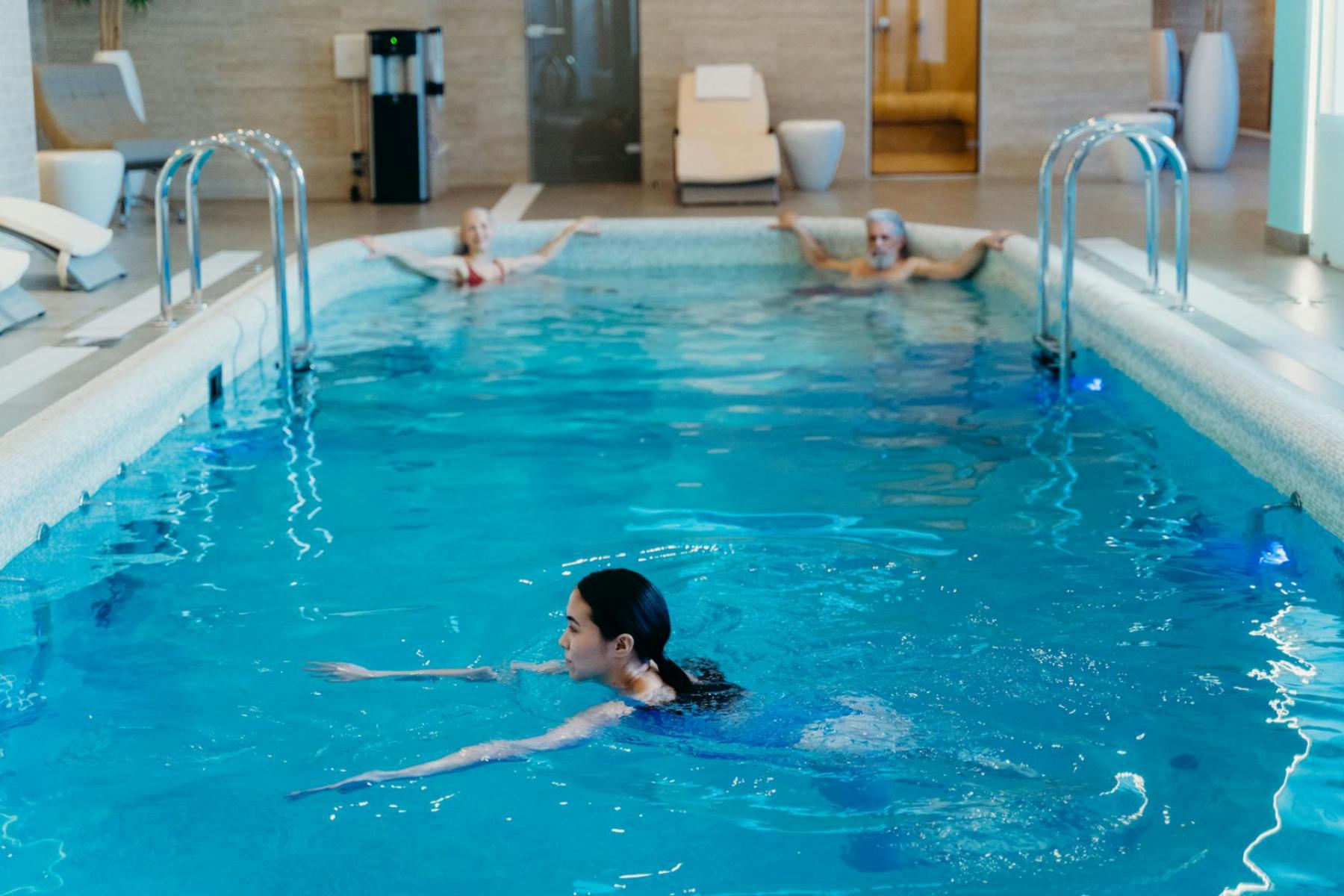
Some of spa medicine’s language can feel abstract; the rooms aren’t. In Świeradów’s radon pool, you’ll notice a warm hush, the light off tiled edges, and the unbroken surface until you lift an arm. The peat room smells of moss and loam; time is counted in minutes and folds of canvas. Inhalations are about breath: a mouthpiece, soft aerosol, the scuffed floor under your chair. The spruce bath is as much olfactory theatre as hydrotherapy — a small forest steeped in porcelain.
Across the valley in Cieplice, thermal pools feel softly heavy, as if the water wants you to float whether you intend to or not. In Lądek, there’s theatre too — historic rotundas and marble tubs — but the water in your glass from the pump room brings it all down to earth. One sip and the geology becomes something you can taste.
Mini‑glossary for the Sudetes
- Acidulous water (szczawa) — Natural mineral water rich in free CO₂; in Świeradów–Czerniawa it underpins carbonic‑acid baths and some drinking cures.[5]
- Balneotherapy — Therapeutic use of mineral waters and peloids: baths, inhalations, drinking cures, packs.
- Carbonic‑acid bath — Immersion in CO₂‑rich water; fine bubbles adhere to the skin; widely used in the Sudetes.[5]
- Dry CO₂ bath — A waist‑high, sealed “bag bath” filled with carbon dioxide; in the region, practised for example in Długopole‑Zdrój.[6]
- Emanatorium — A controlled inhalation space dispersing radon and/or saline aerosol; listed in Świeradów’s offer.[2]
- Hydromassage / whirlpool — Jet‑driven water massage; local whirlpools for hands/feet appear as “masaż wirowy.”[2]
- Inhalation — Nebulized curative waters inhaled; in Świeradów both radon and iodine–bromine are scheduled.[2]
- Mineral bath — Tub bath in local mineral water; sometimes combined with iodine–bromine brine (mineral–saline bath).[2]
- Peloid — Umbrella for therapeutic muds (peat/borowina among them) matured in water and used warm in wraps or baths; a cornerstone of Polish spa practice.
- Radon bath — Immersion in water containing dissolved radon gas captured from local sources; Świeradów–Czerniawa is a designated radon resort with baths, pool and inhalations.[1][2]
- Spruce bath — A warm bath infused with decoction of spruce bark/needles; rooted in Świeradów’s forest tradition and offered as an individual soak.[2]
How to use this A–Z? Match the medium to the place. If you’re reading a Świeradów–Czerniawa programme, look for the radon line, the acidulous bath, peat, and the spruce bath to understand the local logic. In Cieplice, note that every wet procedure is a conversation with one thermal field. In Lądek, expect a menu that can toggle radon, fluoride and sulfide across different rooms and rituals.[3][4][5]
None of this is prescription. It is, instead, a way to understand why a tub in one valley feels different from a pool in the next, and why a quiet cup from a pump room tastes the way it does. In the Western Sudetes, tradition isn’t marketing — it’s chemistry, temperature, and time.