Railway, Mill and Former Borderland: 3 or 5 Days of Everyday Life around Świeradów-Zdrój
“Station–mill–spa” or “Świeradów–Mirsk–Czechia”? This itinerary is shaped not by the number of peaks, but by curiosity about the world that usually remains in the background: railway stations, workshops, springs, old routes and small cultural centres. The three-day version stays on the Polish side of the Jizera Mountains; the five-day option shows how similar needs also shaped life on the Czech side of the border.
“Station–mill–spa” or “Świeradów–Mirsk–Czechia”? The choice depends on whether you want to read Świeradów-Zdrój from the inside at an unhurried pace, or add former cross-border connections, crafts and towns on the other side of the Jizera Mountains to the itinerary.
This is not a route for people who want to conquer another peak every day. Its subject is the places created to serve a purpose: to receive spa guests, transport goods, mill grain, bake bread, pass on knowledge or simply organise everyday life for local residents. In three days, you can build a compact stay in Świeradów-Zdrój and Czerniawa-Zdrój. Five days allow you to add Mirsk and the Czech side of the region—Frýdlant or Jizerka.
The most important rule is this: separate places to look at from places to listen to. The railway station, Strolling Hall and spa architecture work best when given time to reveal themselves. Czarci Młyn, Izerska Łąka and events at Stacja Kultury, on the other hand, gain depth when you arrive for a guided tour, presentation or workshop.
How to choose between three and five days
The three-day version is better for couples, solo travellers and anyone who wants one main theme each day without packing up every morning. All the key points remain within reach of Świeradów-Zdrój and Czerniawa-Zdrój, and travel does not overshadow the sightseeing.
The five-day version makes sense if you are interested not only in the spa itself, but also in its hinterland and network of connections. Then the railway is not decoration beside a former station, but a way of reading the region; the mill is not an isolated monument, but part of the local economy; and Czech Jizerka shows how crafts could build an entire settlement.
- 3 days: Stacja Kultury, an urban historical walk, Dom Zdrojowy, Muzeum Zdrojowe, the Strolling Hall, Czarci Młyn and Izerska Łąka.
- 5 days: the itinerary above plus Mirsk and a separate day on the Czech side—Frýdlant or Jizerka.
- Least rushed: do not combine Frýdlant and Jizerka in one day unless you have your own transport and regard the journey as part of the programme.
Day One: Stacja Kultury and a City Written in Details
For looking: the former railway station and the model railway
Stacja Kultury occupies the building of the former railway station on Dworcowa Street. The centre began operating on 1 March 2019, and its most important exhibit for this itinerary is a model depicting sections of railway lines 317 and 336 between 1945 and 1970, on the Gryfów Śląski–Mirsk–Świeradów-Zdrój–Świeradów Nadleśnictwo route. The model has approximately 105 metres of track and can be viewed free of charge[1].
Do not begin with photographs outside the building. First, look at the model as a map of everyday connections: where the stations were located, how the route ran, and what had to be linked for the spa to function. Only then step out onto the platform and see how the former station now operates as a cultural centre. A Tp4-217 steam locomotive also stands in front of the building, an exhibit connected with the history of the railway[1].
Stacja Kultury is also a venue for exhibitions, concerts, performances, meetings and workshops. It is therefore worth checking not only the opening hours, but also the current programme. An ordinary visit belongs to the category of “looking”; an event moves the same building into the category of “listening”—and may change the character of the entire day.
A short walk: do not look for a monument, look for the layout
After visiting Stacja Kultury, walk towards the spa centre, choosing a quiet route along streets lined with villas, traces of former resort infrastructure and details that are easy to miss on the way to a trail. The “Trail of Jizera Mysteries” urban game can provide a useful framework. The official route connects, among other places, Stacja Kultury, Czarci Młyn, Dom Zdrojowy, Muzeum Zdrojowe and Spa Park[2].
You do not need to complete the entire game. On the first day, it is enough to treat it as a catalogue of suggestions and choose several points in the centre. Pay attention to what lies between the attractions: the course of the streets, the distance between the station and the spa buildings, services, guesthouses and places where visitors once had to be looked after. This is where the story of the residents begins—not that of the monuments alone.
Day Two: The Spa as a Well-Designed Infrastructure
For looking: Dom Zdrojowy and the Strolling Hall
Dom Zdrojowy is worth reading as a functional building, not merely a ceremonial one. It was built on the site of the earlier Dom Źródlany, dating from 1781 and destroyed by fire in 1895. Rebuilt by the Schaffgotschs, the building received its first spa guests in 1899; it housed, among other things, gaming, music and dance salons, as well as guest rooms[3].
The most distinctive part of the complex is the larch-wood Strolling Hall. It is approximately 80 metres long and is described as the longest structure of its kind in Lower Silesia. Its interior retains polychrome decorations, stained-glass windows and the coat of arms of the von Schaffgotsch family, while an intake of radon-iron mineral water stands by the entrance[3].
This is a place for looking on your own. Do not hurry. The hall speaks of the former resort through its scale, layout and programme: guests came here not only to drink the water, but also to stroll, meet others, take part in social life and spend time without venturing into the mountains.
For listening: Muzeum Zdrojowe
Muzeum Zdrojowe is located beside Dom Zdrojowy and is best planned as a separate stop, rather than a fifteen-minute addition between coffee and a walk. Current opening hours, visiting rules and prices change, so before setting out, check the information published by the town or the spa[2].
If a guided tour is available, choose it instead of simply passing through the galleries. This itinerary is about connecting the building with practice: who used the spa, how stays were organised, and why Dom Zdrojowy needed a hall, pump room, terraces and a park. After the museum, continue through Spa Park and along the promenade, but without trying to tick off every point. This day is meant to show the resort as a system that functioned thanks to many smaller elements.
Day Three: Czerniawa-Zdrój, from Grain to Knowledge
For listening: Czarci Młyn
Czarci Młyn in Czerniawa-Zdrój is the most tangible stop on the entire itinerary. The official description takes visitors “from grain to loaf”: the building retains original milling machinery from 1890 and a replica waterwheel with a diameter of more than six metres[2].
It is not enough simply to look at the wooden structure and take a photograph. Choose a tour with a narrative, during which you can understand the sequence of the work: grain, milling, flour, oven and bread. If workshops interest you, check the current programme and reserve a place in advance. Classes may be seasonal, and their organisation differs from that of an ordinary visit.
Czarci Młyn belongs in the category of “listening” because its value lies not only in its preserved equipment. The machines are a starting point for a conversation about food, work and local self-sufficiency. This is a good day for people who would rather see how a specific mechanism worked than learn another general history of the region.
For looking and listening: Izerska Łąka
Izerska Łąka—the Centre for Environmental Education—complements Czarci Młyn, but should not be treated as a brief continuation of it. The centre focuses on the meadows of the Jizera Mountains and Foothills and on education about the local environment[2]. Instead of simply turning up, plan a presentation according to the current schedule; registration is required for some classes and for groups.
The best arrangement for the day is simple: begin at the mill with its story of food production, then continue to Izerska Łąka and the broader question of the landscape that made this production possible. If the weather does not encourage a long walk, these two places create a complete educational programme without the need to add another attraction.
Day Four: Mirsk—the Railway as a Tool, Not Decoration
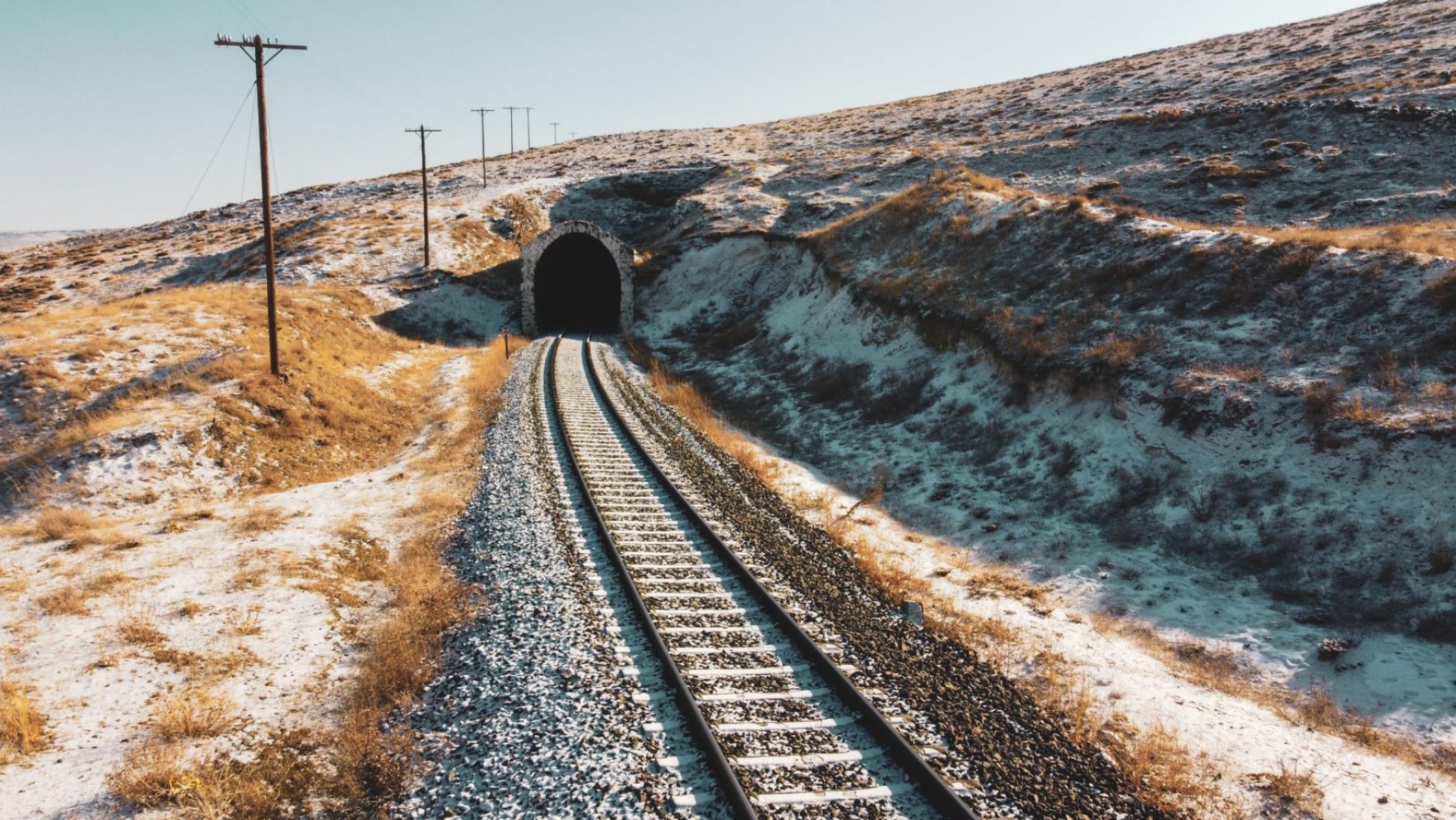
In the five-day version, Mirsk should have a day of its own. Not because you need to tick off another town, but because without Mirsk, the history of the railway connection with Świeradów remains incomplete. The line connected the spa via Mirsk with Gryfów Śląski; after a long interruption, its reopening was celebrated on 7 December 2023, and regular services were due to begin on 10 December of the same year[4].
Before setting out, check the current timetable and the latest transport rules. Do not build your plans around a connection found in an old guidebook. If the times do not fit, treat travelling by road as a practical solution and revisit the railway’s history at Stacja Kultury.
There is no need to create a packed programme in Mirsk. It is best to walk through the town without a list of twenty compulsory points and pay attention to the relationship between the station, the urban buildings and the roads leading onwards towards the mountains and the border. This is a day for those interested in infrastructure: in how transport changes a town’s accessibility, the movement of people and the significance of local centres.
In the five-day version, it is also worth taking a moment to speak with a member of staff at the tourist information office or checking whether Stacja Kultury is hosting a meeting about railway history. An event of this kind may offer more than another information board, because it lets you hear the residents’ memories.
Day Five: Frýdlant or Jizerka?
Frýdlant: a Town, a Castle and a Larger Scale
Choose Frýdlant if you are interested in urban history, architecture and infrastructure developed on a larger scale. The town lies on the Czech side of the region, and its history includes both former trade routes leading towards Görlitz and Lusatia, and a railway launched in 1875 along the route from Liberec through Frýdlant to Zawidów[5].
Frýdlant is worth treating as a counterpoint to Świeradów. Here, you are not looking only at the infrastructure of a spa, but at a town that organised trade, administration and regional life for centuries. If you plan to visit the castle, check the availability of tours and entry times in advance. If you choose a walk through the town, leave time to read the market square, streets and relationship between the residential and representative quarters at an unhurried pace.
Jizerka: a Settlement Built around Work
Jizerka is the better choice for those interested in crafts and settlement on a small scale. In the eighteenth century, it was a small settlement whose residents were involved, among other things, in forestry and smuggling. A glassworks opened here in 1829, and during the height of its glassmaking development, Jizerka had around 450 residents. It had a school, inn, sawmill, bakery, smithy and other small workshops[6].
This list says more about Jizerka than the picturesque quality of its buildings alone. It shows a settlement that was not merely a place to spend the night or a summer destination for walkers. It had its own services and trades, and everyday life depended on the forest, crafts, transport and the ability to sell products. After the glassworks closed in 1911, tourism began to develop, and some houses were converted into accommodation and inns[6].
Choose Jizerka for looking at details and reading the landscape. Do not build a programme here out of numerous attractions. One longer route through the settlement, a break at a locally run place and a conversation about the history of glass are enough to complete the theme of work that began at Czarci Młyn.
How to Preserve the Right Character of This Stay
- Do not book everything rigidly. Events, workshops and presentations have their own calendars. Check the programme first, and only then decide the order of your days.
- Do not treat museums as shelters from bad weather. In this itinerary, they are the main sources of knowledge about how the spa and the region functioned.
- Prepare a separate transport option for the Czech day. Timetables and connections change faster than the history of the towns themselves.
- Choose one story per day. Railway, resort, food production, local nature, borderland—each needs time for the individual places to come together as a whole.
If you choose three days, Świeradów-Zdrój will reveal itself as a spa sustained by a railway station, water, culture, food and education. If you add Mirsk and the Czech side of the Jizera Mountains, you will see something more: not a collection of attractions, but a network of places where people travelled, worked and built their own ways of life. That is why the choice between “Station–mill–spa” and “Świeradów–Mirsk–Czechia” is a decision about the scale of the journey, not the number of points on a map.