Who Really Maintains the Singletracks in the Izera Mountains? Water, Contracts and Trail Closures
A singletrack does not end with the construction of the trail. After heavy rain comes the work of managing drainage, surfacing and signage, while the decision to close a section can be just as important as the repair itself. We compare three management models: the municipal network in Świeradów-Zdrój, the cross-border Singltrek pod Smrkem and the dispersed Singletrack Glacensis system.
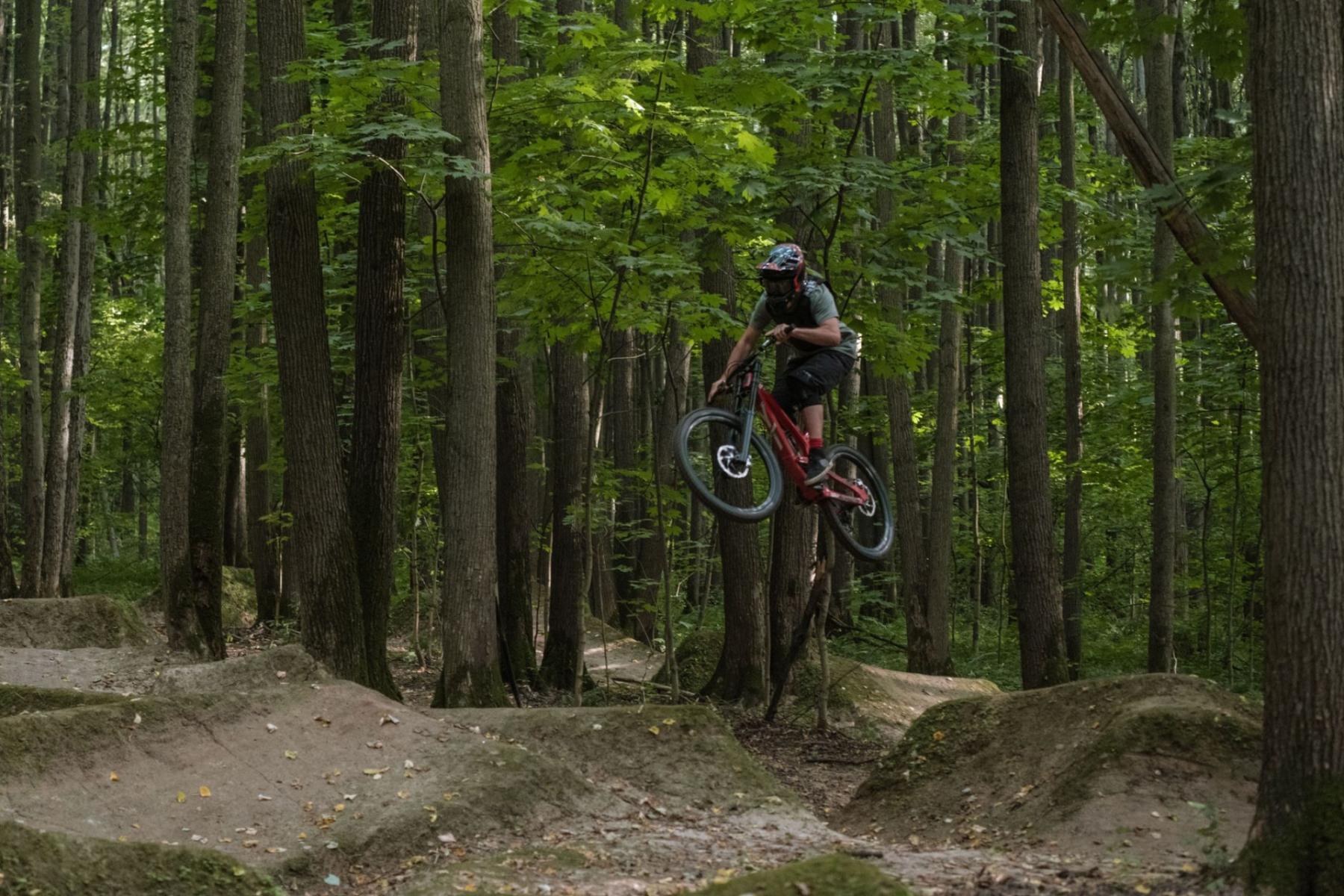
The most labour-intensive day for a singletrack begins after the trail has been closed, not during the busiest period. That is when it becomes clear whether water has been diverted away from the trail, whether the surface has held its profile, whether the footbridge is still stable and whether the section can be safely reopened after rainfall.
A cyclist sees a finished line between the trees. The operator sees a system of dependencies: the landowner, operator, contractor, foresters, signage, disruption notices and the cost of every intervention. In the Izera Mountains, trails that look similar operate according to different models. Singletrack Świeradów is a municipal network, Singltrek pod Smrkem is a cross-border project linked to forest management, and Singletrack Glacensis is an extensive system of loops managed across multiple administrative areas.
This difference has practical consequences. In one place, a fault is reported to the municipal office; elsewhere, to the operator of the Czech network; and on parts of Glacensis, to the relevant forest district or section manager.
After Rain, a Trail Does Not Dry Out by Itself
The greatest enemy of a forest trail is not a single puddle but concentrated water runoff. If rainfall reaches a section with an unsuitable profile, water begins to flow down the centre of the trail, washing away fine aggregate, exposing larger stones and creating ruts. Every subsequent ride deepens the problem.
That is why maintaining a natural singletrack is primarily about directing water before it reaches the surface. In practice, a crew checks places where the trail crosses natural depressions in the terrain, clears outlets, restores side slopes and replaces material where it has been washed away. In the technical documentation for forest cycling trails, cross slopes, infiltration ditches and drainage channels serve a similar purpose: dispersing water rather than allowing it to concentrate in a single channel[1].
On a narrow trail, this does not mean building heavy road infrastructure. The designer seeks to use the existing contours of the land, route the trail along the contour line and limit the length of sections where water could gain speed. In wet areas, boardwalks, small bridges or reinforced crossings may appear. The description of the Świeradów network points both to the natural character of the trails and to the use of wooden structures in places that would be difficult to ride through without additional protection[2].
After heavy rainfall, not every problem requires immediate rebuilding. Sometimes it is enough to clear an outlet and allow the ground to stabilise on its own. At other times, a section must be closed because continued traffic would only enlarge the damage. Świeradów’s regulations expressly provide for the temporary closure of sections because of ground conditions, forest management or a decision by the operator[3].
How can you tell when the surface requires more cautious riding?
- A continuous channel formed by water runoff appears along the centre of the trail.
- Fine aggregate has been washed away and larger stones are beginning to protrude from the profile.
- On a bend, surface material has shifted towards the outer edge.
- Water is standing in a rut instead of draining to the side.
- The ground is soft, sinks under the wheel or forms deep braking marks.
- Loose components, slippery sections or damaged joints appear on a boardwalk, bridge or wooden crossing.
This is not merely a matter of comfort. A wet or unstable surface changes the riding line and the loads acting on the trail structure. If users bypass a difficult section at the side, they create a parallel line that may eventually become another runoff channel.
A Shortcut Costs More Than a Few Metres of Trail
A shortcut looks harmless: bypassing a berm, cutting across a bend, riding outside the designated line. From the operator’s perspective, however, it is an unplanned change to the geometry of the entire section. A wheel loosens the slope, pedestrians and subsequent cyclists widen the passage, and water gains a new, more direct route downhill.
The most expensive moment is when a single instance of riding off line becomes permanent erosion. Then it is not enough simply to fill in the track. The slope must be reshaped, the ground compacted, the drainage restored and the alternative line closed so that the problem does not return after the next rain. That is why regulations do not treat riding off trail as a minor departure from the rules. Świeradów’s document prohibits damage to vegetation and states that only service and emergency vehicles may enter the trail[3].
In forest systems, another element comes into play: a forestry access road, timber removal, wind, icing or a fallen tree. A trail operator cannot always remove an obstacle immediately, because they must take into account the safety of forestry workers and the rules governing forest management. Closing a section therefore does not indicate operator failure. Often, it is proof that someone has noticed a conflict between cycling and another use of the forest.
Three Management Models in the Izera Mountains
1. Singletrack Świeradów: The Municipality as System Owner
Under the municipal regulations, the Świeradów trails are defined as paths built and managed by the Municipality of Świeradów-Zdrój in forested areas. They are open to everyone and free of charge, but remain infrastructure for which a specific local authority is responsible[3].
This is a clear model for users: if damage appears, the regulations identify the Świeradów-Zdrój Municipal Office as the appropriate place to report it. That does not mean, however, that every repair is carried out by office employees. The register of contracts shows that routine maintenance and supervision of the trails and existing infrastructure may be commissioned to an external contractor for a specified season[4].
This is where it is useful to distinguish three concepts: owner, operator and contractor. The town may be responsible for the decision to close a trail, the budget and the public notice; the operator or contractor for inspections and fieldwork; and the Forest District for matters arising from the use of forest land. For cyclists, the key point is that the first contact is the municipal office—not a random repair service or the owner of a nearby bike-rental shop.
2. Singltrek pod Smrkem: A Cross-Border Network
On the Czech side, the arrangement is different. Singltrek pod Smrkem was created as a joint undertaking by several municipalities and forest districts on both sides of the border. The official description by the Świeradów Forest District states that the network was designed and maintained according to separate rules, with respect for the forest character of the area, while the Polish and Czech sections connect into a single riding system[5].
For visitors, this means a change of language and a change in the point of responsibility. A Polish office is not automatically the appropriate authority for a section on the Czech side. Before setting out, check the notice relating to the specific section, not just the general map of the destination as a whole. If a section in Nové Město pod Smrkem is closed, the diversion may lead along a forest road or another marked line; do not assume that Polish signage will continue unchanged on the other side of the border.
This is a model in which keeping the status up to date is particularly important. Operators and managers may temporarily close a section because of forestry work, damage or danger following a windstorm. For cyclists, a closure notice is part of the infrastructure, just like a sign on a tree or a board at the entrance.
3. Singletrack Glacensis: A Dispersed System
Glacensis is not one compact loop beside a single town. According to information from the Międzylesie Forest District, the system consists of 23 interconnected loops with a combined length of more than 200 km. Individual sections pass through different municipalities, forest districts and tourist areas[6].
This is where it is easiest to confuse the brand of the network as a whole with the manager of a particular section. One name on a map does not mean one repair crew. Damage on the Międzylesie Loop may require contacting the Międzylesie Forest District, while a problem on another loop should be reported to the local manager. The Międzylesie Forest District identifies two practical channels: reporting the problem through the Trailforks app or informing the forest district directly about the damage[6].
This is also a system in which colour may indicate the direction or level of a trail, but does not in itself say who is responsible for repairs. Before a longer ride covering several loops, it is worth noting not only the trail routes but also the names of the forest districts and municipalities along the way.
Natural Singletrack versus a Bike Park
A natural singletrack and a downhill park may both have berms, bends and wooden features, but their maintenance follows a different logic.
A forest trail is part of a larger environment. Its design should limit intervention, make use of the natural contours of the land and leave room for natural obstacles: stones, branches, roots or mud. The aim of inspection is to ensure that an obstacle does not become a hazard resulting from structural damage or uncontrolled water runoff.
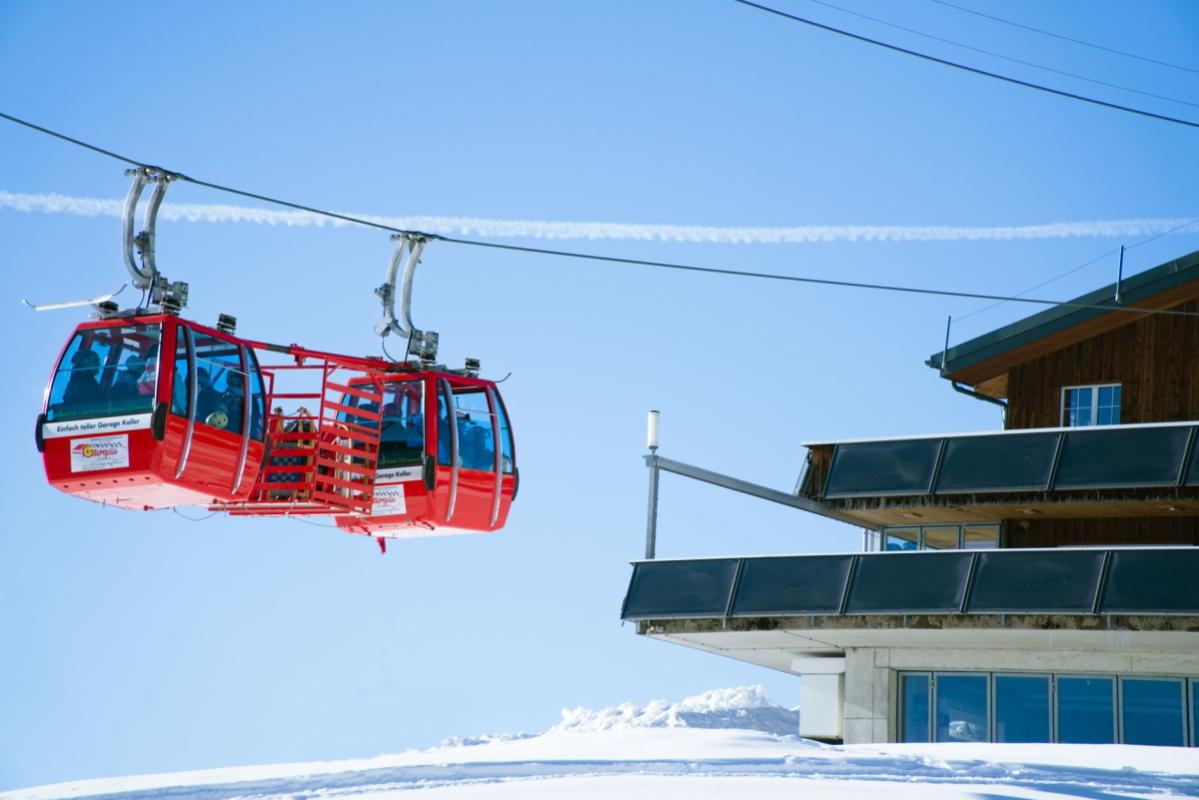
Bike Park Świeradów operates according to a more concentrated model. Traffic is linked to the resort, its technical facilities and the gondola lift, while opening decisions depend on operating hours, the condition of the infrastructure and weather conditions. The Ski&Sun regulations cover not only the trail but the entire resort—the lift, ski run, snow park and remaining technical infrastructure. They also provide for technical breaks and the possibility of suspending lift operations in hazardous weather[7].
On a natural singletrack after a downpour, the problem may be drainage and a washed-out surface. In a downhill park, regular inspections of trail profiles, landings, berms, crossings, wooden features and areas connected with bike transport are also required. In both cases, the principle is the same: a trail should be opened only when the operator can determine its condition, not when users begin gathering at the start.
What to Do If You Find Damage
The best report is brief, locatable and possible to verify. Simply saying “the red trail is in bad shape” is usually not enough.
- Stop in a safe place. Do not photograph the damage while standing in the middle of the trail or on a blind bend.
- Record the name of the system, loop and direction of travel. Add the nearest landmark, kilometre marker, name of the junction or coordinates from your phone.
- Describe the type of problem. A fallen tree, washed-out surface, damaged boardwalk, missing signage and a silted-up outlet require different responses.
- Add a photograph. One image showing the wider context and one close-up will often allow the crew to assess the situation more quickly.
- Do not repair trail features yourself. Moving a branch is not the same as dismantling a boardwalk, digging out a drainage channel or creating your own diversion.
- Check the status later. If the section is closed, do not go around the sign at the side. The closure may also relate to forestry work that is not visible from the trail itself.
The Right Channel for the Three Systems
- Singletrack Świeradów: report irregularities and damage to the Świeradów-Zdrój Municipal Office, which formally manages the municipal trails[3]. The office’s general contact details are ul. 11 Listopada 35, telephone 75 78 16 489 and um@swieradowzdroj.pl[8].
- Singltrek pod Smrkem: check the current status of the Czech network and direct your report to the appropriate operator on the Czech side. Do not automatically send the matter to Świeradów simply because the two networks form a shared cross-border destination.
- Singletrack Glacensis: if the problem is on a section in the area of the Międzylesie Forest District, report it through the Trailforks app or directly to the forest district. On the remaining loops, look for the appropriate forest district or local manager identified along the trail[6].
- Bike Park and Ski&Sun infrastructure: report faults connected with the resort, lift or downhill trail to the resort staff, not to the manager of the forest singletrack[7].
The regulations reviewed contain no single common rule stating that every trail must be inspected at set intervals. Operators work with defined maintenance scopes, condition notices and decisions taken after rainfall, forestry work and extraordinary events. This is important information for anyone planning a multi-day trip: the map is a starting point, but it does not replace a notice about current conditions.
A singletrack remains open thanks to work that is usually invisible: clearing silt from an outlet, adding a few barrowloads of aggregate, inspecting a boardwalk, changing a sign or deciding to keep everyone out for several days. The trail’s busiest day really does begin when the cyclists have disappeared from the forest. The quality of this unseen work determines whether the next ride follows the designed line rather than another shortcut carved by water.