Water and Stone: dams, waterfalls and spa towns between Świeradów, Szklarska Poręba and Harrachov
Two valleys, three waterfalls and two impressive stone walls. From a base in Świeradów-Zdrój we plan timeless walks: along the crowns of the dams on the Kwisa, beneath the cascades of Kamieńczyk and Szklarka and above the year-round Mumlava. A route for spa-goers, families and photographers — unhurried, with comfortable sections and firm ground underfoot.
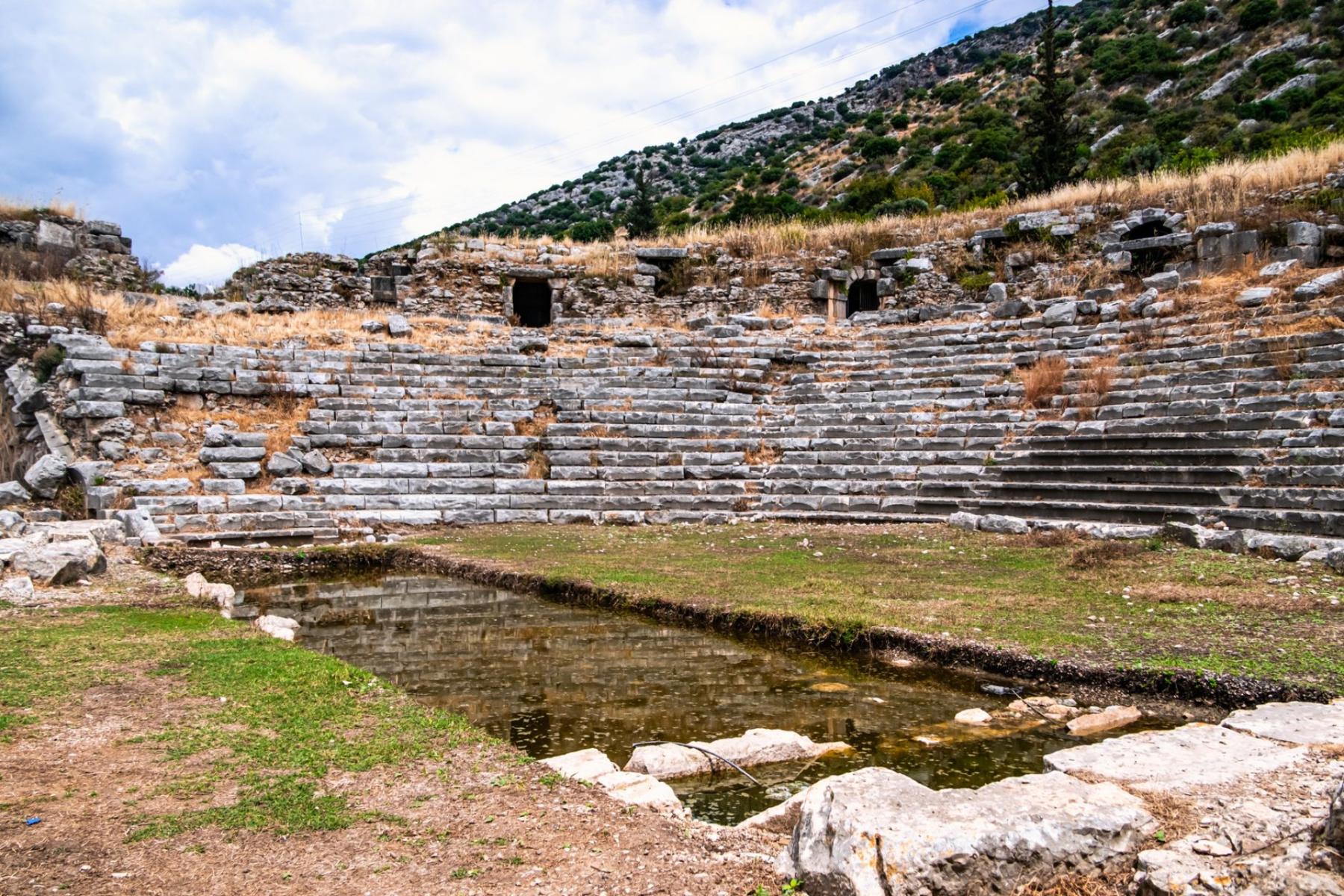
The first thing you hear at dawn in Świeradów after rain is the low murmur of the streams. Resin smells richer, and the stone — whether the gneiss foundation of the Kwisa dams or the granite of the Karkonosze gullies — turns darker and glossy. In this guide water and stone share top billing: we show how to combine walks along the crowns of historic dams with safe approaches to waterfalls and where to weave in a sip of mineral water in the Hala Spacerowa so the day ends softly, not in a rush.
Dams on the Kwisa: engineering that has become part of the landscape
The Kwisa — a river with capricious floods — was tamed in the early 20th century by two monumental dams above Leśna. The first, Leśniańska, built from 1901 and commissioned on 15 July 1905, is a classic of the Intze school: a curved, gravity wall of quarried stone on a gneiss foundation, with a crest about 130 m long.[1] The reservoir is closed by the view of Czocha Castle — a stone backdrop that, on a sunny day, reflects in the water like an old sepia photograph. The second dam — Złotnicka — was built after World War I (1919–1924), also as a curved gravity wall; the impounded Lake Złotnickie serves not only flood protection and power generation but also recreation: summer swimming and watersports.[2]
A good plan for the “dam loop” is simple: arrive early, stroll calmly along the crest (usually a short, scenic stretch with railings), then extend the walk along the shore — on paths that undulate along bays and peninsulas. On Leśniańskie the water can be dark green, rocking around the roots of pines. On Złotnickie the wide surface reflects the white of sails and the cries of gulls. Along the way you pass intakes, old steps to the water, small jetties; these are traces of past infrastructure that now lend the landscape a patina. If the impoundment level is high or technical work is underway, passage along the crest is sometimes temporarily closed — respect signage and official notices. These walls are not just a postcard — they are hydrotechnical structures that are still in operation.
How to read this landscape? Pay attention to ogee spillways and outlet cascades — they are the safety valves for great floods. Farther from the Kwisa — in the Bóbr valley — you will find a similar, classic line of prewar dams (other links in the region’s then-engineering), but our compass today points to the two twin reservoirs of the Kwisa. These walks give your lungs a lift and your calves some slack — little elevation gain, lots of wide frames.
- For strollers and small legs: stretches along the dam crests and parts of the shoreline roads are suitable for a slow, even walk. Look for railings and hardened shoulders; avoid steep descents to the water.
- Photographically: the golden hour paints gneiss and concrete like honey; after rain a soft steam hangs above the outlet cascades.
The Karkonosze duo: Kamieńczyk and Szklarka — how to combine two waterfalls without haste
This is a pair that needs no introduction. Kamieńczyk — tall and raw — and Szklarka — lower, sculptural — make a balanced day trip from Szklarska Poręba. Start with a morning approach to the Kamieńczyk Waterfall. The cascade is 27 metres high, dropping in three steps into a narrow rocky gorge; behind the middle cascade lies the Złota Jama — a gleaming niche carved in the past by Walloon prospectors.[3] Entrance to the gorge that leads right under the waterfall is organized — and importantly — requires a safety helmet, which you will receive at the entrance; visits take place at designated hours.[3]
After a short break — a coffee at the mountain hut, a sip of water — go on (or drive, if you’re short on time) to Szklarka. This cascade, at 13.3 m, is known for its narrowing fan and the spiral flow of water into the plunge pool. A short, comfortable track with a viewing platform leads to the waterfall; it is also an enclave of the Karkonosze National Park and a section friendly to people with limited mobility — you can reach it with a stroller, and beneath the falls waits the old‑fashioned inn “Kochanówka”.[4]
The key to a “two waterfalls in one” day is rhythm. Allow 1.5–2 hours for Kamieńczyk (approach time, entry to the gorge, break), then move to Szklarka for an easy, family-friendly walk and a longer rest. If the weather turns bad, reverse the order — start at Szklarka, where the route is gentle and has a secured footbridge.
- Safety: stay behind railings at edges, do not leave the marked trail. Mosses and lichens on stones are beautiful and a slippery hazard at the same time.
- For families: Szklarka is a great “first waterfall” for children — wide path, nearby facilities. Kamieńczyk delivers more mountain “drama” — plan a shorter stay right at the gorge.
- Photos: Kamieńczyk in the morning, before the sun climbs high; Szklarka in the afternoon, when light wraps around the plunge pool.
Mumlava above Harrachov: a year-round lesson in water
On the Czech side of the border, above Harrachov, the Mumlava cuts granite with a broad slab and falls over a wide, several- to a dozen‑metre lip. The trail from town to the waterfall is short and simple, and the fall — also thanks to its easy accessibility — is one of the most visited in the Czech Republic. It is a year-round destination: in autumn the beeches turn russet against the wet graphite of the rock, in winter an ice curtain forms, in spring the roar of the meltwater dominates.[—]
The charm of the Mumlava lies in the details: the “devil’s eyes” — rounded potholes carved in the granite — hum beneath the footbridge, and the water carries the paint of trees and sky like a shifting glaze. This is where you understand where Karkonosze granite sculpture begins: planes, offsets and terraces controlled by the rock’s fractures. When walking with a child or a stroller, choose the main hardened track — it is wide, even, and in places has railings. In winter watch out for ice and shaded stretches — tourist crampons can transform the walk.
- Etiquette in the protected zone: on the Czech side park rules (KRNAP) also apply — stick to the trail, do not approach the edge of ice sheets, do not touch mossy “bowls”.
- Day plan: if you want to combine the Mumlava and Szklarka in one day, start early on the Czech side and return to Poland for an afternoon walk to the Szklarka enclave.
Spa en route: a sip of mineral water and a short outing to the Waterfalls of the Black Stream
Świeradów is a spa town with its own soft tempo. The Hala Spacerowa — about 80 metres long, smelling of larch and stained glass light — houses the mineral water pump room. It is the ideal pause between dams and waterfalls: a few sips and a longer breath under an Art Nouveau ceiling.[6] Opening hours are seasonal — check them before you set out and time the day so that the “sip of mineral water” fits into the route, not breaks its rhythm.
If you have an hour to spare, add a micro-excursion to the Waterfalls of the Black Stream. It is not a single drop but a tight sequence of low cascades that — taken together — form the greatest waterfall spectacle of the Izera Mountains. The green trail from the centre leads gently into the valley; the path murmurs close to the water and granite steps are worn into the current. On one stretch you will also see a small debris-control dam — a modest cousin of the great Kwisa walls — which protects the valley from rock flows during sudden floods.
- For strollers: the first few hundred metres of the Black Stream valley are comfortable; further on the terrain steepens and the steps become rockier — choose the stretch to match your abilities.
- To the ear: after rain you can hear a whole band of sounds here — deeper “bass” steps and the hiss of thin threads flowing over moss.
Park rules, etiquette by the water and light for photographers
Entering the KPN — concrete rules, no shortcuts
On the Polish side remember the simple rules of the Karkonosze National Park. Tourist movement is permitted only on marked trails and — with the exception of approaches to mountain huts — during the day: from dawn to dusk.[5] Buying entrance tickets is made easier by online sales and by points at trailheads. Keep dogs on a leash and leave the drone at home (flying requires separate park permits). These are not “restrictions for their own sake” — they are simply how the balance between your adventure and the safety of nature is maintained.
Etiquette at waterfalls and dams
- Do not cross barriers, do not enter stream channels or step onto wet rocks. Mosses and lichens are fragile ecosystems, and a slip on the water’s “glass” ends quickly and harshly.
- At dams respect prohibitions and signs — the crest is often a service road. If a water release is underway, keep your distance. Do not approach spillway machinery or outlets.
- Take your rubbish with you. Water carries more than you think — do not give the river anything it did not bring itself.
Photography: mist, long exposures and “windows” of light
- After rain or in the morning look for low mist — it hovers over the water like a delicate veil. A polarizing filter will remove reflections from wet stone.
- At waterfalls work on two settings: a fast shutter to “freeze” splashes, and a long one to render a silky stream. In the shaded gorge a tripod will save sharpness.
- At dams aim for the golden hours — concrete and stone get soft modelling then. At noon look for compositions with the wall’s shadow and the gloss of the spillways.
How to assemble a day — three ready itineraries
- "Dam + lakeshore loop": a morning on the Leśniańska crest[1], a shore walk toward the bays and a return on another path. Lunch by the water. Afternoon — a short pause at the pump room in Świeradów[6].
- "Two waterfalls without rush": Kamieńczyk with entry to the gorge (helmet required)[3], transfer to Szklarka (platform, route also friendly to people with limited mobility)[4], dinner in town.
- "Czech crossing": morning walk to the Mumlava (short, even track), return across the border and sunset at Złotnickie — with binoculars for sails and spillways.[2]
This guide does not know season. Water and stone play here all year — sometimes in half-tones, sometimes forte. And a visit to the pump room in Świeradów closes the day in the way we like best: a sip tames the element, straightens your steps and leaves a calm in the mind. Just listen to the river and read the walls — with distance, but also with affection.
Notes:
- Marklissa‑Talsperre (Leśniańska Dam): construction dates, crown parameters and type of construction, mention of commissioning in 1905 and the proximity of Czocha Castle.[1]
- Talsperre Goldentraum (Złotnicka Dam): dates 1919–1924, dam type, reservoir capacity and purpose, including recreation, bathing and watersports.[2]
- Kamieńczyk Falls: height 27 m, arrangement of three cascades, Złota Jama and rules for entering the gorge (helmets, designated hours).[3]
- Szklarka Falls: height 13.3 m, enclave of the KPN, accessibility of the trail and viewing platform; mention of “Kochanówka”.[4]
- Rules for access to the KPN: daytime movement (from dawn to dusk), staying on trails, general entry rules.[5]
- Hala Spacerowa Świeradów‑Zdrój: description and length approx. 80 m, location of the mineral water pump room in the Spa House.[6]