Izerskie Tajemnice on Foot: How to Turn Świeradów-Zdrój into an Outdoor Game
Can Świeradów-Zdrój be explored like a game board? Yes — simply treat the stones bearing pictograms as points in your own quest, linking the spa town, Zajęcznik, Czerniawa and the mountain attractions into several logical stages. It is a way to experience the Izera Mountains for families, curious adults and anyone who already knows the classic ascent of Stóg Izerski by heart.

Can Świeradów-Zdrój be crossed like a game board rather than approached as a list of attractions? Yes — the best way is to treat the stones bearing pictograms as points in your own quest and divide the exploration into three stages: spa, forest-and-educational, and mountain-and-landscape.
The idea does not begin with a blank sheet of paper. The official In the Footsteps of Izerskie Tajemnice trail leads to 22 attractions marked by stones bearing bas-reliefs and mysterious pictograms to trace. The points include Park Zdrojowy, Dom Zdrojowy, Muzeum Zdrojowe, Zajęcznik, Czarci Młyn, Sępia Góra, Wodospad Kwisa, Stóg Izerski and Stacja Kultury[1].
It does not have to be a race to collect them all. A more intriguing version is to complete a small task at each point: find the symbol, notice an architectural detail, write down one sentence about the place and decide whether the attraction belongs to the town centre, the forest or the mountains. Świeradów then ceases to be a collection of stops. It becomes a story that the participants assemble themselves.
Do not collect kilometres. Collect evidence
In the official format, after finding at least 15 mysterious places, participants had to reproduce the pictograms and report to Stacja Kultury for an Explorer’s certificate and an entry in the Book of Explorers of the Izera Mountains[1]. Tracing required sheets of paper or a notebook and wax crayons.
This is where the more flexible version begins. At the time this article was prepared, on 8 September 2026, Stacja Kultury reported that the supply of Explorer packs from the 2022 edition had run out[2]. That does not mean the idea has to be abandoned. It simply means that before setting out, you should check whether a new edition of the materials is available; if not, prepare your own notebook and treat the stones as independent game points.
The simplest rules for a private quest might look like this:
- point found — the participant locates the stone, pictogram or designated place;
- point interpreted — they write down one detail they would not have noticed on an ordinary walk;
- point remembered — they sketch the symbol, make a brief note or photograph a detail, where the rules of the site permit it;
- point connected to the story — they answer the question of what the place says about the spa town, the forest, people’s work or the landscape.
Children can search for shapes and signs. Adults get a reason to read the history of a place instead of walking past yet another façade. A group already familiar with the classic trails can treat the pictograms as an excuse to depart from the usual plan.
Stage one: the spa town as an architectural puzzle
The most natural place to begin is the centre. Not because it contains the greatest number of points, but because Świeradów’s spa district teaches the rules of the entire game: look lower, more slowly and more closely.
If the packs are available, it is worth starting at Stacja Kultury on Dworcowa Street. This is the organisational hub of the official game and one of the places marked along the trail[1]. If there are no materials, Stacja can still serve as a good notional starting point: from here, it is easy to plan an urban loop without immediately embarking on a longer ascent.
The most important complex to read is the area around Park Zdrojowy, Dom Zdrojowy and Muzeum Zdrojowe. The park consists of several sections spread throughout the spa centre; the part beside Dom Zdrojowy features terraces, stairs, an artificial grotto, ramps and retaining walls on the slopes[4]. In the quest version, it is not enough to follow the main avenue. The task might be: find the element that makes the park more architecture than ordinary green space.
Dom Zdrojowy leads to another layer of history. Hala Spacerowa is approximately 80 metres long, made of larch and decorated with botanical polychrome and stained-glass windows. The building was erected in an era when a stay at a spa meant not only treatments but also a particular way of spending time under a roof[4]. A question of your own for participants could be simple: which elements of the hall serve as decoration, and which organise the movement of visitors?
It is also worth going into Muzeum Zdrojowe, housed in the basement of Dom Zdrojowy. The exhibition tells the story of the use of the springs and the history of the spa town[4]. This is a good moment to change the rules of the game: after several outdoor points, participants must find one fact or object that explains why Świeradów developed specifically as a spa.
This stage is a walking route and easy to shorten. It can be done with young children, combined with a visit to the pump room or kept as a contingency plan for a day when the weather does not encourage a walk into the forest. There is no need to cover all the town’s points in a single loop. In the game, the quality of the answers matters more than the number of symbols traced.
Stage two: Zajęcznik, or a quest within a quest
Zajęcznik is the best transition between town and forest. Officially, the green trail leads there; the round trip takes approximately an hour and a half, and the route is described as easy, scenic and suitable for families with children[3].
This is not, however, an ordinary walk to a point marked by a stone. The Zajęcznik educational trail was conceived as interactive forest education. It was created in 2012 on the initiative of the Świeradów Forest District and includes nine stations dealing, among other things, with habitats, plants, animals, dendrology, the food chain and forest instruments[3].
In practice, this means there is a ready-made second game that can be layered onto the main quest. The stone or pictogram accounts for the history of the place, while the educational station requires action. Something must be matched, identified, compared or set in motion. For families, the difference is fundamental: the child is not asked to listen to yet another information board, but is given a task to complete.
It is best not to rush through Zajęcznik. At each station, you can ask three questions:
- What do you have to do, rather than merely read?
- Which element concerns a particular animal or plant of the Izera Mountains?
- Can the task be explained in your own words?
If the answer is “no”, the point has not yet been completed. It is a rule that works well on the urban sections, too. Your own quest is not about photographing information boards. It is about checking whether the place has left you with a specific observation.
Zajęcznik is worth planning as a separate stage, but not as a full-day expedition. It offers a change of surface and pace while not requiring the entire day to be organised around an attraction’s opening hours. On returning, you can decide whether the participants still have the energy for the centre or whether it is better to end the game at the last forest point.
Stage three: Czerniawa-Zdrój and Izerska Łąka without cramming everything into one day
The most common mistake in a plan like this is trying to combine the centre, Zajęcznik, Stóg Izerski, Czarci Młyn and all the remaining points into a single route. A quest should encourage attentive walking, not turn a holiday into an endurance test.
Czarci Młyn is best treated as a separate outing towards Czerniawa-Zdrój. The site has preserved its original mill machinery from around 1890, while the exhibition presents the former process of producing flour and baking bread. The mill also has a garden of plants and herbs, as well as a space associated with the Izerska Łąka Environmental Education Centre[5].
Here, the quest changes subject. In the spa town, we asked how space serves spa visitors. At the mill, we ask how water, grain and people’s work changed the valley. Children can look for elements of the mechanism; adults can reconstruct the journey from grain to loaf. If the site is open, it is worth checking the possibility of tours or workshops before setting out, as the availability of attractions may depend on current arrangements.
Izerska Łąka is a good extension of the same section, but it should not be presented as one of the basic points on the official list of 22 places. It is an additional interpretive stop. The centre focuses on environmental education, showcases the fauna and flora of the Izera Mountain meadows, addresses the problem of light pollution, offers dark-sky observations and explores the lives of bees[6].
This creates the most family-friendly section of the entire outing: Czarci Młyn answers the question of how the old economy worked, while Izerska Łąka shows how the environment in which that economy developed functions. This is not a quick loop from the centre. Plan this combination as a separate outing and check the admission rules in advance; the Izerska Łąka website states that the site accepts groups of 10 or more by prior telephone reservation[6].
Stage four: Stóg, Sępia Góra and the landscape as a finale
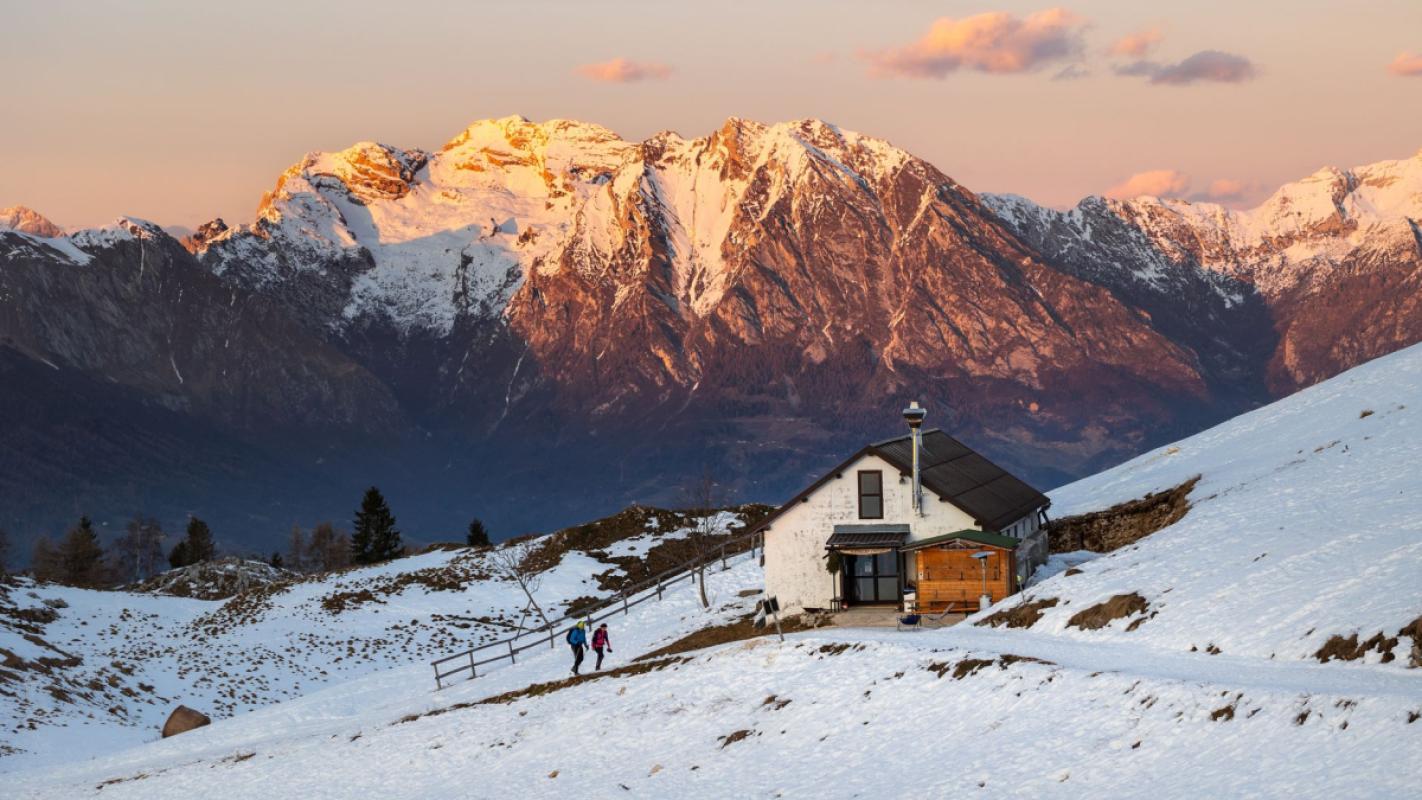
The mountain section of the trail is for those who do not want to end with urban details. The official list includes, among others, Stóg Izerski, Sępia Góra and Wodospad Kwisa[1]. They do not, however, need to be treated as mandatory points for a single day. Each represents a different kind of experience.
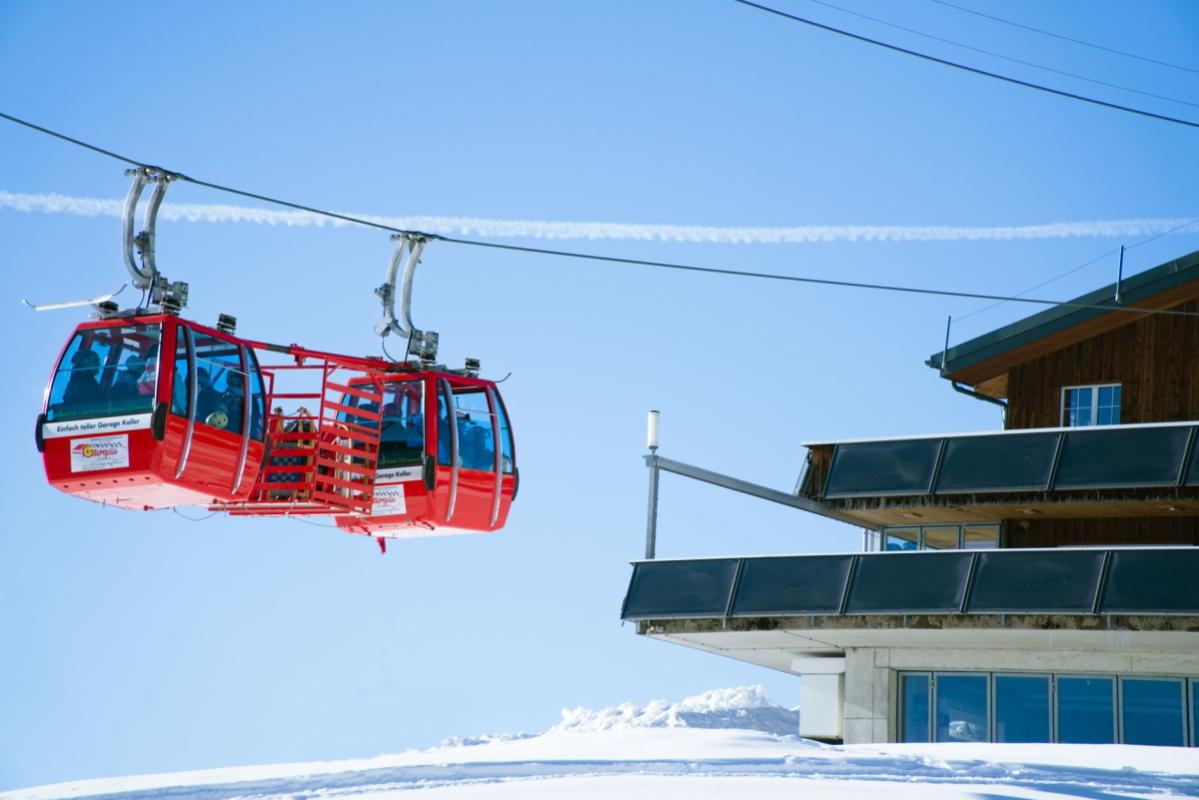
Stóg Izerski is the most obvious finale for people who want to combine the quest with a classic mountain outing. You can walk to the summit or take the gondola lift. In this version, riding up is not “cheating” but a design decision: you save your energy for later observations, the panorama and the descent — or do the opposite, riding up and devoting your full attention to what lies above.
For regular visitors to Świeradów, the combination of Sępia Góra and Wodospad Kwisa may be more intriguing. These are points that shift attention from buildings to the valley, water and the relationship between the town and the mountain range. The task does not have to involve reaching the highest point. It is enough to write down what changes in the landscape when you look at Świeradów from above, and what changes when you follow the water.
If the group wants to delve further into the subject of historic mining, it can add a separate visit to Sztolnia św. Jana Chrzciciela in Krobica. This should not be an accidental add-on after Stóg, but a planned chapter for those interested in the region’s technical history. It is worth checking availability and visiting conditions before setting out, particularly when planning a family day.
How to prepare your own quest
The best equipment is not complicated. You need things that do not get in the way of walking and allow you to keep a record of successive points:
- offline map — particularly for the journey between the centre, Zajęcznik and Czerniawa;
- pencil or wax crayon — if you want to trace the pictograms from metal plates;
- phone with notes — for your own questions, answers and photographs of details;
- comfortable shoes — urban pavements quickly give way to forest ascents;
- rain plan — if the weather deteriorates, shorten the route to the centre, Hala Spacerowa, Dom Zdrojowy and Muzeum Zdrojowe, and leave the forest sections for later;
- the attractions’ phone numbers — visiting hours and the availability of indoor sites may change.
Do not begin by asking how many points you can collect. Instead, decide what kind of story the day should tell. The family version might include the centre and Zajęcznik. The version for curious adults might take in the centre, Muzeum Zdrojowe and Czarci Młyn. For those familiar with the classic routes, it could mean one urban point, one educational element, followed by Stóg, Sępia Góra or a mining extension in Krobica.
The rule of one main stage and one add-on also works well. The main stage is then the forest, the spa town or the mountain; the add-on is a single point along the way. This means you do not have to end the day with the feeling that the most important thing was simply arriving on time.
So, can Świeradów-Zdrój be explored on foot as an outdoor game? Yes, provided you do not try to fit all of Izerskie Tajemnice into a single route. The best quest does not lead from number one to number 22. It leads from question to question — from what the spa town once was, through how the forest and valley work, to your own decision about where a walk ends and a true mountain expedition begins.