Izerska Pantry: flour from the mill, meadow honeys and forest flavors between Świeradów and Jizerka
Skip the usual ‘what to eat’ list. This evergreen takes you to the sources of taste in the Izera Mountains: a working watermill and bread oven in Czerniawa‑Zdrój, a live‑streamed beehive at the Izerska Łąka ecological center, and a hut on the open meadow where blueberry omelettes and mountain light reward a hike. Learn to read a honey label, buy well from local beekeepers, and map your own tasting loop.
The first thing you smell is resin. Then warm flour. In Czerniawa‑Zdrój the river hush is steady and the timber creaks softly, and if you follow both sounds you’ll reach the wheel of a mill and the slow pulse of a bread oven. Higher up, on the broad Izera Meadow, wind combs the grasses and bees work the flowers stitched between bog pools and spruce. This is an edible landscape. One you taste at the source.
Flour, water, fire: inside the Devil’s Mill
At Czarci Młyn — the Devil’s Mill — grain becomes story. Guides lead you past the waterwheel and into the production heart of the building, a vertical labyrinth of belts, chutes and wooden pipes. The Technological Hall strings four levels of historic machinery: roller mills, crushers, aspirators, grain cleaners and sifters, with the old sackworks and silos still in place. Tours weave these working organs into a clear narrative of how wheat and rye once moved through a water‑powered system and came out as flour; they end in the Biesiadna Hall with period photographs of old Czerniawa‑Zdrój and, crucially, the museum’s prized bread oven — a hulking, fire‑blackened hearth that anchors demonstrations of traditional baking.[1]
The room feels close and fragrant when the oven is lit. You’ll notice the rhythm: the scrape of the wooden peel, the thud of a door, the lowering murmur of visitors as steam drifts by. This is the right place to talk about what makes Lower Silesian loaves so satisfying in the mouth — that crackle of crust from strong heat, the gentle lactic tang of sourdough, flours milled with enough character to survive butter. In town, cafés and taverns play with those same flours in cakes and kołacz‑style pastries, but the starting point is here, where a working mill and an oven frame the craft as a complete cycle: field to flour to fire.
If you’re traveling with children, the mill is a gift — it translates complex, 19th‑century engineering into clacking belts and visible cause‑and‑effect. For slow‑food adults, it’s the rare place where a loaf isn’t just “served” but made legible. Allow an hour, ask when the oven next fires, and step outside afterward to the mill stream; the smell of wet boards and husk hangs in the air a little longer than you expect.
Where honey learns to sing: bees on the Izera Meadow
Just down the road, the Izerska Łąka Ecological Education Centre treats bees not as mascots but as teachers. The beekeeping corner includes an observation hive — a ‘multimedia’ hive fitted with micro‑cameras and a microphone — that lets you watch the colony work around the clock. Kids press noses to glass and gasp at the queen; adults lean in and start to trace the choreography: waggle runs, trophallaxis, ventilating fans. Programs here braid pollinators with the wider story of the meadow: its flowering calendar, the pressures of light pollution in a certified dark‑sky region, and what biodiversity looks like when bog, grassland and forest meet.[2]
Stand outside the center and you can feel why honey from these mountains has its own accent. The Izera Meadow — a high, open basin shared by Poland and the Czech Republic — is a cool, peat‑stitched grassland edged by spruce, trails and ski paths. Peat bog plants and subalpine light give it a lean, northern look; in summer the air is resinous and clean, in autumn it carries the slightly tannic scent of drying grasses. Trails and bike routes thread here from Świeradów‑Zdrój and Jakuszyce, converging on the lone mountain hostel that survived the old Groß‑Iser settlement. It’s an easy place to connect the dots between plants, pollinators and pantry — literally to read the “terroir” in the pollen.[3]
Hut appetite: a plate on the meadow
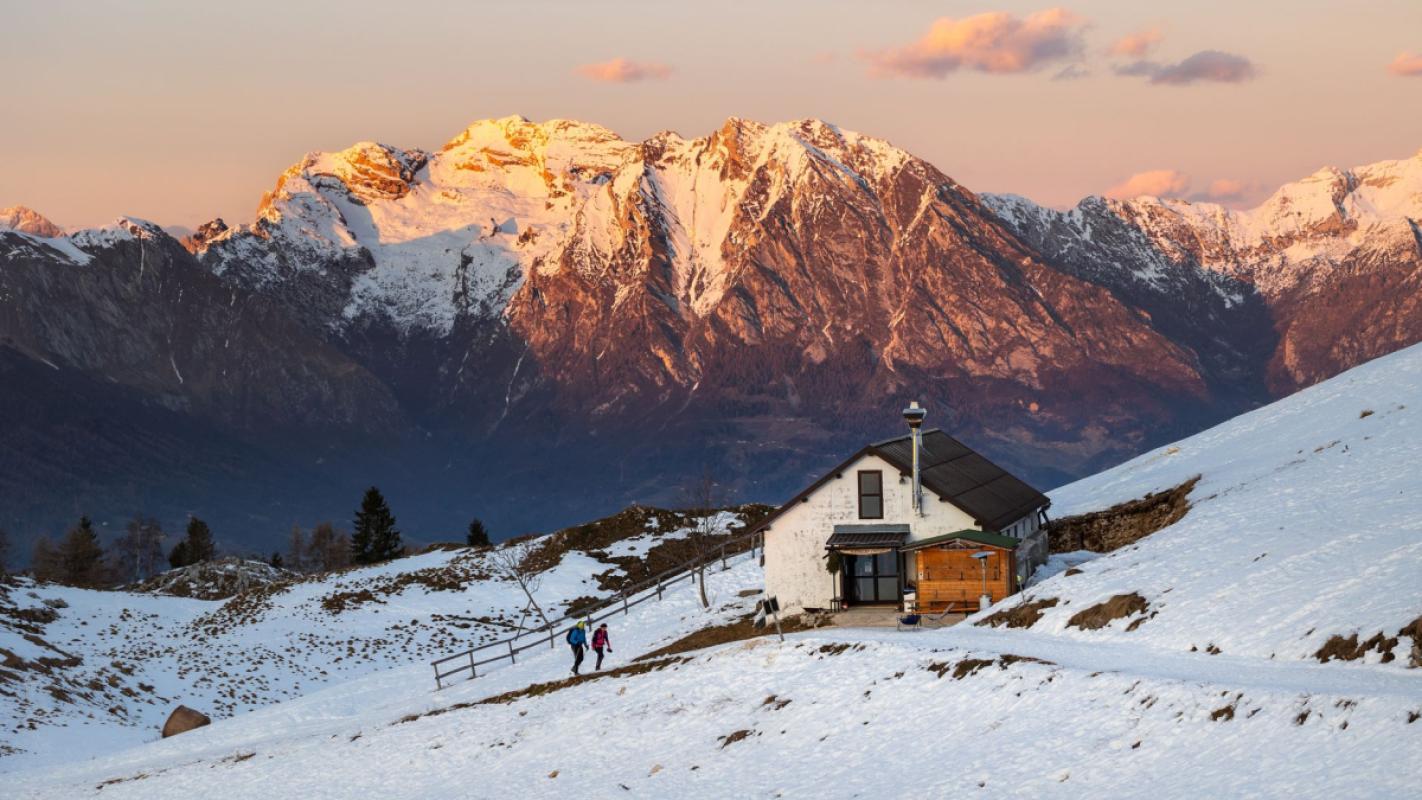
After a day among millstones and bees, food tastes sharper. On the meadow itself, the mountain hut known as Chatka Górzystów has become a ritual stop — a place where boots shuffle on old floorboards, mugs thud, and blueberry omelettes arrive like a promise. The kitchen’s fluffy, skillet‑browned omelette folded with bilberries is as simple as it gets, and exactly what a wide, windy meadow asks for.[4]
Getting here is half the pleasure. The routes are straightforward and family‑friendly in good weather: consolidated footpaths and cycling tracks from Świeradów‑Zdrój, and winter trails that turn the meadow into a quiet plain of ski tracks. The hut stands nearly alone on the grass — a survivor and a reward — and it’s a useful anchor for teaching children how a landscape feeds you twice: first with its light and silence, then with a plate.
How to buy good honey here (and anywhere): a short, practical guide
Start with the label
Poland tightened honey labeling rules in April 2024: jars sold on the domestic market must state the full name(s) of the country or countries where the honey was harvested. Generic phrases like “mixture of EU and non‑EU honeys” are no longer enough. Look for a precise origin and a clear style — “nectar honey” or “honeydew honey,” and if it’s a varietal, the dominant plant (e.g., linden, multifloral). You should also find a best‑before date, net weight, a batch number and the name and address of the producer or packer on a legible, durable label.[5]
Then listen to the place
In and around the Izeras you’ll often come across jars marked “multifloral,” “linden,” or “honeydew (forest) honey.” Those names aren’t marketing fluff; they’re legal categories tied to pollen, chemistry and sensory profile. Ask beekeepers how a particular season shaped their harvest — what bloomed early, what came late, whether honeydew flowed — and taste across styles to hear the nuance. In a cool, forest‑edged basin, a multifloral honey from late spring will not sing the same notes as a high‑summer jar pulled when the woods are humming.
Prefer proximity and transparency
- Buy where you can look someone in the eye: at a farm gate, local market stall, or a small town shop that can tell you which apiaries they work with. The Izerska Łąka centre itself curates beekeeping education and points visitors toward local producers; it’s a smart stop before you shop.[2]
- Read for specifics. Detailed origin, a clear style, and the producer’s contact details are green flags under Polish rules. Vague blends with fuzzy provenance deserve more questions.[5]
- Store it like a food, not a souvenir: cool, dark, closed. If you cook with it, add at the end so heat doesn’t trample aroma.
Forest ethics: mushrooms, berries and being a good guest
Foraging is part of life here, not a trend. In Poland, picking mushrooms in public forests is generally free and allowed — with key exceptions. Don’t forage where entry is prohibited (such as marked research plots, seed stands, game refuges, or young plantations), and be mindful that national parks and some nature reserves forbid collecting altogether. The best practice is simple: know what you pick, take only what you’ll use, leave small or old specimens to cycle life back into the soil, and treat the forest as someone’s living room.[6]
With berries, the same courtesy applies. Hand‑pick without stripping shrubs, stay on existing paths when the ground is fragile after rain, and carry a basket or box rather than plastic bags that sweat and crush fruit. In wet meadows and boggy margins — frequent around the Izera Meadow — step lightly and keep clear of fenced restoration zones. If you’re walking with children, make the etiquette explicit: we’re not taking from a supermarket; we’re borrowing from a community.
Design your own tasting loop
Turn a day or two in Świeradów‑Zdrój into an edible field trip that works for both slow‑food couples and families.
- Morning: grain and fire. Start in Czerniawa‑Zdrój at the Devil’s Mill. Book a guided visit, ask about demonstration bakes, and take notes on the milling sequence. It changes the way you see flour, and it will sharpen your bread‑buying antennae the rest of the trip.[1]
- Late morning to lunch: bees and meadow logic. Walk or drive a few minutes to the Izerska Łąka Centre. Watch the observation hive in action, sit in on a presentation about bees, the Izera Mountains or light pollution in the night sky, and step into the garden to match flowers with flavors. Before you go, ask staff for tips on nearby beekeepers or seasonal tastings — they keep a finger on the local pulse.[2]
- Afternoon: the open, windy plate. Head for the Izera Meadow. On foot or by bike, the approach itself is the reward: level, quiet tracks and the sudden wideness of sky at the edge of the bogs. Aim for Chatka Górzystów, order the blueberry omelette, and let the room — the hush, the scrape of chairs, the sweet‑wood smell — soak in. Trails and winter routes draw straight lines here from Świeradów‑Zdrój and Jakuszyce; plan the return in the forgiving light of late day.[3][4]
If you’d like to stretch your loop into two days, keep the rhythm but change the lenses: one day tactile (mill, oven, dough), the other sensory (bees, meadow, plate). That way children get both the levers and the flavors; adults get a narrative instead of a checklist.
What the Izera terroir teaches
“Terroir” often gets locked into wine. In the Izeras it belongs just as much to flour and honey. Grain grown on nearby lowland fields picks up the season’s arc, then passes through the mill’s calibrated bones into something you can touch. Bees concentrate a meadow’s whole argument — altitude, peat, resin, grass — into a glass jar. Both are crafts that respond to weather minute by minute. In a year of long spring, multifloral honeys are delicate and floral; in a hot summer with a strong honeydew flow, forest honeys thicken and darken. Bread crumb tightens or loosens with shifts in protein and humidity; sourdough gently edits the wheat so the crust sings instead of shouts.
Most of all, this corner between Świeradów and the Czech village of Jizerka shows how food and landscape remain one thing. You don’t just visit the mill; you watch water power translated into bread. You don’t just buy a jar of honey; you watch the loop between flower and hive, child and teacher. On the meadow, you taste a plate under a huge sky and feel how wind nudges appetite. The pantry here isn’t a shelf. It’s a place.
Come in a curious mood and with time to listen — to the wheel turning under its spillway, to the constant conversation inside the hive, to the hiss of a skillet in a hut balanced on a sea of grass. You’ll leave with flour on your fingers, a jar that smells of resin and clover, and a clearer sense of how food begins.