Before Flinsberg Became a Spa: Work, Craft and Everyday Life in the Former Settlement
In 1840, Flinsberg had 1,687 inhabitants—and was not yet a place built solely around spa treatments. Life in the valley depended on cattle breeding, butter production, forestry, woodworking, mills, sawmills, cottage industries and a whole range of crafts that only later became subordinate to the needs of the spa.
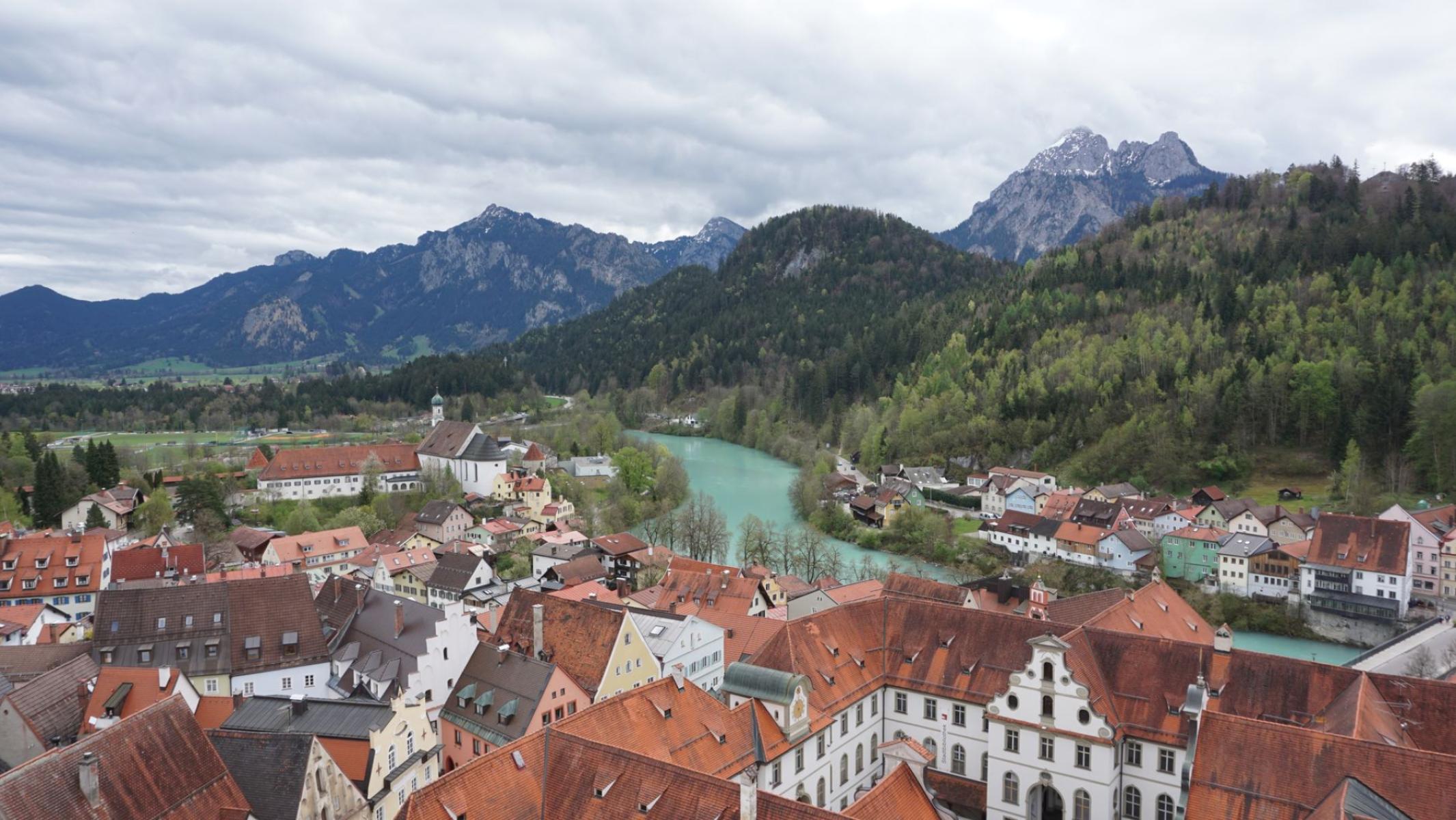
Flinsberg had 1,687 inhabitants in 1840—a figure that changes how we view historic Świeradów-Zdrój. It was no longer a small, accidental settlement beside a forest road, but neither was it yet a resort built exclusively for visitors. Farms, mills, sawmills, workshops, shops, inns and homes where some families combined several sources of income all occupied the same place[1].
The history of the spa usually begins with its waters. Yet 1572, the year Leonard Thurneysser described the Świeradów springs, is sometimes confused with the beginning of the town. It is a date associated with the waters, not with the founding of the settlement or the birth of its name. Organised spa activity began only in 1768, and the spa register was established two years later[2]. For a long time, Flinsberg remained a place where treatment was just one element of life—alongside work in the fields, in the forest, by the water and in the home workshop.
A Settlement by the Road, River and Forest
The earliest Flinsberg had no single economic specialisation. Its location pointed in several directions at once: the upper Kwisa, its tributaries and streams, extensive forests, and the road leading from Mirsk towards Bohemia. Documents and municipal studies mention both names associated with the settlement itself and those connected with an inn standing beside the route. This matters because an inn was not merely a place to stop, but also a point for exchanging information, food and services.
In the town’s historical calendar, 1524 is listed as the first mention of Flinsberg, while the form Bad Flinsberg appears later, in 1782[2]. The earlier settlement developed in stages. In 1597, 20 families settled at the foot of Opaleniec, in the area of today’s Góreczny[2]. These data do not allow us to reconstruct the layout of every farm, but they do show that this was a community rooted in the landscape, not seasonal support for visitors to the springs.
In 1826, the settlement had 1,488 inhabitants. Fourteen years later, it had 1,687. This growth did not automatically mean that everyone found employment serving spa visitors. Sources mention spa activity, agriculture and cottage industries alongside cattle breeding, butter production, logging, the gathering of forest produce and the manufacture of wooden goods[1].
A Farm Extended Beyond the Fields
Agriculture in a mountain valley was presumably conducted on a different scale from that of fertile lowlands. The sources do not allow us to determine the exact size of the farms or the structure of cultivation, so it is better not to add an elaborate picture of a self-sufficient village to this history. We can, however, say one thing with certainty: cattle breeding and butter production were among the inhabitants’ principal occupations[1].
These were two elements of a single economy. Cattle provided milk, while butter was a product that could be stored, sold or exchanged. In a mountain settlement, it mattered both to the household diet and to local trade. The later Czarci Młyn even preserves the memory of butter as one of the products associated with the everyday food supply, although the building itself was not constructed until around 1890[4].
The forest was the other mainstay. Logging, gathering forest produce and working with wood did not constitute a single occupation, but an entire chain of activities: from harvesting raw materials to making objects needed in the home, on the farm and in construction. Surviving descriptions of Świeradów mention wooden goods, carpentry, turning, cooperage and joinery[1][3].
Wood best illustrates how the local economy connected the forest with everyday life. A joiner built and repaired structures, a carpenter made furnishings, a turner shaped components on a lathe, and a cooper prepared vessels and containers. This does not mean that every family had a separate workshop. In a small community, skills could remain within families, be practised seasonally or be combined with work on the farm.
Establishments associated with wood processing are also documented. They included watermills, sawmills, mill-based wood-grinding workshops, an oak-bark mill and a shingle-splitting workshop[1]. A municipal study also notes that two sawmills were established in Świeradów at the beginning of the twentieth century[3]. This was already a period of vigorous spa development, but it shows that the timber industry was not displaced by the resort. On the contrary, the increasing pace of construction and demand for furnishings may have enhanced the importance of local skills.
Mills, Sawmills and a Water-Based Economy
Water in historic Flinsberg had two entirely different meanings. One was the water of the springs, which in time attracted doctors and spa visitors. The other powered machinery, irrigated the land and organised work in the valley. The first entered the history of the spa. The second remained for a long time part of the ordinary economy.
A mill was not a tourist attraction. It was an establishment to which grain was brought to be turned into flour or meal. In the case of a watermill, the rhythm of work depended on the flow, the water-control structures and the mechanical system’s condition. Czarci Młyn in Czerniawa-Zdrój, built around 1890, has preserved its original machinery and a layout showing how power was transferred from the waterwheel to a shaft and then to individual machines[4]. It is therefore not a relic from a time entirely before the resort, but a material record of an economy that operated alongside its increasingly representative side.
At Czarci Młyn, visitors can see, among other things, a roller mill, a grist mill, elevators, a grain-cleaning machine, a winnower and a sifter[4]. These names are not merely a catalogue of old machines. Together they show that flour production involved more than simply grinding grain. It had to be cleaned, transported, separated into fractions and the finished product packed.
Other establishments operated in a similar way. A sawmill used raw material supplied from the forest, while the shingle-splitting workshop points to the use of local mineral materials. The oak-bark mill, in turn, reminds us that wood could be important not only as a construction material or fuel, but also as a raw material for further processing. However, no data survive that would allow us to determine how many people each establishment employed or how work was divided among the inhabitants.
Crafts That Sustained Everyday Life
The list of occupations mentioned in descriptions of Flinsberg is short, but highly revealing. Bakers, butchers, shoemakers, tailors, coopers, turners, carpenters, joiners and blacksmiths formed the basic infrastructure of residents’ lives[1]. This was not a decorative layer of the settlement. Without these services, it would have been difficult to run a farm, build houses, repair tools, prepare food and keep clothing and footwear in use.
A baker meant access to regularly baked bread. A butcher met food requirements, as well as the seasonal demands associated with slaughtering and preserving meat. A blacksmith repaired tools, fittings and wagon components. A shoemaker and a tailor took care of things that could not easily be replaced by work done at home.
Cooperage was particularly important in a world where many products were stored and transported in wooden containers. Carpentry and joinery were connected with building houses, repairing structures and making furnishings. Turning points to a more specialised form of woodworking. What these occupations had in common was simple: they used local resources and responded to the specific needs of the inhabitants.
There were also shops, inns and taverns. Descriptions of the settlement record 18 shops selling colonial and glass goods[1]. This number should not automatically be read as evidence of big-city commerce. It does, however, show that Flinsberg had its own circulation of goods and services, and that its inhabitants were not entirely dependent on distant centres.
The inn beside the road was significant long before the development of spa treatments. It is mentioned in the history of the settlement associated with the route from Mirsk towards Bohemia[1]. The later resort therefore made use of a place that had previously served travellers, carriers and local residents. The spa did not begin on an empty plot. It entered an existing network of roads, stopping places and occupations.
Cottage Industry: Work Between the Farm and the Market
The least visible part of the former economy was cottage industry. It left no buildings as distinctive as a mill or sawmill. The work took place at home, alongside everyday duties, which makes it easy to overlook in an account of the settlement.
The sources mention home-based textile production, cotton-spinning establishments and the work of many people for the Jelenia Góra veil-weaving mill[1][3]. This is an important trace of Flinsberg’s connection to the regional economy. The inhabitants did not live solely from what could be sold to a neighbour or passer-by. Some of their work was carried out for businesses located beyond the valley.
We do not know the detailed distribution of this work: it is unclear how many people were involved in spinning, what the wages were or how duties were divided within households. We can cautiously assume, however, that cottage industry made it possible to combine income with other occupations. In a place where livestock, forestry and seasonal work were highly significant, additional work carried out at home could help stabilise the household budget.
This is also one reason why the image of historic Flinsberg should not be limited to a division between farmers and craftspeople. One family might run a farm, sell butter, work in the forest and, during quieter months, undertake textile-related work. In the sources, occupations appear as separate entries. In everyday life, their boundaries must have been more fluid.
When the Resort Began to Change the Local Economy
From 1768, spa activity already had an organised character, but its importance grew gradually. The turning point came in the second half of the nineteenth century. The number of spa visitors increased from 500 in 1873 to 5,000 in 1893[1]. Such growth could not fail to affect the inhabitants.
The change did not consist solely in the arrival of guests and new buildings. The resort needed food, fuel, transport, accommodation, repairs, services and building materials. Existing occupations could gain new customers. A baker might bake more, a carpenter make furnishings for boarding houses, a joiner work on expansion projects, and a farmer rent rooms or supply produce. We have no basis for assigning such roles to specific individuals, but the mechanism itself follows from the combination of a growing number of visitors and the existing list of local occupations.
In 1898, the composition of the Spa Park was created according to a design by Karl Grosser[5]. The following year, a new Spa House was built, with a larch-wood Walkway Hall approximately 80 metres long[6]. Today’s central landscape therefore reflects above all the later, representative phase of development. The park, terraces and hall are material signs of the resort, but beneath their surface lies an older economic infrastructure: the road, crafts, trade, woodworking and the food supply.
The railway connection from Świeradów to Mirsk was opened in 1909, while earlier improvements in transport had already brought the settlement closer to the region’s larger centres[1][2]. The railway accelerated the arrival of visitors and goods, but it did not immediately replace local work. Rather, it increased the scale of demand for services that had previously served a smaller community.
How to Read This History on the Ground
The best place to begin such a walk is Czarci Młyn in Czerniawa-Zdrój. The chronology should be kept in mind, however: the building was constructed around 1890, when the spa was already operating and developing rapidly[4]. Its value lies not in showing a world entirely before spa visitors, but in allowing us to see the technical side of the local economy—grain milling, the transmission of power, the organisation of production and the importance of bread.
In the centre, it is worth viewing the Spa Park and Spa House as a later layer of the same settlement. The park was designed in 1898, and the new Spa House was built in 1899[5][6]. Here, the history of residents’ work begins to merge with the history of servicing the resort. The representative architecture does not invalidate the earlier economy; on the contrary, it depended on it.
A walk through the Kwisa valley and along the settlement’s former routes requires imagination, but not fantasy. One can look for the relationships between water and the establishments it powered, between the forest and wooden buildings, between the road and the inn, and between the spa centre and the places that worked to support it. Not every location now invisible can be identified with complete certainty. The surviving names of occupations and establishments nevertheless make it possible to reconstruct the settlement’s structure far more precisely than the mere sight of historic façades.
Historic Flinsberg should therefore not be presented as a resort that appeared fully formed one day. In 1840, with 1,687 inhabitants, it was a local economic organism: with farms, cattle, butter, forest, mills, sawmills, cottage industries, workshops, shops and inns. The spa grew out of this network—and for decades relied on its work before becoming the town’s defining image.