A Borderland Dining Dictionary: How to Read a Menu from Świeradów-Zdrój to Liberec
You do not need to speak Czech to order confidently in a restaurant in Liberec, Jablonec or a border spa resort. This practical dictionary explains the most important menu words, warns of culinary pitfalls and provides ready-made phrases about side dishes, portions, allergies and the local provenance of ingredients.
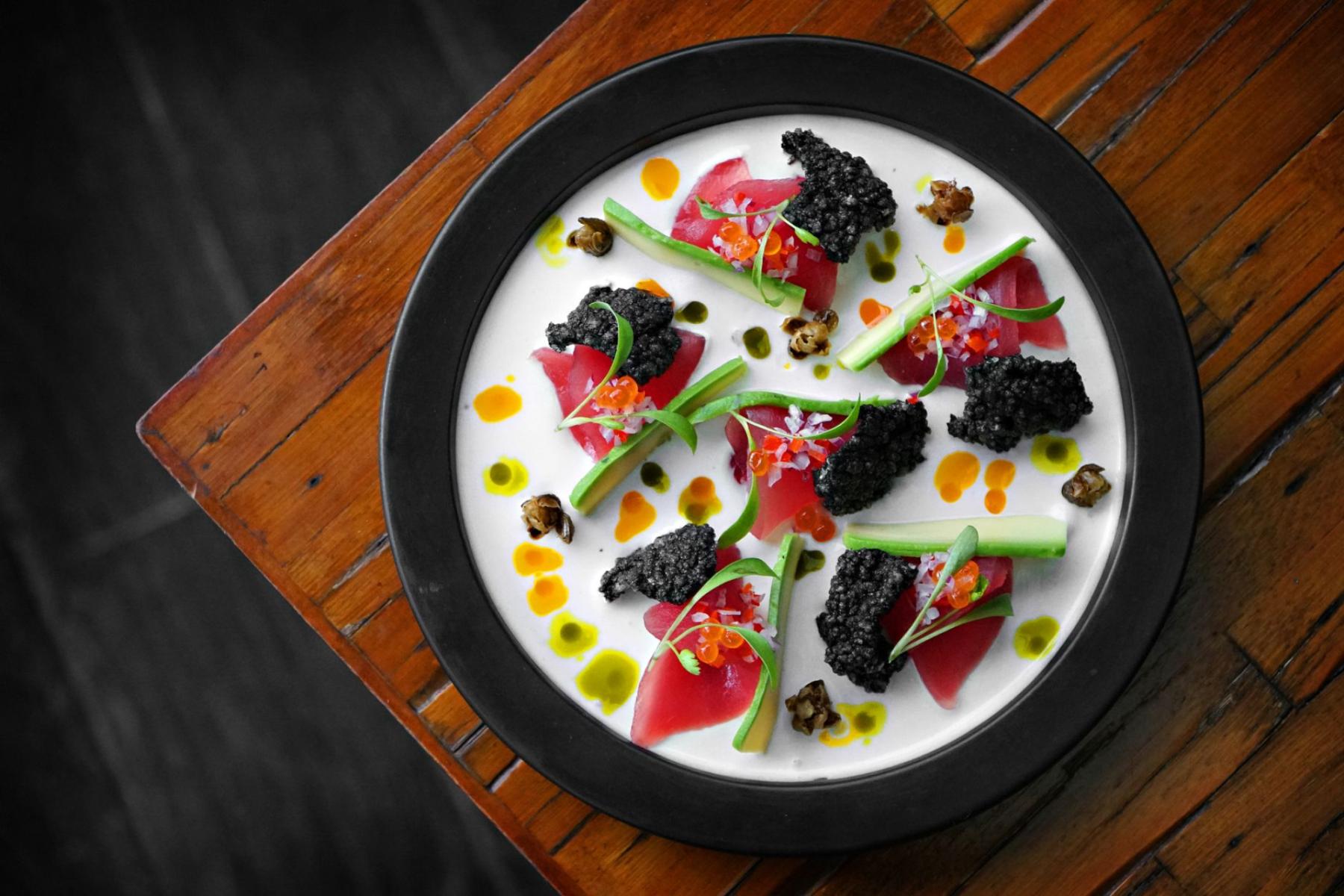
How do you order lunch in Liberec without speaking Czech? Simply break the name of the dish down into four pieces of information: the main ingredient, the method of preparation, the sauce and the side dish.
This works in a Czech tavern, a roadside restaurant, a hotel dining room or a modern bistro alike. Menus in Świeradów-Zdrój do not fit into a single culinary category: alongside Polish classics, you will find original dishes inspired by traditional recipes, seasonal produce and regional ingredients[1]. At the SKI&SUN restaurant, you may come across żur bacowski, kwaśnica, pierogi or oven-baked sausage[2]. On the other side of the border, the language changes, but the principle remains the same: you need to know what is the dish, what is the sauce and what is an extra that will be charged separately.
The dictionary below is not intended to replace the menu. It is meant to make the menu stop looking like a test in Czech grammar.
How a Czech dish name is constructed
The most important element often comes first. Kuře means chicken, vepřové pork, hovězí beef, ryba fish, sýr cheese and houby mushrooms. Endings may change because Czech adjusts the form of the adjective to match the noun: for example, you may see smažený sýr, but smažené brambory.
The second element describes the preparation. Pečený or pečené means baked or roasted, vařený boiled, dušený stewed, grilovaný grilled and smažený fried. Do not assume, however, that every dish described as fried will be breaded. Breadcrumb coating is especially to be expected with names such as řízek or smažený sýr.
The third element is the sauce or the way the dish is served: omáčka means sauce, na smetaně in a cream sauce or with cream, s houbami with mushrooms, se zelím with cabbage and s česnekem with garlic. A side dish often appears at the end: knedlík, brambory, hranolky, meaning chips, or salát.
A simple example: vepřové na česneku s knedlíkem a zelím means pork with garlic, dumplings and cabbage. It is not a mysterious proper name, just a shorthand description of what is on the plate.
Mini-dictionary: words that really change your order
- uzené — smoked, usually meat or smoked meat. In Czech cuisine, this ingredient also appears as a filling for potato dumplings, alongside spinach or cabbage[3]. It does not mean raw meat or simply “meat-based”.
- klobása — sausage. Depending on the establishment, it may be fresh, grilled or smoked, so it is worth checking how it is prepared. The name itself does not tell you whether you will receive one large sausage, several smaller pieces or a sausage served with bread.
- příloha — a side dish served with the main course. This is one of the most important words on the menu, because potatoes, chips, rice, dumplings or salad may already be included in the price or may appear as a separate item.
- omáčka — sauce. If a dish simply lists “omáčka”, ask what kind of sauce it is and whether it is served on the plate or separately.
- smažený — fried. Smažený sýr is usually breaded and fried cheese, served with potatoes, chips or tartare sauce[3]. The closest association on a Polish menu would be fried cheese, but not every cheese on a Czech menu will necessarily be prepared this way.
- domácí — homemade, made in-house, prepared on site or according to the establishment’s recipe. It is an appealing description, but it does not answer the question of where the main ingredient comes from.
- regionální — regional. The word may refer to a product, a recipe, a style of cooking or the very idea behind a dish. If local provenance matters to you, ask separately about the meat, cheese, mushrooms or vegetables.
- knedlík, knedlíky — dumpling, dumplings. In Czech cuisine they may be bread dumplings, potato dumplings, filled with meat or served sweet with fruit. They most often do not resemble Polish dumplings in the shape of balls, but are boiled or steamed and then cut into slices[3].
- kyselo — a sour soup made with rye sourdough starter and mushrooms, associated with the mountainous region of the Czech Republic. It is not simply any sour soup. Its base is sourdough starter, so it should not automatically be equated with kulajda, which is based on different ingredients, including cream, potatoes, dill and mushrooms[4].
It is also worth remembering three short words: bez means “without”, s — “with” and nebo — “or”. They make it easier to understand constructions such as bez masa, s omáčkou or brambory nebo hranolky.
The most common pitfalls for Polish visitors
“Knedlík” does not necessarily mean what the Polish association suggests
The safest approach is to treat knedlík as a category of side dish, not one specific product. Houskový knedlík is a bread dumpling, bramborový knedlík a potato dumpling, while ovocné knedlíky are sweet fruit dumplings. If you order a main course with sauce, bread dumpling slices are a natural vehicle for the sauce; if fruit, butter, sugar or poppy seeds appear, the menu is already pointing towards a sweet dish.
“Kyselo” is not the Czech equivalent of every sour soup
On a borderland menu, it is easy to confuse names that sound similar. Kyselo is associated with sourdough starter and mushrooms, while kulajda usually means potatoes, mushrooms, dill and cream. Both soups may be sour, but their character is different[4]. If you do not like dill, cream or mushrooms, do not choose solely on the basis of the word “sour” in the Polish translation.
“Smažený” does not automatically mean a meat dish
This is important for vegetarians. Smažený sýr can be a complete meat-free dish, but it often comes with chips and a sauce containing egg or milk. The menu may also feature smažený hermelín, meaning fried Camembert-style cheese, as well as fried vegetables. The word “fried” describes the technique, not the main ingredient.
“Domácí” and “regionální” do not answer the same question
Domácí primarily describes the method of preparation or the product’s stated character. Regionální suggests a connection with a place, tradition or local range of products. If you want to know whether the meat comes from the surrounding area, ask directly: Je maso z místních surovin? — Does the meat come from local ingredients? Asking is more reliable than interpreting a single adjective.
How to read side dishes, sauces and portion sizes
The most expensive mistake on a menu does not always involve ordering the wrong dish. Sometimes you order a dish without a side, then add potatoes, sauce and salad separately.
Look for the phrases včetně přílohy, meaning “including a side dish”, and příloha dle výběru, meaning “side dish of your choice”. If you see a separate list headed přílohy, check the prices and portion sizes. Omáčka zvlášť means the sauce is served separately, while extra omáčka means an additional sauce.
With meat dishes, the stated weight may refer to the meat alone, not the entire plate. Instead of guessing, ask: Kolik gramů má celá porce? — How many grams is the full portion? If you would like a smaller portion, use the phrase Je možné objednat poloviční porci? — Is it possible to order half a portion?
It is also useful to know Je to včetně přílohy? — Is the side dish included? — and Mohu místo hranolků brambory? — Could I have potatoes instead of chips? These questions are simpler and more effective than trying to decipher the entire menu with your phone.
Three ordering scenarios
A quick lunch after coming off the trail
After a hike, you do not need a lecture on the history of a dish. First check whether the menu includes the words polévka, hlavní jídlo and příloha. Soup may be a small first course, but in mountain establishments more substantial soups are sometimes sufficient as a meal in their own right. If you want to eat quickly, ask about a dish that is already prepared, or about the waiting time: Jak dlouho budeme čekat?
A practical order would be: Dám si polévku a smažený sýr s bramborami, prosím. — I’ll have the soup and fried cheese with potatoes, please. If you do not want cheese, replace the dish name with kuřecí řízek, meaning a breaded chicken cutlet, or choose roast meat with a side dish.
Dinner in a Czech tavern
Here, it is worth asking one opening question: Co doporučujete jako místní jídlo? — What do you recommend as a local dish? Then clarify whether this refers to a recipe, a product or simply the establishment’s name. Je to domácí? means “Is it homemade?”, while Je to z místních surovin? means “Is it made with local ingredients?”.
If you see vepřo-knedlo-zelo, you can expect a combination of pork, dumplings and cabbage. It is one of the best-known combinations in Czech cuisine[3]. If the menu offers svíčková, ask about the sauce and the side dish — the name does not explain everything to someone seeing it for the first time.
A tasting of regional side dishes
The best approach is to order one dish to share and treat the side dishes as a separate dictionary. Brambory means potatoes, vařené brambory boiled potatoes, šťouchané brambory mashed potatoes, often with additions, and zelí cabbage. Kysané zelí means sauerkraut, while dušené zelí means stewed cabbage.
It is worth ordering the sauce separately if you want to compare the flavours of the side dishes. Ask: Mohu poprosit o omáčku zvlášť? — Could I have the sauce separately, please? This is also a good solution for anyone who is not yet sure whether they will like the dill, mushroom or cream profile of the dish.
Allergies, meat-free diets and questions about ingredients
Information about allergens in restaurants and cafés is covered by EU rules concerning unwrapped food. A restaurant should provide a way to obtain information about the presence of gluten, eggs, milk, nuts, soya, celery, mustard, fish and crustaceans, among other allergens[5]. In practice, it is best not to rely solely on a symbol next to the name of the dish, but to ask the staff to check the ingredients.
Useful phrases:
- Jsem vegetarián. — I am a vegetarian.
- Jsem vegetariánka. — I am a vegetarian.
- Jsem alergický na ořechy. — I am allergic to nuts.
- Jsem alergická na ořechy. — I am allergic to nuts.
- Obsahuje to lepek? — Does this contain gluten?
- Je v tom mléko nebo vejce? — Does it contain milk or egg?
- Bez masa, prosím. — No meat, please.
- Je možné připravit to bez sýra? — Is it possible to prepare this without cheese?
If the allergy is serious, mention it before placing your order, not only after the dish has been served. Mám silnou alergii na... — I have a severe allergy to... — is a more important sentence than asking whether the dish is “light”.
A small German appendix
In a hotel, a roadside restaurant or an establishment serving tourists from different countries, you may also receive a German version of the menu. The most important words serve a similar function to the Czech ones: Beilage means side dish, Soße — sauce, geräuchert — smoked, hausgemacht — homemade and regional — regional.
Wurst is a broad category of sausages and sausage products, while Bratwurst refers to a sausage intended for frying or grilling. A German menu may also use the word Schnitzel without specifying the type of meat. In that case, look for the terms Schwein — pork, Hähnchen — chicken, or Kalb — veal. The sausage category is exceptionally broad and regionally diverse in German cuisine[6].
The safest question in German is: Ist die Beilage im Preis enthalten? — Is the side dish included in the price? You can also say: Ist das hausgemacht? — Is this homemade? — and Welche Zutaten sind darin? — What ingredients does it contain?
How to order without guessing
The best way to read a borderland menu is as an instruction manual, not a competition in name recognition. First find the main ingredient. Then check the preparation method, sauce and side dish. Finally, ask about the weight, allergens and provenance of the product if those details matter to you.
In Świeradów-Zdrój, you may encounter both menus featuring Polish mountain dishes and original cuisine based on seasonal ingredients. In Liberec, the same approach will help, only with Czech words. And when you see uzené, příloha, omáčka or kyselo, you no longer have to choose based on a photograph. You know what to ask.