Mountain Shelters as the Destination: The Most Interesting Mountain Stops from Świeradów-Zdrój
Chatka Górzystów, the shelter on Stóg Izerski, Samotnia, Strzecha Akademicka and the mountain lodges around Szklarska Poręba reveal the mountains from a less obvious perspective. You do not have to conquer the highest peak: sometimes the most rewarding destination is a building, its history, a warm room and a meal along the way.
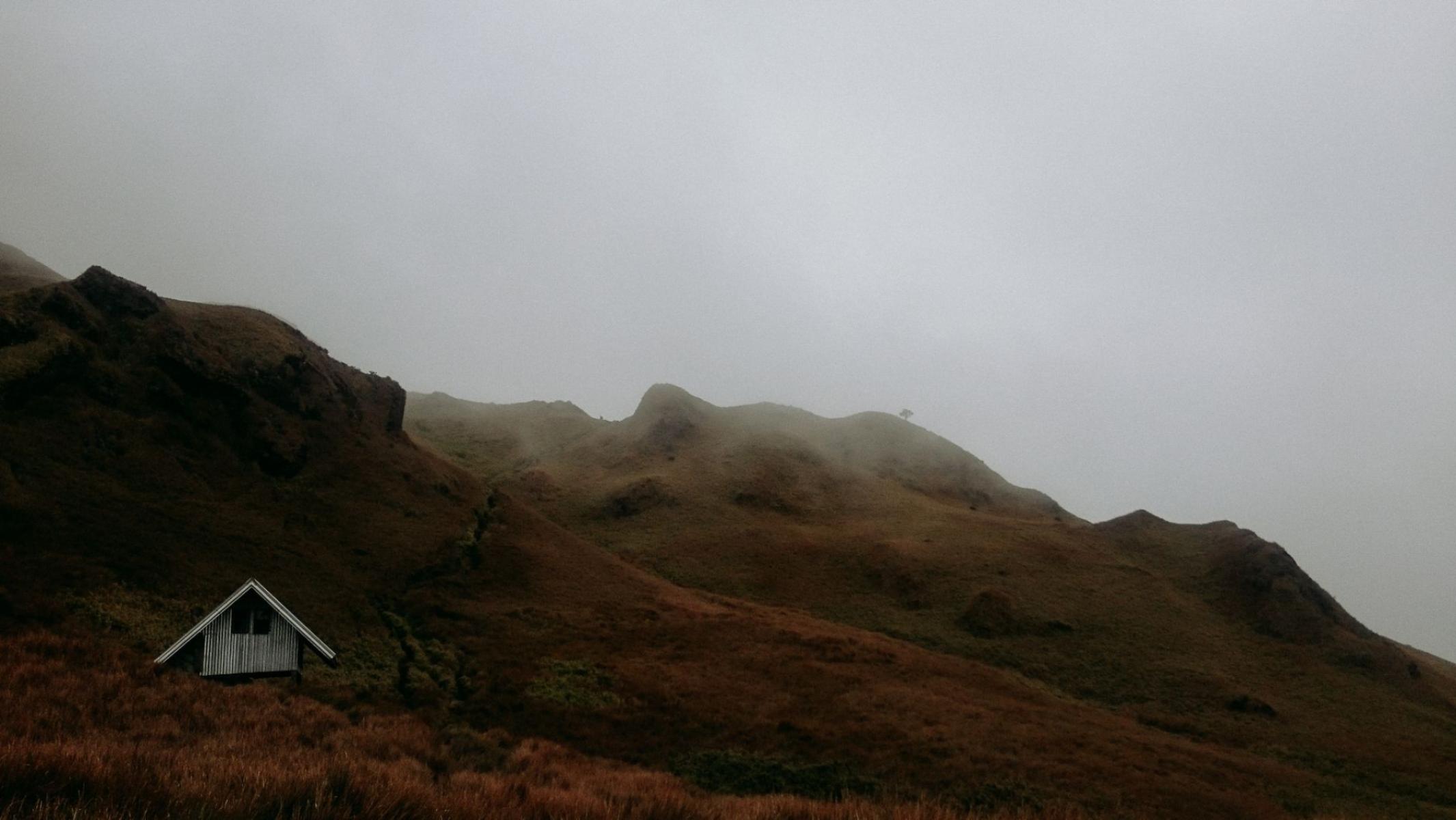
Chatka Górzystów and the shelter on Stóg Izerski lie above the same town, but they require completely different planning: Chatka is reached via a 6.8-kilometre walk, while a gondola carries visitors up to Stóg[1][2]. This is a good introduction to the broader story of the mountain shelters of the Izera Mountains and the Karkonosze. Some are destinations for a leisurely family outing, others require a full day, while still others attract visitors above all with their architecture and history.
This is not another trail catalogue. A mountain shelter can be an attraction in its own right: a place you visit for a particular building, regional cuisine, an overnight stay or traces of former economic life. In these mountains, the boundary between a shepherd’s hut, an inn and a mountain shelter was never entirely clear. Former establishments provided travellers with food and accommodation, and gradually changed their function as tourism developed[5].
Hala Izerska: Chatka Górzystów as a Destination in Its Own Right
Chatka Górzystów is the best example of a shelter that needs no additional excuse in the form of a summit or spectacular viewing tower. It stands on the northern edge of Hala Izerska, on the site of the former settlement of Gross-Iser. According to the municipal description of Świeradów-Zdrój, the building is the only surviving structure from the settlement, founded in the 17th century by Czech religious refugees[1]. The Polish Tourist Organisation states that it once housed a school, after which the building was rebuilt and adapted for tourists[3].
It is this continuity that gives a visit its meaning. Hala Izerska is not merely an open space crossed on the way to the next point. Chatka allows visitors to see how a mountain landscape was once inhabited, used and organised. In a place now associated with peat bogs, a broad valley and harsh conditions, there was once a settlement with farms and shepherds’ huts.
The blue trail from Świeradów-Zdrój to Chatka runs via Polana Izerska. The official route description gives a walking time of approximately 2 hours and 27 minutes one way, and a distance of 6.8 km from the centre of the spa town[2]. This is a full-day outing, but it is not technically demanding. You should bear in mind, however, that after reaching the shelter you will still have the return journey or a further stretch towards the Izera sites.
There is a home-style kitchen on site, particularly known for its pancakes and fried cheese. The building has around 40 beds and, according to the town’s official description, operates year-round[1]. This makes Chatka a good choice for those who want to combine a walk with a specific meal, but are not expecting guesthouse standards. A visit also makes sense when the weather limits the views: the building itself, its setting and its history remain reason enough to make the journey.
Who is it for? Older children, families accustomed to longer walks, enthusiasts of settlement history and anyone who prefers one clear destination to ticking off successive summits. It is not the best choice for a short walk with a small child or a spontaneous outing without a planned return.
Stóg Izerski: The Easiest Way to Reach a Real Mountain Shelter
If your priority is a short, comfortable and predictable day in the mountains, the shelter on Stóg Izerski has an advantage over most of the area’s other establishments. The gondola from Świeradów-Zdrój runs for 2,172 m, overcomes an elevation difference of 443 m and takes approximately 8 minutes. The upper station is located at an altitude of 1,060 m above sea level[4]. From a trip-planning perspective, this means one thing: you can quickly find yourself in a high-mountain setting without a several-hour ascent.
There is no need, however, to regard the gondola simply as a shortcut for people who do not like walking. Stóg functions more as a mountain gateway. After a short ride, you can stop at the shelter, have a meal, admire the building and then decide whether the day will end on the terrace or continue towards Polana Izerska, Hala Izerska or the Czech borderlands.
The shelter was built in a characteristic Silesian–Lusatian style and opened in 1924. The municipal information card for the building lists around 50 beds, rooms with bathrooms, full board and year-round operation[5]. Regardless of whether every detail of the offering remains current on the day of your planned visit, the character of the place is clear: this is a shelter prepared both for a short stop and for an overnight stay.
Who is it for? It is the best family choice in this selection, especially if members of the group have different levels of fitness. The gondola makes it easy to reach the building, while the onward walk can be adapted to the group’s abilities. Stóg is also suitable for older visitors and anyone who wants to experience a mountain shelter without giving up convenient transport.
Shelters Around Szklarska Poręba: A Landscape Built from History
In the Karkonosze, mountain shelters are not random points on a map. Karkonosze National Park emphasises that some have retained continuity with the sites of former shepherds’ huts or other buildings associated with mountain husbandry[6]. As a result, a trip to a shelter can be a lesson in architectural history every bit as engaging as the route itself.
Pod Łabskim Szczytem
The Pod Łabskim Szczytem shelter stands on the site of the former Alte Schlesische Baude, whose tradition dates back to the period before 1670[6]. This is not a destination for visitors looking for the shortest walk from a car. Its strength lies in its location in the high Karkonosze and in the way its name leads to an older layer of the landscape—to a time when mountain huts served not only hikers, but also pastoralism and forestry.
A visit here works best as part of a longer day from Szklarska Poręba or as a destination for those who want to spend the night at altitude and continue on in the morning. Karkonosze National Park lists the building among the operating shelters where visitors can rest, eat and stay overnight[7]. Before setting out, check the park’s current notices and the availability of beds.
Na Hali Szrenickiej
Hala Szrenicka has a particularly clear pastoral history. Karkonosze National Park describes how, in the 18th century, the natural meadow was enlarged and a hut was built there, which hikers gradually began to visit. The building was slowly transformed into a tourist shelter and repeatedly rebuilt over the following decades[6].
This is a place for those who want to see not just a shelter, but an entire type of landscape: a broad meadow below the summit, a building standing in open country and a former pastoral function written into the topography. Hala Szrenicka is more a sightseeing destination than a quick lunch stop. You can plan a rest and an overnight stay here, but it is best viewed as part of a longer day in the Szrenica area rather than as a building reached with almost no effort.
Samotnia: Not a Shepherd’s Hut, but a House beside a Pond
Samotnia stands apart from the other Karkonosze shelters. Its earlier form, known as Teichbaude, was not a shepherd’s hut. It was the home of the keeper of Mały Staw and the trout raised there. Rather than replacing it entirely with a new building, successive extensions preserved the oldest, 17th-century part of the structure[6].
This is one of the best destinations for anyone who wants to combine a short stop with an exceptional sense of place. Samotnia is not, however, an attraction accessible without preparation. The approach leads through mountain terrain, and in the area around Mały Staw there are sections whose accessibility may vary seasonally. Karkonosze National Park describes routes linking Samotnia and Strzecha Akademicka with Polana, Biały Jar and the park’s educational infrastructure[8].
For families with children, Samotnia can be a good destination once the children are confident walking over rocky ground and the adults treat the route as a mountain hike rather than a stroll through a city park. The reward is not only a meal or a rest, but also the shelter’s setting above Mały Staw itself—one of those views in which architecture and terrain form an indivisible whole.
Strzecha Akademicka: A Large Shelter with an Historic Name
Strzecha Akademicka continues the tradition of the former Hampelbaude, mentioned as early as 1654. Karkonosze National Park includes it among the buildings retaining continuity with the sites of former shepherds’ huts[6]. The modern building is larger than the original mountain hut, but its location itself is a reminder that the Karkonosze shelters developed gradually, along with the growth of tourism.
Strzecha is a more practical choice for an overnight stay than for an intimate, solitary stop. It is a large establishment that can accommodate more visitors and works well as a base for further walks. If Samotnia draws visitors with the scale of its setting and its position beside the water, Strzecha tells the story of the development of mass mountain tourism: the need for a larger dining room, more beds and more efficient service.
The simplest choice in this part of the region is therefore:
- Samotnia — for its architecture, its setting above Mały Staw and its shorter, though still mountainous, route;
- Strzecha Akademicka — for an overnight stay, greater infrastructure and the historic continuity of the former Hampelbaude;
- Pod Łabskim Szczytem — for those interested in former mountain huts and a high-mountain setting;
- Na Hali Szrenickiej — for the landscape of a pastoral meadow and a longer day in the Szrenica area.
A Polish Shelter, a Czech Bouda
On both sides of the border, the mountain inn arose from a similar need: people required food, shelter and a place to rest far from settlements. The difference lies more in language and naming traditions than in the function itself. On the Czech side, the word bouda still describes a characteristic type of mountain establishment that can be an inn, a shelter, a place to stay overnight and a landmark all at once.
That is why Jizerka and Smědava make a natural complement to a tour of the Polish establishments. They need not be treated as a separate world. They are a continuation of the same borderland story, in which buildings arose wherever animals were grazed, goods transported, forests worked or growing numbers of hikers served.
There is something else important for visitors: on the Czech side, it is easier to think of a mountain hut as a destination in its own right, rather than merely a checkpoint along a route. A visit can consist of walking to a particular bouda, ordering a simple meal and returning by the same path. This is precisely the model that best suits an unhurried exploration of the Izera Mountains.
How to Choose a Shelter for Your Own Day
If accessibility is the priority, choose Stóg Izerski. The gondola limits the ascent, and the shelter is located by the upper station. If you want a longer but peaceful route with a clear culinary and historical destination, choose Chatka Górzystów. If architecture and the heritage of former shepherds’ huts interest you, plan a visit to Pod Łabskim Szczytem or Hala Szrenicka.
When considering an overnight stay, it is best not to focus on a single “most beautiful” building, but on the overall plan. Chatka and Stóg allow you to build a stay around the Izera Mountains. Samotnia and Strzecha open the way to a longer exploration of the Karkonosze. Pod Łabskim Szczytem and Hala Szrenicka are the right choices when the building itself matters to us as much as the trail.
Before setting out, check opening hours, whether meals can be ordered, bed availability and the latest trail notices. A mountain shelter is part of a living mountain system, not a museum exhibit. That is precisely why its offering, access and rules of stay may change.
Chatka Górzystów and Stóg Izerski are not competitors. One teaches patience and leads through the history of Hala Izerska; the other lets you enter the world of mountain architecture almost at once. Between them lies the full spectrum of possible outings—from a family stop to an overnight stay in a building that remembers the days of shepherds, the first spa visitors and the old mountain inns.