Cuisine from a Suitcase: Why Lower Silesia’s Table Has No Single Tradition
Pierogi, Silesian roulade, dumplings, smoked cheeses, honey and Czech knedlíky do not form a single canon in Lower Silesia—they create a map of resettlement, neighbouring cultures and local produce. This article shows how a recipe travels from home to guesthouse, from farm to restaurant and from one side of the border to the other.
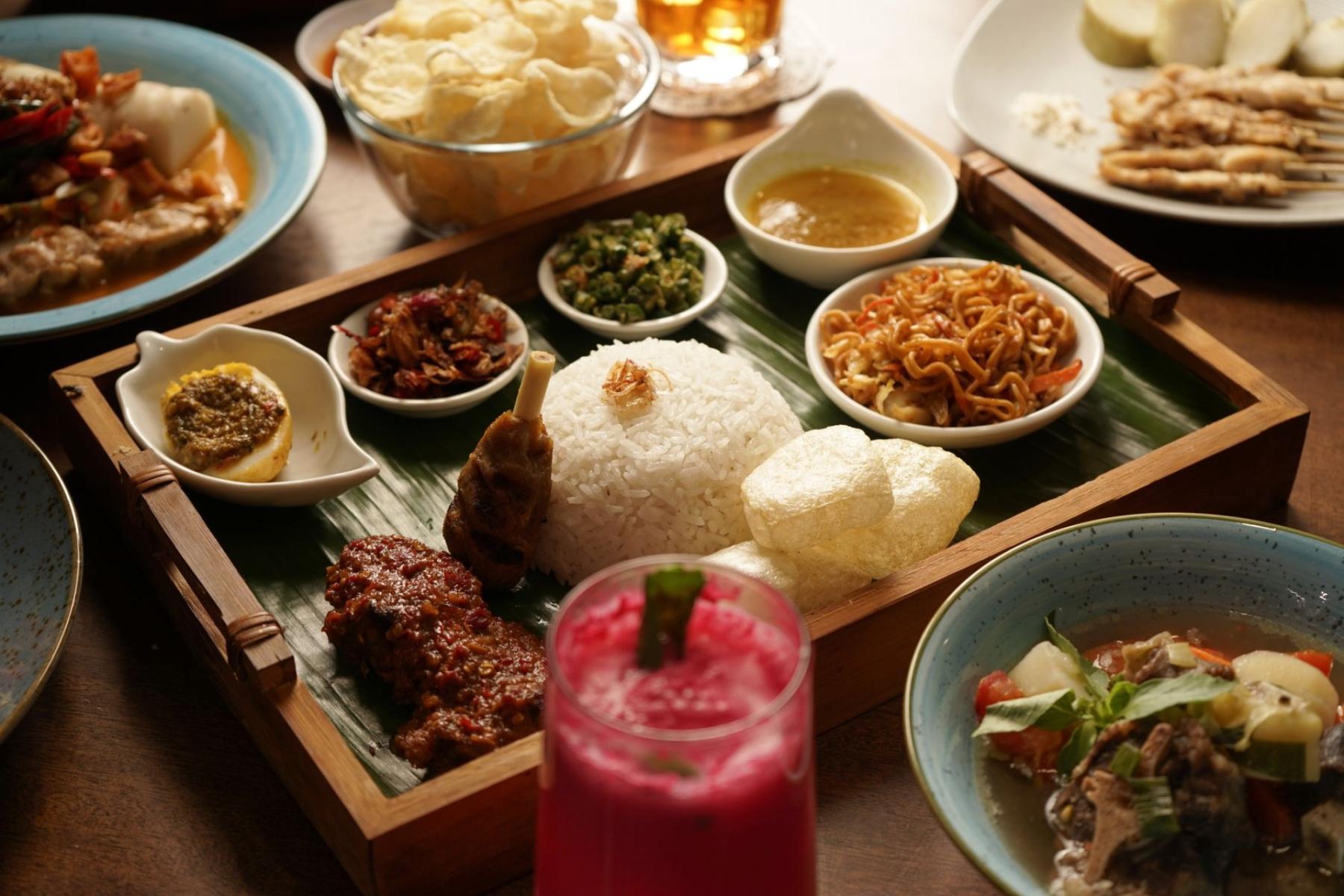
Choosing a Lower Silesian lunch solely by the name of a dish is a mistake. It costs more than a few złoty: it means treating the region’s cuisine as a closed catalogue of dishes, when in reality it is a record of many arrivals, family memories and products that only found new uses here. Roulade, pierogi, dumplings, smoked cheese, honey and knedlík may appear at the same table not because they were all born in the same kitchen, but because after 1945 Lower Silesia became a meeting place for traditions from almost every region of Poland.[1]
A Region Shaped by Arrivals
The most honest answer to the question “what is Lower Silesian cuisine?” is: it depends on whether we are asking about a recipe, an ingredient, a technique or a family memory. Each of these answers leads in a different direction.
The post-war newcomers brought more than furniture, documents and tools to Lower Silesia. They also brought ways of fermenting cabbage, making pierogi, drying fruit, baking bread and preparing festive dishes. Descriptions of settlers’ menus from the area around Gródek nad Dunajcem, the Kielce region and the former Kresy have survived in materials relating to the region. They include cabbage with mushrooms, mushroom soups with łazanki noodles, borscht with uszka dumplings, pierogi, grain-based dishes and compotes made from dried fruit.[1]
This was not a recipe being moved into an empty space. The new inhabitants made use of what they found: former German ovens, mills, orchards, cellars, farms and local markets. The old infrastructure remained, but the hands using it changed. As a result, the region’s cuisine is neither a straightforward continuation of a single pre-war tradition nor an exact copy of Kresy cuisine. It is better understood as a process of adapting memory to new conditions.
That is why flour-based dishes matter so much on the Lower Silesian table. Pierogi and stuffed cabbage rolls belonged to the repertoire of settlers from the south-eastern Kresy, as did mushroom dishes and borscht. The official description of krużewnickie black cabbage rolls shows that a recipe can be domestic, festive and public at the same time: the dish preserves the memory of families displaced after the war, but it can also become the calling card of a town and an event.[2]
In this sense, Lower Silesian cuisine resembles an archive without a single cover. A recipe need not have one owner, and a dish need not be “pure” in terms of origin to be authentic. Its authenticity may lie precisely in the fact that it changed along with the family over several generations.
A Recipe Is Luggage, but the Ingredient Determines Its New Form
The most fascinating part of this story begins when a recipe encounters a place. The recipe itself may have travelled from far away, but its contemporary character is shaped by what can be bought, grown or gathered locally.
A good example is Chrząstawa’s ruskie pierogi. Their Kresy ancestry is explicitly described, but in culinary practice the dish became rooted in Lower Silesia through local ingredients: flour, eggs, twaróg cheese, potatoes, water and onion. This distinction matters. The origin of a recipe and the origin of its raw ingredients need not be the same; it is their combination that tells the story of a particular place.[3]
Balkan pita from Lipiany travelled a similar route. The recipe reached Lower Silesia with re-emigrants who returned after the Second World War from the territory of former Yugoslavia. They brought a cuisine shaped earlier by the experience of living in the Balkans—a tradition that had itself already travelled and been transformed. Pita with pumpkin, apples, cheese or meat is therefore not a simple “import”. It is the second stage in a recipe’s migration: a Polish recipe, Balkan experience and a Lower Silesian farm.[4]
The same principle applies to products that are not main dishes but help create the region’s culinary vocabulary. Heather honey from the Lower Silesian Forests has its own long beekeeping history, but its contemporary story also includes the people who continued practices already established in the area after 1945. In this case, it was not merely the label that changed. The community that took over the landscape and learned to use its resources changed too.[5]
This is where the popular notion of tradition as something frozen in time comes to an end. Tradition may preserve the form of a pieróg, a way of smoking cheese or the proportions of a dough, but its meaning changes with the place. At home, a recipe represents continuity. In a guesthouse, it becomes a promise of hospitality. In a restaurant, it may turn into shorthand that still needs to be decoded.
Silesian, Sudeten, Borderland—Three Different Orders
Most misunderstandings begin with the word “Silesian”. Beef roulade with dumplings and cabbage is a recognisable classic of Silesian cuisine, but its presence on a restaurant menu in Świeradów-Zdrój or Szklarska Poręba does not prove that it originated in the Izera Mountains. The official description of the roulade points to its roots in Silesian tradition, particularly in Upper Silesia, and to the dish’s presence in family cooking as early as the interwar period.[6]
Roulade can therefore be an honest element of a Lower Silesian menu if the menu presents it as part of a broadly understood Silesian heritage. It becomes less honest only when it suggests a local origin without explaining what, precisely, is regional: the recipe, the meat, the accompaniments, the method of serving or simply the name.
One Dumpling, Many Names
A shared form does not mean a shared history. A Silesian potato dumpling with its characteristic indentation, a Czech knedlík sliced like a loaf and a mountain dumpling served with sauce may end up on the same plate, but they are not the same product.
In Czech cuisine, knedlíky are one of the basic accompaniments to meals. They come in wheat and potato versions, are often steamed and then sliced. They accompany, among other things, meats, sauces and braised cabbage. This way of serving creates a different structure of a meal from the classic Polish portion of potatoes or Silesian dumplings, even if to a tourist all these accompaniments look like “dumplings”.[7]
Smoked cheese works in much the same way. The fact that cheese is smoked does not in itself point to a particular region. One needs to ask about the type of milk, the farm, the maturing time, the wood or the smoking method. Only then can we know whether the plate holds a product from a local homestead, a cheese inspired by the tradition of a neighbouring region or simply a universal accompaniment that fits the mountain setting.
That is why it is worth breaking “regionality” down into four questions:
- Where does the recipe come from? From a particular village, a family notebook, Silesian tradition or the broad repertoire of Polish cuisine?
- Where do the ingredients come from? From a nearby farm, a producer in the region or a wholesaler?
- What is the local technique? Smoking, fermenting, baking in an oven, steaming or drying?
- How has the dish been described? As Lower Silesian, Sudeten, Silesian, Czech or simply home-style?
This four-layer definition makes it possible to avoid the false choice between “authentic” and “inauthentic”. A dish may have foreign origins but local ingredients. It may have a local recipe but a contemporary form. It may be a classic of a neighbouring country that, in a borderland, has become part of the everyday repertoire.
Świeradów, Szklarska Poręba, Liberec: Three Ways of Telling the Story of Regionality
In Świeradów-Zdrój, cuisine meets three traditions of looking after guests: spa, guesthouse and inn. Stara Karczma may build its story through hearty, home-style dishes; Kawiarnia in Hala Spacerowa through cakes, drinks and a leisurely dessert after a walk; while Czarci Młyn reminds us that regionality sometimes begins not with a finished dish but with flour, an oven and bread. These are not three competing definitions. They are three stages in a product’s journey: farm, kitchen and table.
In Świeradów, it is therefore worth asking not only “what is regional?” but also “what is your own?”. Does the restaurant source its products from a particular supplier? Is the bread baked on site? Does the honey come from the surrounding area, or does it merely accompany the name of a dessert? Does the menu speak of a family recipe, or use the word “regional” as decoration?
Szklarska Poręba works somewhat differently. Here, regionality often meets trail cuisine: simple food after exertion, soup, a pancake, cake or a dish whose primary purpose is to work well after several hours of hiking. At a mountain shelter or a restaurant along a trail, local character will not always be conveyed through an old recipe. Sometimes it is expressed through the way food is served, seasonality, a relationship with the mountains and a return to a cuisine that does not pretend to be fine dining.
Liberec introduces Czech grammar to this map. There, menus more readily reveal the broader repertoire of Czech cuisine: soups, goulash, meat with knedlíky, cream sauces, cabbage, fried cheese and potato dishes. This does not mean that every dish is “Liberec” in the narrow sense. More often, it is Czech, North Bohemian or Sudeten. For a visitor from the Polish side of the border, this distinction is valuable precisely because it shows that a borderland is not about erasing boundaries, but about borrowing forms from one another in everyday life.[7]
In these three places, the word “regional” can therefore mean something different. In Świeradów, it will often be a promise of hospitality and produce from the mountain hinterland. In Szklarska Poręba, food shaped by the tourist landscape and mountain-shelter cuisine. In Liberec, belonging to the Czech repertoire, which on the Polish side is sometimes read as Sudeten.
How to Order Regionally Without Buying into a Legend
The best conversation over a regional meal does not begin by asking whether a dish is “the real thing”. It begins with a request for specifics.
Eight Questions That Actually Clarify Things
- Where does the recipe come from? Does it bear the name of a place, family or group of settlers?
- What is local about the dish? The meat, potatoes, cheese, flour, mushrooms, honey, herbs—or perhaps only the way it is served?
- Does the product come from a particular farm? The word “local” alone does not yet say who produced it.
- Why is the dish Silesian, Sudeten or Czech? A good answer should point to a recipe, ingredient or technique.
- Is the roulade being served as a Silesian classic or as this place’s speciality? These are two different claims.
- Are the knedlíky prepared on site? It is worth asking whether the menu refers to Czech technique or merely uses the name.
- What exactly does “smoked cheese” mean? The type of milk and smoking method will tell you more than a Highland ornament on the plate.
- Does the chef know the recipe’s journey? If they can explain who cooked the dish before and what changed after it arrived in Lower Silesia, it usually points to a living tradition rather than a mere label.
Questions like these do not take away from the pleasure of a meal. On the contrary, they reveal that authenticity need not mean a museum reconstruction. A recipe may have travelled, an ingredient may have been bought from a new farmer and the way it is served may have been adapted to a restaurant. What matters is that the menu does not pretend to represent a single, immaculate genealogy.
The greatest mistake, then, is not ordering roulade in the mountains, pierogi in a Czech style or a knedlík on the Polish side of the border. The mistake is expecting all these dishes to have one passport. The Lower Silesian table is regional precisely because it remembers many journeys: from the Kresy, from Silesia, from farms, from guesthouses, from a neighbouring country and from homes that had to be rebuilt from scratch after the war.